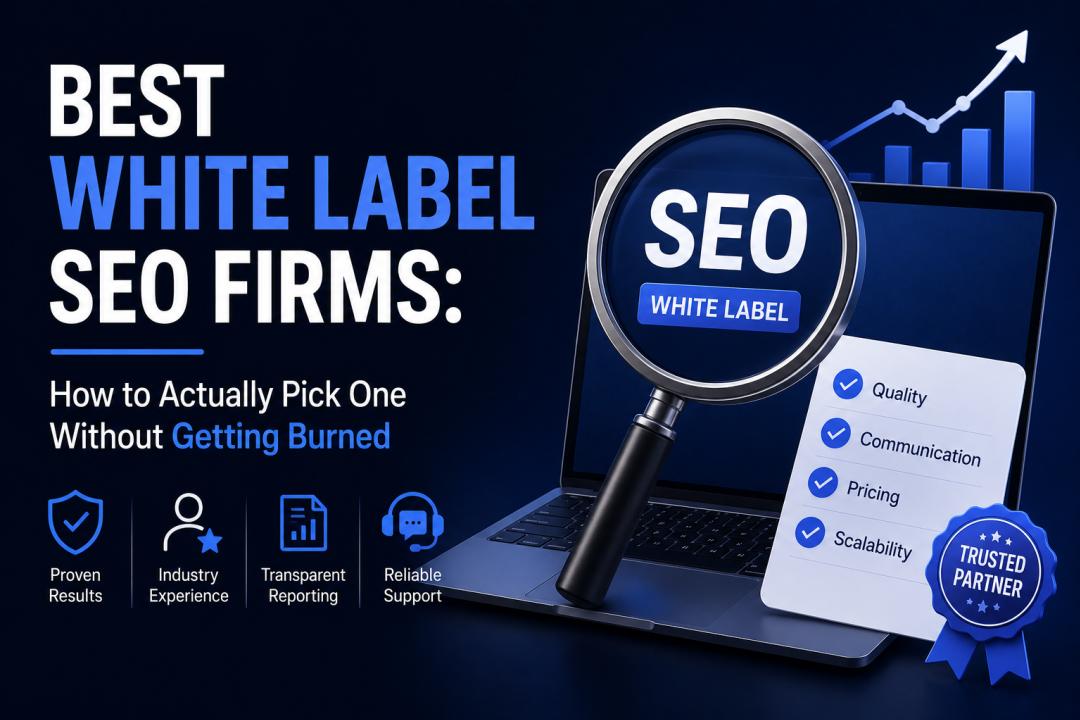
Ever tried explaining to a client why their rankings dropped when you don't even really understand what your SEO vendor did behind the curtain? Yeah. Not a fun conversation. I've had it more than once, and honestly it's one of those moments that makes you rethink your entire vendor stack.
If you're running an agency, a marketing consultancy, or even just freelancing and trying to offer SEO without doing all the grunt work yourself, you've probably stumbled across the idea of white label SEO. The concept's simple on paper — you partner with a firm that does the actual SEO work, you rebrand it, and you sell it to your clients under your own name. Sounds great, right? And it can be, but only if you pick the right partner. Pick wrong and you're the one fielding angry emails while some faceless vendor is off doing who-knows-what to your client's backlink profile.
So in this post I wanna walk through what actually matters when you're evaluating no.1 white label SEO firms, some red flags I've learned to spot (sometimes the hard way), and a few tips that'll save you a headache or two down the line.
Why Agencies Even Bother With White Label SEO in the First Place
Look, SEO is genuinely hard to do well. It's not just throwing keywords into a blog post and calling it a day (though I wish it was that easy, would've saved me a lot of late nights). Real SEO involves technical audits, content strategy, link building, local optimization, ongoing monitoring... it's a lot. Most agencies, especially smaller ones, just don't have the bandwidth or the specialized talent to do all of that in-house.
That's where white labeling comes in clutch. Instead of hiring a whole SEO team (which, let's be real, is expensive and hard to staff well), you outsource the actual execution to specialists while keeping full control of the client relationship. Your client thinks they're working exclusively with you. Behind the scenes, there's a whole team of SEO nerds grinding away on their behalf.
A few reasons agencies lean into this model:
- You expand your service offering without hiring. Suddenly you can pitch SEO alongside web design, PPC, social, whatever you already do.
- Faster turnaround. Established white label teams already have the workflows and tools dialed in. You're not reinventing anything.
- Lower overhead. No need to pay full-time salaries for specialists you might not need work for every single week.
- You stay the face of the brand. This one's huge honestly. Your client relationship stays intact, and the vendor stays invisible in the background.
I remember when I first pitched this idea to my business partner, he was skeptical. Felt kinda like cheating almost, like we weren't "really" doing the work. But once we saw the results start rolling in for clients, that feeling went away pretty quick. Clients don't care who's typing the meta descriptions, they care about results.
What Separates a Good White Label SEO Firm From a Mediocre One
Okay, this is the part that actually matters. Not all white label providers are created equal, not even close. I've worked with a couple that were genuinely fantastic and at least one that I'd rather not name (you know who you are) that nearly tanked a client relationship I'd spent a year building.
Here's what I look for now, after learning some lessons the hard way:
- Transparency in reporting. If a firm can't clearly show you what they're actually doing — what keywords they're targeting, what content they're producing, what links they're building — that's a massive red flag. You need this info to actually manage the client relationship, and also, honestly, just to sleep at night.
- White label reporting dashboards. A lot of the better firms will give you branded dashboards you can hand off to clients directly. Makes everything look polished and keeps your name front and center.
- Communication speed. When you email your account manager with an urgent client question, how fast do they get back to you? This matters more than people realize, especially when a client is breathing down your neck about a ranking drop.
- No shady link building. Ask directly about their link acquisition process. If they're vague or dodge the question, run. Bad backlinks can tank a site for months, sometimes longer, and it's your name on the invoice when it happens.
- Custom strategy, not cookie-cutter packages. Some firms just slap every client into the same three-tier package regardless of industry or goals. That's lazy, and it usually shows in the results.
Honestly, once I found a partner that checked all these boxes, running SEO as a service felt less like gambling and more like an actual, sustainable business line. There's a real difference between working with a proper white label SEO reseller agency that treats your clients' campaigns with care, versus just outsourcing to whoever's cheapest on a random directory listing. Cheap almost always ends up costing more in the long run, trust me on that one.
Red Flags I Wish Someone Had Warned Me About Sooner
I've made mistakes here, not gonna lie. So let me save you some pain.
- Guaranteed rankings. Nobody, and I mean nobody, can guarantee a #1 spot on Google. If a firm's promising that, they're either lying or planning to do something that'll get your client's site penalized eventually.
- No trial period or month-to-month flexibility. Locking you into a long contract before you've even seen results is a bad sign. Good firms are confident enough to earn your continued business, not trap you into it.
- Vague pricing structures. If you can't get a straight answer on what you're actually paying for, walk away. This isn't complicated, it shouldn't feel like pulling teeth to understand your invoice.
- Zero access to raw data. Some sketchy providers only give you their polished summary reports and nothing underneath. You want access to Search Console data, analytics, the actual nitty gritty, not just a pretty PDF.
- High client turnover on their end. Ask how long their average partnership lasts. If agencies are constantly ditching them, that tells you something.
I switched providers once because the reporting they gave me was basically a glorified screenshot collage. Cute, but useless when a client asked me a specific question about their keyword rankings and I had literally nothing to show them. Never again.
How to Actually Vet a White Label SEO Partner Before Signing Anything
So you've narrowed down your options, now what? Here's the process I run through every time now, learned through a mix of trial, error, and a few too many awkward client calls.
- Ask for case studies with real numbers. Not just "we improved traffic," but specifics. What was the timeline, what industry, what were the actual before-and-after metrics?
- Request a sample report. See exactly what your clients would receive. Is it clear? Is it something you'd feel confident presenting yourself?
- Talk to current partners if possible. Some firms will connect you with existing agency clients for a reference call. If they refuse, that's worth noting.
- Start small. Don't hand over your biggest client on day one. Test the partnership with a smaller account first and see how communication, quality, and results actually play out.
- Clarify ownership of the work. Who technically owns the content, the strategy documents, the reports? Make sure this is spelled out clearly so there's no confusion later.
I know this all sounds like a lot of due diligence for something that's supposed to save you time, but trust me, the upfront effort pays off tenfold compared to scrambling to fix a bad partnership six months in.
What This Actually Looks Like Day to Day
Once you've got a solid white label partner in place, the day-to-day rhythm gets a lot smoother than people expect. You're mostly managing the client relationship — regular check-ins, translating technical SEO jargon into stuff your client actually cares about (traffic, leads, revenue, not "domain authority," nobody outside our industry cares about that number), and occasionally pushing back on the SEO firm when something doesn't look right.
There's still work involved on your end, don't get me wrong. You need to stay engaged enough to catch problems early and ask good questions. But it's nowhere near the workload of building and managing an in-house SEO team, which frankly a lot of smaller agencies just aren't equipped to do well anyway.
A Quick Story About Why the Relationship Matters More Than the Contract
I wanna share one more thing before wrapping up, because I think it illustrates the point better than another bullet list ever could. A couple years back we brought on a white label partner that looked amazing on paper. Great case studies, slick sales deck, competitive pricing. First month, everything seemed fine. Second month, reports started coming in late. Third month, I noticed a client's site had picked up a bunch of low-quality backlinks that definitely weren't part of any strategy we'd approved.
Turns out the account manager we'd been dealing with had left the company and nobody bothered telling us. Our account got quietly reassigned to someone brand new who didn't know the client's history, goals, or any of the context we'd built up. Classic case of a firm that scaled too fast without the infrastructure to actually support their growing client list.
We caught it early enough to fix things, but it was a wake-up call. Since then, I always ask potential partners how they handle account manager transitions, and honestly, their answer tells you a lot about how organized the company actually is behind the scenes. The good ones have a real process. The mediocre ones kinda shrug and say "it doesn't happen often," which, sure, but what happens when it does?
Setting Realistic Expectations With Your Own Clients
One thing that took me embarrassingly long to figure out: managing your client's expectations matters just as much as managing the vendor relationship. SEO takes time, usually a few months before you see meaningful movement, and clients coming from other agencies or trying this for the first time often expect overnight miracles.
I've found it helps a ton to be upfront from the very first sales conversation. I tell clients straight up that anyone promising instant results is probably setting them up for disappointment, or worse, some sketchy tactic that'll backfire down the road. Setting that expectation early, before any contract's even signed, saves you from awkward conversations three months in when they're wondering why they're not ranking #1 yet.
It also helps to loop clients in on the process a little, without drowning them in jargon. A quick monthly call walking through what's being worked on, in plain language, goes a long way toward keeping trust intact even during the slower early months when rankings haven't caught up yet.
Wrapping This Up
Picking a white label SEO firm isn't something you should rush into after one sales call and a slick-looking pitch deck. Do your homework, ask uncomfortable questions, request real data, and start small before going all in. The right partnership can genuinely transform your agency's offering and revenue, but the wrong one can cost you client trust that takes years to rebuild.
If you've had good or bad experiences with white label SEO providers, drop a comment below, I'd love to hear what's worked for other people out there. And if this was helpful, share it around, there's a decent chance someone in your network is about to make the exact mistake I made a couple years back.
Quick FAQ
Is white label SEO actually ethical? Yeah, totally. It's a standard business practice across tons of industries. As long as the work quality holds up, clients are getting real value regardless of who's technically executing it.
How much should I expect to pay a white label SEO firm? Pricing varies a lot based on scope, industry competitiveness, and the specific services included. Get a few quotes and compare what's actually included before deciding based on price alone.
Can I white label just part of my SEO services, like link building only? Definitely. A lot of agencies mix and match, keeping some services in-house while outsourcing the more resource-heavy stuff like content production or link building.
What happens if the white label firm makes a mistake that hurts my client's rankings? This depends on your contract, so read it carefully. Good firms will have some kind of remediation process in place. This is exactly why vetting upfront matters so much.