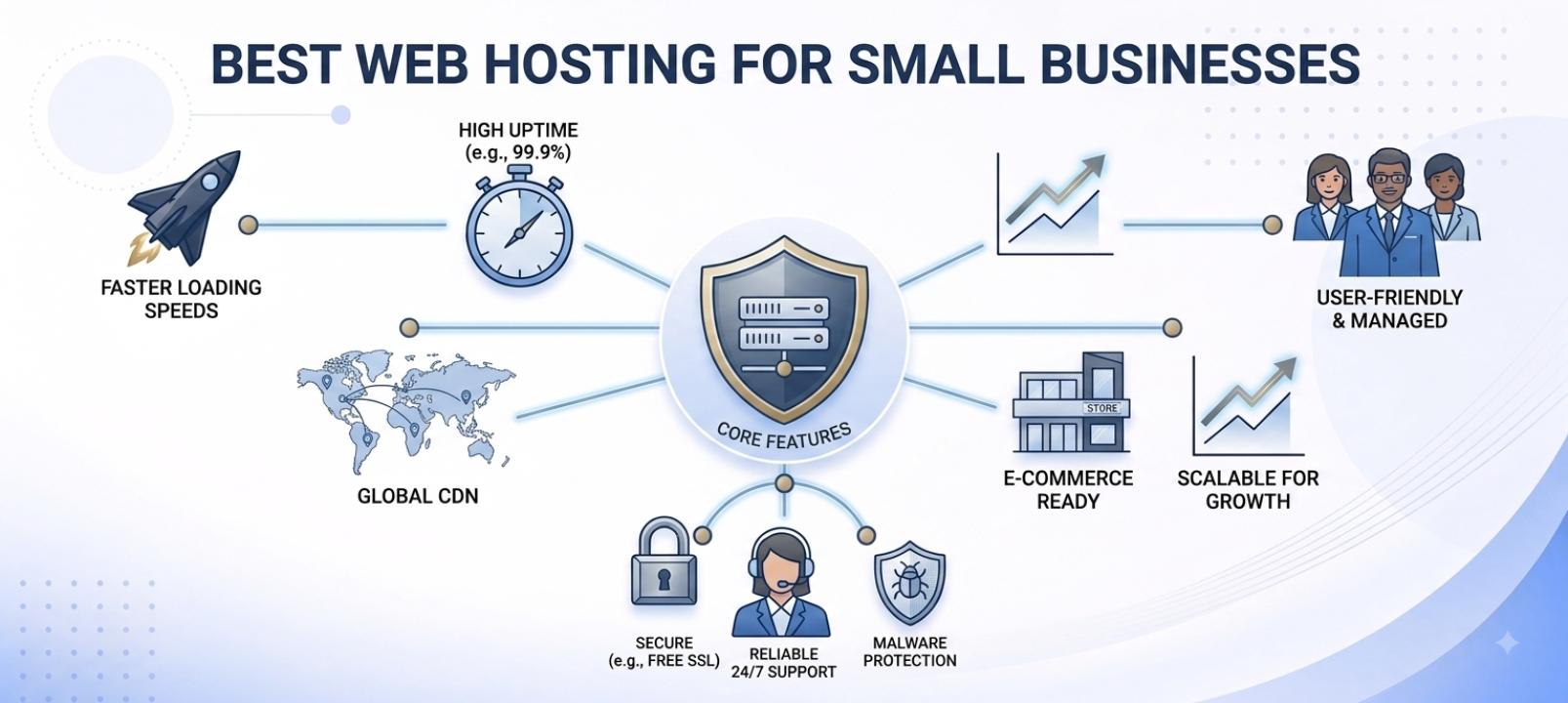
Building a website is an important investment for any small business, but the website itself is only part of the equation. The hosting environment behind the website plays an equally important role in determining how well the site performs, how secure it remains, and how easily customers can access it.
A slow or unreliable website can affect customer trust, reduce conversions, and limit business growth. On the other hand, a well-hosted website provides a seamless experience, helping visitors find information, explore products or services, and complete desired actions with confidence.
With so many hosting plans available, choosing the best web hosting for small businesses can be challenging. Understanding the essential hosting features and available options can help business owners make informed decisions and select a solution that supports both current requirements and future growth.
Why Small Businesses Need Reliable Web Hosting
Better Website Performance
Website performance directly influences how visitors interact with your business online. Modern internet users expect websites to load quickly, and even small delays can create frustration. Slow-loading pages often lead to higher bounce rates because visitors are less likely to wait for content to appear.
Reliable web hosting provides the infrastructure and resources needed to maintain fast-loading times and smooth website functionality. A hosting provider with optimized servers, quality hardware, and efficient network connectivity helps ensure a positive experience for every visitor.
Enhanced Security
Cybersecurity has become a major concern for businesses of all sizes. Small businesses often handle customer information, payment details, and important company data, making security a critical consideration.
A dependable hosting provider offers multiple layers of protection, including SSL certificates, firewalls, malware scanning, DDoS protection, and automated backups. These features help minimize security risks and provide a safer online environment for both businesses and customers.
Improved Website Availability
Website downtime can negatively impact customer trust and revenue. If visitors are unable to access your website when they need information or want to make a purchase, there is a good chance they will turn to a competitor. Reliable hosting providers invest in robust infrastructure and monitoring systems to maintain high uptime levels. Consistent website availability ensures customers can access your content, products, and services whenever required.
Better User Experience
A positive user experience is one of the most valuable assets a business can have online. Fast loading speeds, stable performance, and uninterrupted access help create a professional impression and encourage visitors to engage with your website. When users enjoy a smooth browsing experience, they are more likely to spend time exploring your offerings, making inquiries, or completing transactions.
Scalability for Business Growth
As your business grows, your website requirements will change. Increased traffic, additional content, new products, and expanded functionality all require additional resources. A scalable hosting solution allows businesses to increase server resources without significant downtime or complicated migrations. This flexibility ensures that website performance remains strong even as business demands evolve.
Cost-Effective Operations
Reliable hosting may help reduce long-term operational costs by minimizing technical issues, downtime, and security incidents. Rather than constantly addressing website problems, business owners can focus on serving customers and growing their organizations.
Key Factors to Consider When Choosing the Best Web Hosting for Small Businesses
Understand Your Business Needs
Before selecting a hosting plan, it is important to understand your website's purpose and technical requirements. A small informational website will have different needs than an online store, booking platform, or membership-based website. Business owners should evaluate expected traffic levels, storage requirements, application dependencies, and future growth plans before making a decision. Selecting a hosting plan that aligns with these needs provides a stronger foundation for long-term success.
Evaluate Performance and Speed
Website speed has a direct impact on both customer satisfaction and search visibility. Hosting providers that use SSD or NVMe storage, optimized server configurations, and modern hardware can contribute to faster website performance. Businesses should also consider features such as content delivery networks (CDNs), caching technologies, and resource allocation when comparing hosting providers. Strong performance keeps websites responsive and accessible under varying traffic conditions.
Check Uptime Guarantees
Uptime is one of the most important indicators of hosting reliability. A hosting provider's uptime commitment reflects its ability to keep websites online and available. Providers offering uptime guarantees of 99.9% or higher typically invest in redundant systems and proactive monitoring to reduce service interruptions. Consistently high uptime helps ensure customers can reach your website whenever they need it.
Prioritize Security Features
Security should never be treated as an optional feature. Businesses should look for hosting plans that include essential protections such as SSL certificates, malware scanning, firewall protection, intrusion prevention systems, and automated backup solutions. Comprehensive security measures help safeguard sensitive information while reducing the likelihood of costly disruptions or data breaches.
Consider Scalability Options
Business growth should not be restricted by hosting limitations. A good hosting provider makes it easy to upgrade resources such as storage, RAM, processing power, and bandwidth as requirements increase. Scalable hosting allows businesses to adapt to changing demands without needing to migrate to an entirely new platform.
24/7 Customer Support
Technical issues can occur unexpectedly, regardless of the hosting provider. Access to responsive and knowledgeable technical support can significantly reduce the impact of these situations. Businesses should look for providers that offer 24/7 support through multiple channels, including live chat, support tickets, email, and phone assistance. Reliable support provides peace of mind and ensures problems can be resolved quickly.
Review Pricing and Overall Value
While affordability is important for small businesses, pricing should not be the only consideration. The cheapest hosting plan may lack important features, support, or performance capabilities. Evaluating overall value helps businesses determine whether the included resources, security features, support services, and scalability options justify the investment.
Types of Web Hosting for Small Businesses
Shared Hosting
Shared hosting is often the starting point for many small businesses. In this hosting environment, multiple websites share the resources of a single server. Because infrastructure costs are distributed across multiple users, shared hosting remains one of the most affordable hosting solutions available. It is particularly suitable for startups, personal websites, local businesses, and websites with moderate traffic requirements.
VPS Hosting
Virtual Private Server (VPS) hosting provides dedicated resources within a virtualized environment. Unlike shared hosting, VPS customers have access to allocated resources that are not affected by neighboring websites. This makes Linux and Windows VPS hosting an excellent choice for growing businesses that require improved performance, increased control, and stronger security.
Cloud Hosting
Cloud hosting utilizes a network of servers rather than relying on a single machine. This architecture improves reliability and allows resources to scale dynamically based on demand. Businesses experiencing fluctuating traffic levels often benefit from the flexibility and availability offered by cloud hosting solutions.
Dedicated Server Hosting
Dedicated server hosting provides exclusive access to an entire physical server. All resources belong to a single customer, delivering maximum performance, customization, and security. Large online stores, enterprise applications, and resource-intensive websites frequently rely on dedicated hosting environments to support advanced operational requirements.
Managed Hosting
Managed hosting services are designed for businesses that prefer to focus on operations rather than technical server management. The hosting provider handles monitoring, updates, maintenance, and various administrative responsibilities. This option is ideal for businesses without dedicated IT teams or those seeking a more hands-off hosting experience.
Common Mistakes to Avoid When Choosing Web Hosting
One of the most common mistakes businesses make is selecting a hosting plan based solely on price. While budget considerations are important, sacrificing performance, security, or support often leads to greater costs over time. Another frequent mistake is overlooking security capabilities. Websites face constant security threats, and inadequate protection can create significant operational challenges.
Many businesses also underestimate future growth requirements. Choosing a hosting solution without scalability options may result in costly migrations as website traffic increases. Failing to evaluate support quality and uptime commitments can also lead to frustration, particularly during critical situations when assistance is needed most.
Why Choose bodHOST for Small Business Web Hosting?
bodHOST provides a comprehensive range of hosting solutions designed to meet the needs of modern businesses. Its hosting infrastructure is built to deliver reliable performance, helping websites remain fast and accessible.
The company offers multiple hosting options, including Shared Hosting, VPS Hosting, Cloud Hosting, Dedicated Servers, and Managed Hosting solutions. This flexibility allows businesses to select the environment that best fits their current requirements while maintaining the ability to scale as they grow.
Security remains a key focus, with hosting solutions designed to help protect websites from common online threats. Combined with competitive pricing and 24/7 technical support, bodHOST provides businesses with the tools and assistance needed to establish and maintain a strong online presence.
How to Get Started with the Right Hosting Plan
The first step is identifying your website goals and expected growth trajectory. Understanding your audience, traffic expectations, and functionality requirements will help narrow down suitable hosting options. Next, compare hosting providers based on performance, uptime, security features, scalability, and support quality. Selecting a provider that can accommodate future growth helps avoid unnecessary complications later.
Once your hosting plan is in place, continue monitoring website performance and resource usage regularly. This proactive approach helps ensure that your hosting environment continues to meet business requirements over time.
Frequently Asked Questions
- What is the best type of web hosting for a small business?
The ideal hosting solution depends on your website's requirements. Shared hosting is suitable for smaller websites, while VPS and Cloud Hosting often provide greater flexibility and performance for growing businesses. - How much web hosting does a small business need?
The answer depends on factors such as website size, traffic volume, and application requirements. Many businesses begin with basic hosting plans and scale resources as needed. - Why is website uptime important?
Website uptime ensures that customers can access your website whenever they need information, products, or services. Frequent downtime may result in lost opportunities and reduced customer trust. - What security features should a hosting plan include?
Businesses should look for SSL certificates, firewalls, malware protection, automated backups, DDoS protection, and ongoing monitoring. - Can hosting plans be upgraded later?
Yes. Most reputable hosting providers, including bodHOST, offer scalable solutions that allow businesses to upgrade resources as their needs evolve. - Is Cloud Hosting better than Shared Hosting?
Cloud Hosting generally offers greater scalability, reliability, and performance. However, Shared Hosting remains a practical and budget-friendly choice for smaller websites with modest requirements.
Conclusion
Choosing the best web hosting for small businesses requires a careful evaluation of performance, security, scalability, uptime, and support. The right hosting provider serves as the foundation for your online presence, helping ensure visitors enjoy a fast, secure, and reliable experience.
By understanding your business needs and selecting a hosting solution that supports future growth, you can create a stronger digital presence and position your business for long-term success. With its range of hosting options, dependable infrastructure, advanced security, and expert support, bodHOST remains a trusted choice for businesses seeking reliable and scalable web hosting solutions.