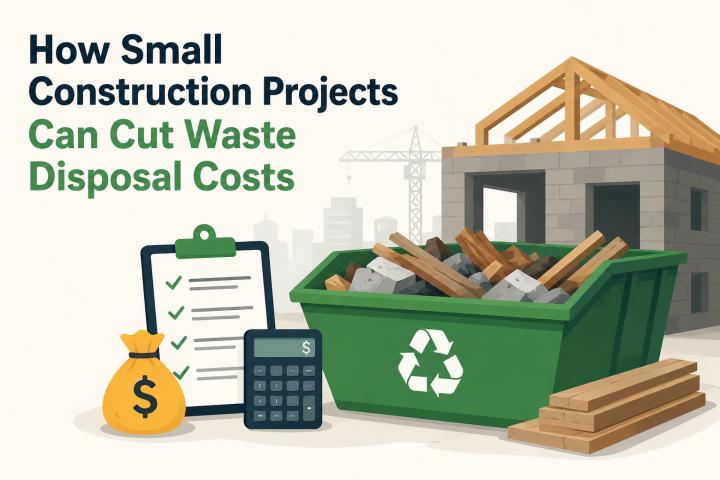
Small construction projects often seem straightforward. Whether it's a bathroom renovation, a backyard makeover, a garage conversion, or a small office fit-out, many property owners focus on materials, labor, and timelines.
However, one area that is frequently overlooked is waste management.
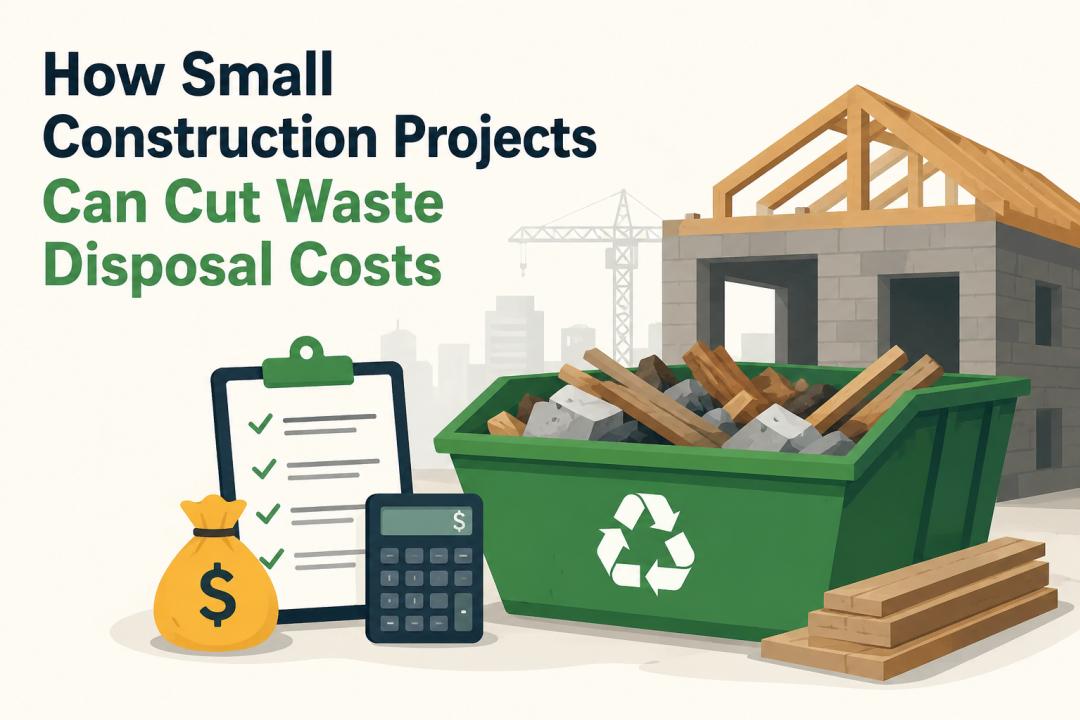
Construction waste can quickly accumulate, leading to unexpected disposal costs, project delays, and unnecessary environmental impact. The good news is that with proper planning and a few smart strategies, small construction projects can significantly reduce waste disposal expenses without compromising efficiency.
Why Waste Disposal Costs Add Up Quickly
Many people underestimate how much waste a small construction project can generate.
Materials such as timber, concrete, bricks, drywall, tiles, packaging, metal, and old fixtures often pile up faster than expected. Without a disposal plan, waste can become a costly problem.
Additional disposal costs commonly arise from:
-
Multiple trips to disposal facilities
-
Mixed waste that cannot be recycled
-
Hiring the wrong waste containers
-
Poor material planning
-
Project delays caused by cluttered work areas
Understanding these costs is the first step toward reducing them.
Plan Waste Management Before Construction Begins
One of the most effective ways to cut disposal costs is to create a waste management plan before work starts.
Many contractors and homeowners only think about waste once debris begins piling up. By then, options may be limited and costs may increase.
A simple plan should include:
-
Expected waste types
-
Estimated waste volume
-
Recycling opportunities
-
Disposal methods
-
Collection schedules
Planning ahead helps avoid last-minute decisions that often result in higher expenses.
Order Materials More Accurately
Over-ordering materials is a common issue in small construction projects.
While it may seem safer to buy extra materials, excessive surplus often becomes waste that must be disposed of later.
Accurate measurements and careful project planning can help reduce unnecessary purchases.
Benefits include:
-
Lower material costs
-
Reduced waste generation
-
Less storage space required
-
Lower disposal expenses
Even small improvements in material estimation can lead to noticeable savings.
Work Closely With Suppliers
Many suppliers can help calculate material quantities more accurately.
They may also offer return policies for unused materials, which can further reduce waste and project costs.
Separate Waste Streams
Mixing all waste into a single pile may seem convenient, but it often increases disposal costs.
Many disposal facilities charge differently based on waste type. Recyclable materials are often cheaper to process than mixed construction waste.
Separating materials such as:
-
Metal
-
Timber
-
Cardboard
-
Concrete
-
Bricks
can create opportunities for recycling and lower disposal fees.
Create Designated Waste Areas
Clearly labeled waste collection areas make it easier for workers to sort materials correctly.
This simple step can improve recycling rates and reduce contamination.
Reuse Materials Whenever Possible
Not every removed material needs to be discarded.
Many items from small construction projects can be reused on-site or repurposed for future projects.
Examples include:
-
Timber offcuts
-
Bricks
-
Pavers
-
Doors
-
Fixtures
-
Cabinets
Reusing materials reduces the amount of waste requiring disposal while lowering the need to purchase new materials.
Choose the Right Waste Container
Selecting an appropriately sized waste container is essential.
A container that is too small may require multiple collections. A container that is too large may result in paying for unused capacity.
Estimating waste volume before construction starts helps ensure the most cost-effective solution.
Many contractors find that arranging waste collection services before the project begins helps streamline operations and avoid unexpected disposal expenses.
Consider Project Scope Carefully
A bathroom renovation produces different waste volumes than a landscaping project or garage conversion.
Matching the waste solution to the project scope can improve efficiency and reduce costs.
Prioritize Recycling Opportunities
Construction and demolition waste contains many recyclable materials.
Recycling can divert significant amounts of waste from landfill while reducing disposal fees.
Common recyclable materials include:
-
Steel
-
Aluminum
-
Concrete
-
Cardboard
-
Untreated timber
Many local recycling facilities accept these materials separately, often at lower costs than general waste disposal.
Environmental Benefits
Recycling not only reduces costs but also conserves natural resources and reduces landfill demand.
Many clients increasingly appreciate environmentally responsible construction practices.
Keep Work Areas Organized
A cluttered site often leads to unnecessary waste.
Materials can become damaged, misplaced, or contaminated when workspaces are poorly managed.
Maintaining a clean and organized site helps:
-
Protect materials
-
Improve safety
-
Increase productivity
-
Reduce waste generation
Simple housekeeping practices can have a surprisingly large impact on project costs.
Schedule Waste Removal Efficiently
Waiting until waste becomes overwhelming can create inefficiencies.
Overflowing waste areas may slow down work and increase labor costs.
Instead, schedule waste removal at strategic stages throughout the project.
Benefits include:
-
Cleaner work areas
-
Improved productivity
-
Better safety conditions
-
More accurate waste tracking
Regular waste collection often proves more cost-effective than dealing with large accumulations later.
Train Workers on Waste Reduction
Even on small projects, everyone involved can contribute to reducing waste.
Workers who understand waste management goals are more likely to:
-
Use materials efficiently
-
Sort waste correctly
-
Protect reusable materials
-
Avoid unnecessary disposal
A brief discussion before construction begins can help establish clear expectations.
Encourage Accountability
Assigning responsibility for waste management can improve compliance and reduce avoidable waste.
Small changes in behavior often lead to significant cost savings over the course of a project.
Monitor Waste Throughout the Project
Tracking waste generation helps identify opportunities for improvement.
Project managers and homeowners should periodically review:
-
Waste volumes
-
Disposal costs
-
Recycling rates
-
Material usage
Monitoring allows adjustments to be made before costs escalate.
Over time, these insights can improve efficiency on future projects as well.
Work With Reliable Waste Management Providers
Choosing the right waste management partner can make a significant difference.
Reliable providers help ensure waste is collected efficiently, disposed of responsibly, and managed in compliance with local regulations.
For projects in Adelaide, many contractors and homeowners use local services such as Skippy Bin Adelaide to simplify waste collection and maintain cleaner work sites throughout the construction process.
Selecting a provider that understands construction waste can help avoid unnecessary costs and logistical challenges.
Common Mistakes That Increase Disposal Costs
Several mistakes repeatedly lead to higher waste expenses.
These include:
-
Failing to plan waste management
-
Mixing recyclable and non-recyclable materials
-
Over-ordering materials
-
Using incorrectly sized waste containers
-
Ignoring recycling opportunities
-
Delaying waste removal
-
Poor site organization
Avoiding these mistakes can deliver immediate cost savings.
Conclusion
Waste disposal is often treated as an afterthought in small construction projects, but it has a direct impact on project budgets and efficiency.
By planning ahead, ordering materials carefully, separating waste streams, recycling whenever possible, and maintaining organized work sites, property owners and contractors can significantly reduce disposal costs.
These strategies not only save money but also support more sustainable construction practices. As construction costs continue to rise, efficient waste management remains one of the simplest and most effective ways to improve project outcomes while minimizing environmental impact.