Cement is one of those industries that looks simple from the outside and turns out to be a dozen different supply chains stacked together. Manufacturing plants, ready-mix producers, aggregate suppliers, construction chemical companies, and distributors all move under the same broad label, but they buy completely different things from completely different people.
That's usually where cement outreach falls apart. A plant manager approving grinding equipment and a quarry manager sourcing limestone are both "in cement," but one cares about capital equipment uptime and the other cares about raw material logistics. A generic pitch aimed at both usually lands with neither.
Green cement adds a newer wrinkle. Carbon capture, alternative fuels, and low-carbon production have created sustainability directors and carbon strategy leads at companies that didn't have those roles a couple of years ago. A contact list that hasn't caught up to that shift is missing exactly the buyers most likely to be evaluating new technology right now.
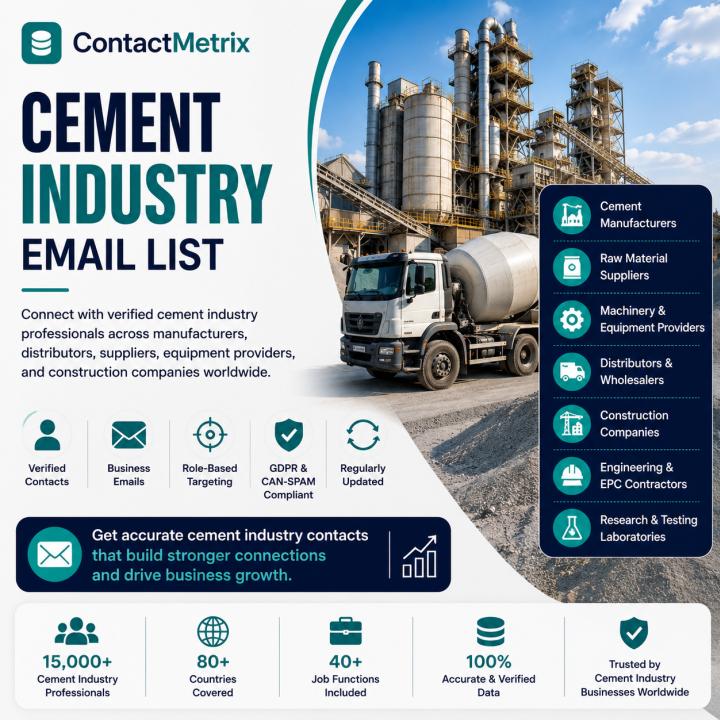
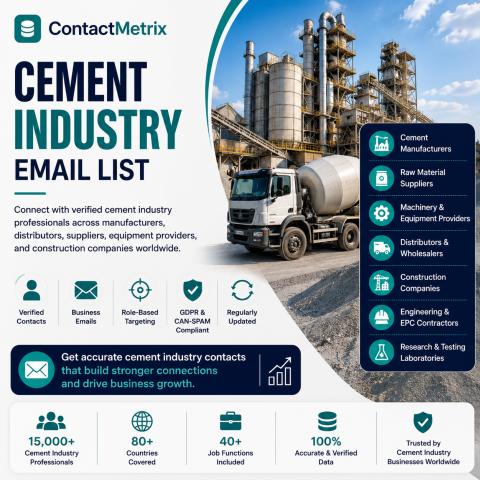
ContactMetrix's Cement Industry Email List is built around these distinctions, segmenting contacts by sub-sector (manufacturers, ready-mix producers, distributors, civil engineering, building materials, mining and aggregates, construction chemicals) and by role within each. That means a pitch for admixtures reaches an R&D director instead of a warehouse manager, and a pitch for bulk transport reaches a logistics head instead of a civil engineer who has no say in it.
Reach matters as much as targeting here too. Plant operations staff aren't always at a desk checking email, so having verified direct phone numbers and mailing addresses on the same record means cold calling and regional mail campaigns are actually possible instead of theoretical.
None of this replaces a strong offer, but it does put that offer in front of someone who can actually act on it. ContactMetrix backs the list with the same standard it applies across every industry: contacts sourced from directories, trade shows, and verified business records, refreshed every 30 to 45 days, and replaced at no cost if they bounce, so a plant manager who's moved on doesn't sit in your CRM for months pretending to be a live lead.