Why Traditional Maamoul Cookies Are Popular in the UAE

Walk into any home in the UAE during Eid, Ramadan, or even an ordinary Friday gathering, and there is a strong chance you will find a tray of maamoul sitting on the coffee table. These small, intricately shaped cookies — filled with dates, nuts, or fragrant spices — have been part of Middle Eastern culture for centuries. But their popularity in the UAE today goes well beyond habit or nostalgia. There is something deeply compelling about maamoul that keeps it relevant generation after generation, and understanding that appeal tells you a great deal about food culture in this part of the world.
This article explores why traditional maamoul cookies continue to hold such a powerful place in the hearts and homes of UAE residents — locals and expats alike.
A Cookie Rooted in Centuries of Culture
Maamoul is not a modern invention. Its origins trace back to ancient Egypt and the Levant, where similar date-filled pastries were made during festivals and religious celebrations. Over centuries, the recipe travelled across the Arab world, adapting slightly to local tastes and ingredients along the way, but always retaining its essential character — a crumbly, buttery shell wrapped around a rich, naturally sweet filling.
In the UAE specifically, maamoul became embedded in the culture through the practice of gifting and communal eating. Offering food to guests is one of the most fundamental expressions of Emirati hospitality, and maamoul, with its elegant appearance and generous flavour, became a natural centrepiece of that tradition. When a tray of maamoul appears, it communicates warmth, welcome, and care — without anyone needing to say a word.
The Role of Dates in Making Maamoul Irresistible
You cannot talk about maamoul in the UAE without talking about dates. The UAE has a deep cultural and agricultural relationship with the date palm — it is a national symbol, a staple food, and a product the country takes enormous pride in. Medjool and sukkari dates, in particular, are prized for their natural sweetness, soft texture, and rich flavour.
When quality dates are used as a filling for maamoul, the result is extraordinary. The natural sugar in the dates caramelises slightly during baking, the cardamom or rose water added to the filling creates a floral warmth, and the contrast between the dense filling and the crumbly shell produces a balance that is hard to achieve in most other cookies. It is a combination that feels both indulgent and grounded — satisfying without being excessive.
This is a big part of why maamoul cookies have maintained such loyal followings across generations. The flavour profile is genuinely distinctive, and when made with real, whole ingredients, maamoul sits in a category of its own.
Maamoul as a Celebration Food
In the UAE, maamoul is most closely associated with Eid al-Fitr and Eid al-Adha. Across Muslim communities, the days leading up to Eid are often spent baking maamoul at home — a practice that brings families together around a shared activity with deep meaning. Children press the dough into the carved wooden moulds. Grandmothers pass down the exact ratios of semolina to butter. The act of making maamoul is as meaningful as eating it.
During Ramadan, maamoul appears on iftar tables as a sweet to enjoy after breaking the fast, often alongside Arabic coffee or mint tea. Its moderate sweetness makes it ideal for this moment — rich enough to feel celebratory, but not so overwhelming that it becomes uncomfortable after a long day of fasting.
Beyond religious occasions, maamoul is gifted at weddings, presented to new neighbours, sent as corporate gifts, and served at business meetings where hosts want to make a good impression. It has a versatility in social contexts that few other foods match.
Why Expats in the UAE Have Fallen in Love With Maamoul
The UAE's population is one of the most diverse in the world, and maamoul's popularity has expanded well beyond Arab communities. Expats from South Asia, Southeast Asia, Europe, and elsewhere have discovered maamoul through colleagues, neighbours, and the gifting culture that permeates UAE life.
Many describe their first experience with maamoul as a genuine surprise — they did not expect a small, unassuming cookie to deliver that depth of flavour. Once that connection is made, maamoul tends to become a regular purchase or a sought-after gift to bring home to family abroad.
This cross-cultural appeal has also driven demand for premium versions of maamoul — cookies made with better ingredients, cleaner recipes, and more thoughtful presentation. It is exactly this space where brands committed to quality have been able to build meaningful followings.
The Shift Toward Healthier Traditional Snacks
One of the more interesting trends shaping UAE food culture right now is the growing appetite for snacks that are both traditional and health-conscious. Consumers are increasingly reading ingredient labels, reducing refined sugar, and looking for products that align with a more mindful life>
Maamoul fits naturally into this conversation. At its best, it is made from whole semolina, real butter or ghee, and naturally sweet date filling with no need for artificial preservatives or flavour enhancers. Compared to the average packaged biscuit, a well-made maamoul is actually a more wholesome option. It delivers real flavour from real ingredients, and its portion size is naturally moderate.
This is why the demand for healthy snacks in UAE that draw on traditional recipes has grown so steadily. People do not want to choose between eating well and eating something that means something to them culturally. The best food brands understand this, and they build their products around it.
What Maamouly by MK Snacks Gets Right
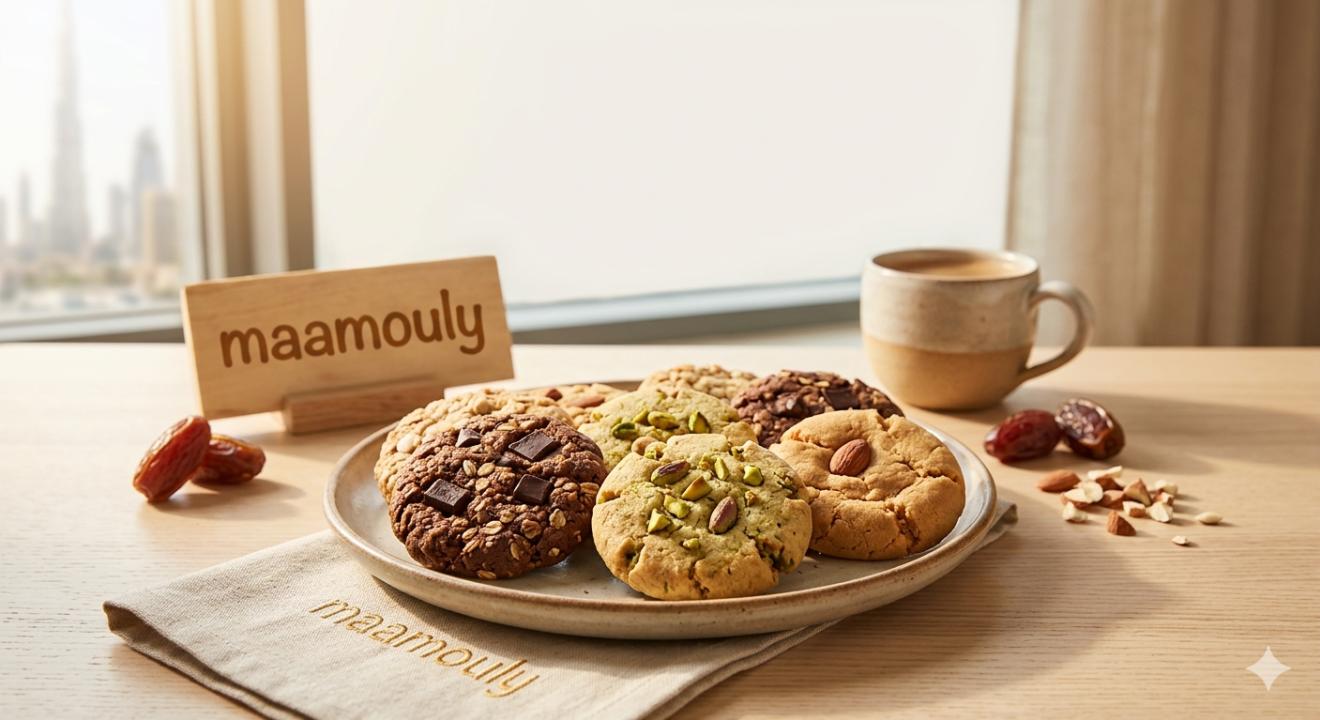
Among the brands bringing traditional maamoul into the modern UAE food market, Maamouly by MK Snacks has carved out a respected position by staying honest to what makes maamoul great. Their commitment to quality ingredients, authentic preparation methods, and genuine flavour reflects exactly what discerning consumers in the UAE are looking for.
Rather than chasing trends or reinventing the product beyond recognition, Maamouly focuses on doing the traditional thing exceptionally well. Their date-filled maamoul uses quality dates as the foundation, with spicing that complements rather than masks the natural flavour. The result is a cookie that tastes the way maamoul is supposed to taste — comforting, fragrant, and deeply satisfying.
For anyone exploring UAE food culture, or for long-time fans of maamoul who want a version they can trust, Maamouly by MK Snacks is worth discovering.
How Maamoul Is Being Rediscovered by a New Generation
Younger consumers in the UAE — both Emirati and expat — are showing renewed interest in traditional foods, driven partly by a broader global movement toward cultural heritage and authenticity in food. Social media has played a role here, with food content creators showcasing traditional recipes and the stories behind them to audiences hungry for something more meaningful than the latest food trend.
Maamoul photographs beautifully. The intricate geometric patterns pressed into the dough by traditional wooden moulds give each cookie a visual elegance that translates well on screen. This has made maamoul a natural fit for digital storytelling, and brands that lean into the cultural narrative around the product have seen strong engagement from younger audiences who appreciate knowing where their food comes from.
Final Thoughts
The enduring popularity of maamoul in the UAE is not an accident. It is the result of a food that genuinely earns its place — through flavour, cultural meaning, versatility, and a quality of experience that holds up over time. In a food market as competitive and dynamic as Dubai's, that kind of staying power says everything.