You hit the brakes in traffic, but your car doesn’t stop as quickly as expected. In many cases, worn tires, not the brakes, are the real problem.
While driving continuously on the highway, the driver unexpectedly hit the brakes during traffic, but the car took longer than expected to stop. Also, such feelings of uncertainty are quite alarming, especially during heavy traffic.
However, few drivers realize that worn tires' stopping distance and wheel alignment affect braking distance and wheel control.
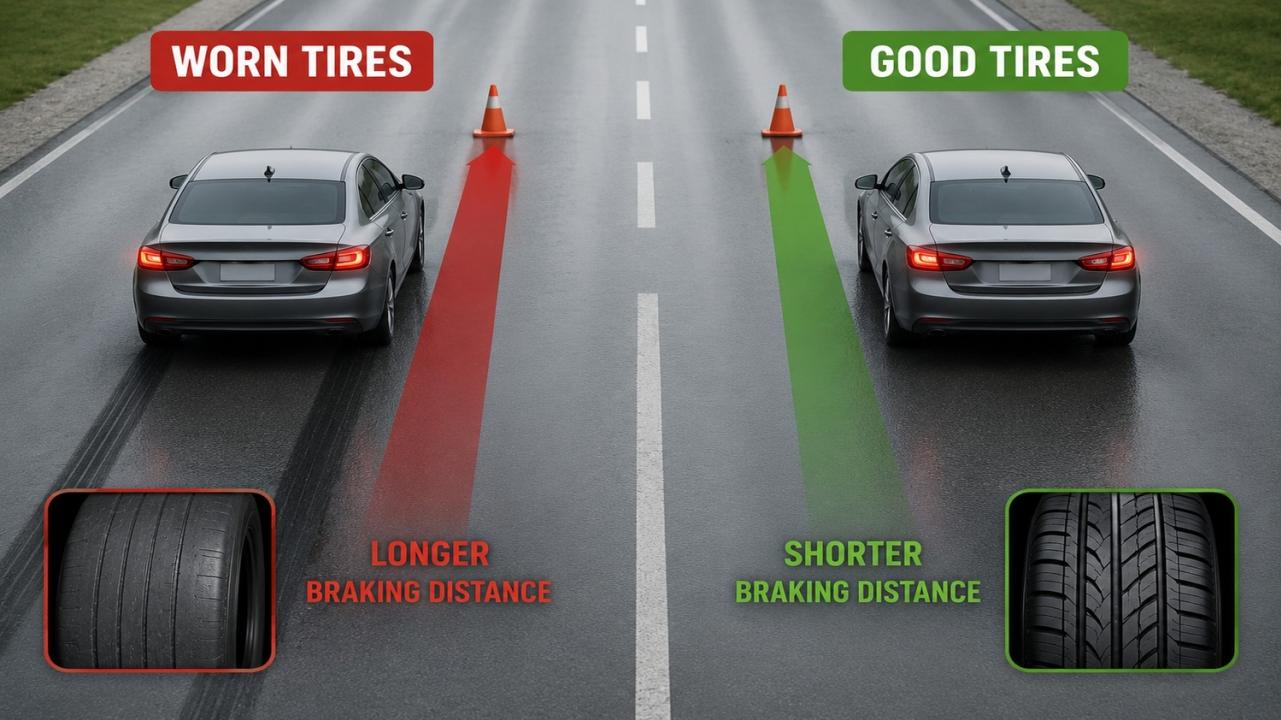
According to the report, worn tires can significantly increase braking distance, especially on slippery roads. They are a major cause of accidents.
That is why regular tire checks and maintenance are important for comfort, safety, and to avoid costly repairs. This blog provides key information about worn tires that adversely affect braking distance and control.
The Vital Role Of Tires In Your Car’s Braking System
When discussing car braking, drivers usually focus on brake pads, disks, and other things. However, tires also affect the complete braking process. It is impossible to maintain stable performance without the correct tread depth.
In a practical case, you might think the only task of tires is to allow you to change direction conveniently, but you should think again. When stopping the car, they work under tremendous pressure. The condition of the tire's rubber greatly influences the car's braking performance.
Worn Tires and Brake Distance Increase: Why and How?
It is crucial to understand how tire wear affects stopping distance. One of the most visible signs of this process is an increase in stopping distance. It often happens when weather conditions are not favorable.
Inability To Remove Water From Tread Pattern
Since the tire cannot grip the road surface well, it cannot effectively remove water from the tread patterns. As a result, a thin layer of water stays between the road and the car. It means the stopping distance will increase the risks.
Reduced Road Tread Grip
Tire tread patterns are meant to increase grip. Once the tires are worn, their tread depth decreases, negatively affecting performance. It significantly affects how worn tires affect stopping distances.
Delayed Reaction To Application Of Brakes
Once tires wear out, a delay occurs after applying the brakes. It can be a major cause of accidents, especially during emergencies.
Tire Tread Depth And Its Relation To Stopping Distance
When talking about tires and stopping distance, tread depth becomes crucial. On average, new car tires have a tread depth of 8 to 9 mm, and frequent tire rotation is required to achieve the required performance. As soon as tires start wearing out, their performance begins to decline.
Why This Process Is Important?
The deeper tread, the better performance.
Tires will grip the road surface more easily, reducing the risk of slipping.
Greater tread depth means better braking performance.
A connection between stopping distance and tread depth should be considered. Tests show that worn tires can increase stopping distance by 25–30% on wet roads, often adding 2–3 car lengths. Thus, they greatly increase risks. The minimum tread depth for safety measures is set at 1.6 mm. Some professional specialists claim that tires should be replaced earlier than that.
Braking Distance and Bald Tires
When discussing tire wear and stopping distance, it is important to consider a specific type of worn-out tire: bald tires. These tires have no tread left.
Loss Of Tire Tread Performance
Without a tread pattern, tires cannot grip the road surface and stop the car in time. It means that the stopping distance will increase.
Increased Risks Of Hydroplaning
Hydroplaning caused by worn tires can become fatal. Due to the lack of tread, any water can compromise the car's stability.
Stability Problems
Bald tires influence the steering control and overall driving safety.
Emergency Braking Distance and Tire Wear
Emergencies on the road occur randomly. In emergencies, reaction time becomes critical.
Slower Braking
In this emergency case, your braking distance will increase, and the car may skid. All because the tires cannot grip the road properly.
Loss Of Driver Control
You will feel it immediately; the car becomes less stable, especially during sudden braking or turns.
Poor Tire Handling During Sudden Turns
In such scenarios, the tires cannot provide adequate grip. This factor means that the car cannot handle sudden turns properly.
The Importance Of Wheel Alignment: Effect On Braking and Wear
Tires may suffer from improper alignment in addition to wear issues.
What Things Occur?
When car wheels are poorly aligned, tires wear unevenly. It causes reduced braking distance and other performance problems.
Several symptoms of alignment issues.
Uneven tread wear.
Pulling the car to the side.
Not centered steering wheel.
Proper wheel alignment will prolong the tire life, improve handling performance, and increase safety.
Steps And Tips To Check Tire Wear
There are many ways to assess the current state of your tires. Some people and drivers prefer consulting specialists, while others prefer inspecting the tires themselves.
Simple Tips To Follow:
Look for signs of cracking, wear, damage, and other things.
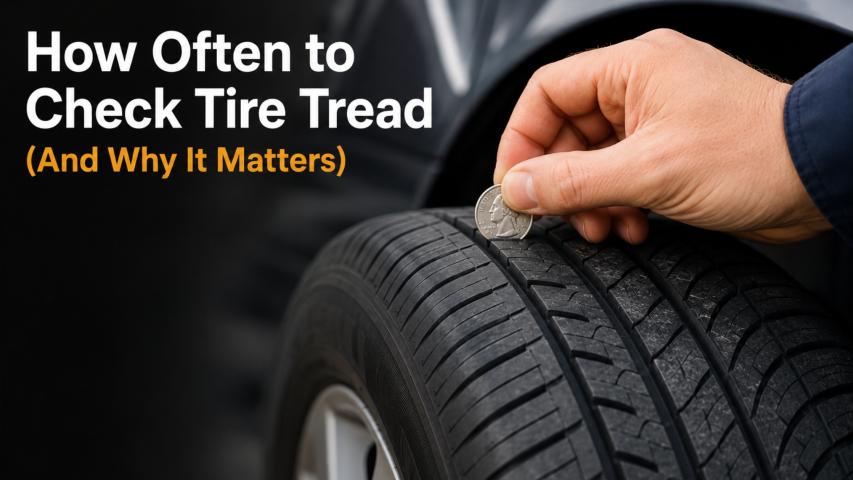
Check tread depth using special tools and methods.
Identify any irregularities in the tire tread pattern.
Regular tire checks will save you from trouble.
Practical Example Associated with the Stopping Distance Problem Caused By Worn Tires
Let us imagine you are driving a car during rainy weather. You observe heavy traffic. Suddenly, another car slows down sharply. You immediately press the brakes. If the tires are in proper shape and you manage to stop in time, you prevent an accident. But if tires were poorly maintained, they failed to perform their braking tasks. This situation led to a crash.
Driving Safety In Cases Of Worn Tires
Driving a car with worn tires becomes increasingly hazardous for several reasons.
Risks Of Getting Into An Accident
Without a sufficient tread path, it is harder for tires to grip the road surface. Thus, the stopping distance will increase. In addition, they increase the chances of road accidents.
Increased Fuel Consumption
As mentioned before, worn tires negatively influence road grip. Their wear negatively affects rolling resistance.
Costly Vehicle Repairs
Improper tire maintenance may lead to suspension misalignment. Thus, regular tire care and maintenance are essential.
Avoiding Tire Wear And Ensuring Safety
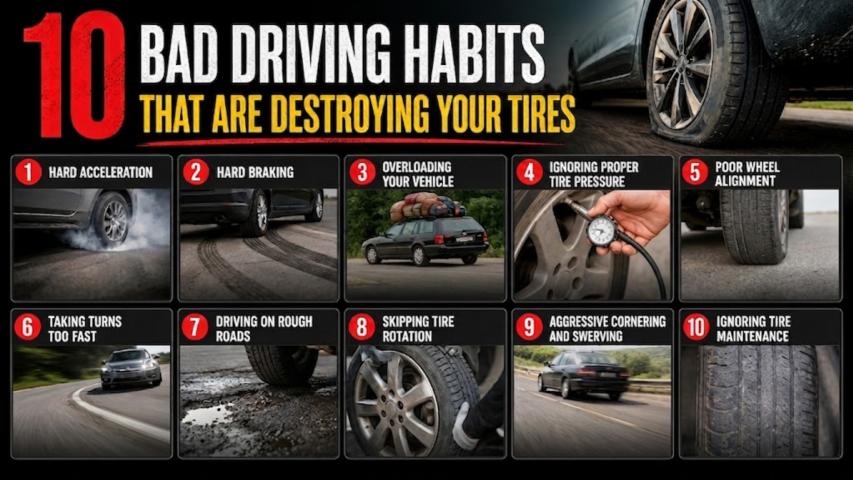
It is not true that tire wear depends solely on the number of miles driven. How you drive and whether you take good care of your car greatly influence it.
Regular tire maintenance is an effective way to make them last longer while maintaining efficient braking performance. Proper tire pressure, tread depth, and wheel balance should be considered.
A correctly aligned wheel set is important. Misaligned wheels result in uneven tire wear, reducing the traction and thus the distance required to stop the car safely.
It is necessary to rotate your tires regularly. If you have searched for tire rotation near me, it's necessary for equalizing tire wear.
When Do You Need New Tires For Improved Stopping Distance?
Tire replacement is unavoidable. However, drivers rarely know when to replace tires. Multiple common signs to look for include:
Frequent loss of traction.
Insufficient tread depth.
Signs of wear and cracking.
Replace tires regularly to avoid problems with braking distance and performance.
Importance Of Tire Maintenance
Apart from frequent replacement and rotation, tires need regular maintenance to stay in top condition. Different maintenance methods to use include:
Alignment checking.
Wheel balancing.
Checking tire pressure.
Periodic rotations.
Looking for tire rotation near me.
These techniques will guarantee increased braking distance and performance.
Get Safety During Driving By Following a Proper Tire Maintenance Routine
Although worn tires might appear to be no big deal, they affect your car’s stopping distance and general movement greatly. Increased stopping distance, traction loss, and even accidents are among the results of not taking tire maintenance seriously enough.
Make sure that your tires are inspected and aligned regularly, and consider replacing them when needed. Should you have any doubts about your tires’ condition, you can visit reliable tire shops in Lubdock, TX, for a checkup and necessary consultation.
Safe driving goes hand in hand with safe vehicle maintenance, and the importance of proper tire care is evident. Your tire needs more attention than it generally receives.