As seniors age, mobility challenges can make everyday activities more difficult and increase the risk of falls and injuries. Tasks such as moving from a bed to a wheelchair, standing up from a chair, or using the bathroom may require assistance from family caregivers or healthcare professionals. For many households, patient lifts have become essential tools for improving safety, comfort, and independence during home caregiving.
Modern patient lifts help reduce physical strain on caregivers while providing seniors with safer and more stable transfers. In 2026, advancements in home healthcare equipment have made patient lift systems more practical, user-friendly, and accessible for families managing long-term elderly care at home.
Understanding the benefits, different lift types, and proper safety practices can help caregivers make informed decisions when choosing the right transfer solution.
Why Patient Lifts Are Important for Seniors
Mobility limitations can develop due to aging, surgery recovery, arthritis, neurological conditions, stroke rehabilitation, or chronic illnesses. As movement becomes more difficult, the risk of falls and caregiver injuries increases significantly.
Patient lifts are designed to:
- Improve transfer safety
- Reduce physical strain on caregivers
- Prevent falls and accidents
- Support patient comfort and dignity
- Encourage safer daily mobility routines
Many families also combine patient lifts with other mobility aids to create a safer homecare environment for elderly loved ones.
Benefits of Patient Lifts for Seniors
Patient lifts provide both physical and emotional benefits for seniors and caregivers alike.
Reduced Fall Risks
Falls are one of the leading causes of injury among older adults. Patient lifts help stabilize movement during transfers, reducing the chances of slipping or losing balance.
Safe transfers are especially important for seniors with:
- Weak muscle strength
- Balance disorders
- Parkinson’s disease
- Arthritis
- Post-surgical limitations
Less Physical Strain for Caregivers
Manual lifting can cause back pain, shoulder injuries, and long-term physical strain for caregivers. Patient lifts reduce the need for heavy lifting, making caregiving safer and more manageable.
Electric lift systems are particularly useful for families providing daily assistance at home.
Improved Comfort and Dignity
Many seniors feel anxious or uncomfortable during manual transfers. Patient lifts provide smoother movement and better positioning, helping patients feel more secure and respected during care routines.
Better Independence and Mobility Support
Some lift systems, especially sit-to-stand models, encourage seniors to participate in transfers whenever possible. This can help maintain remaining strength and mobility while supporting rehabilitation efforts.
Main Types of Patient Lifts for Seniors
Different patient lift systems are designed for different levels of mobility and caregiving needs. Understanding these options can help families choose the safest solution.
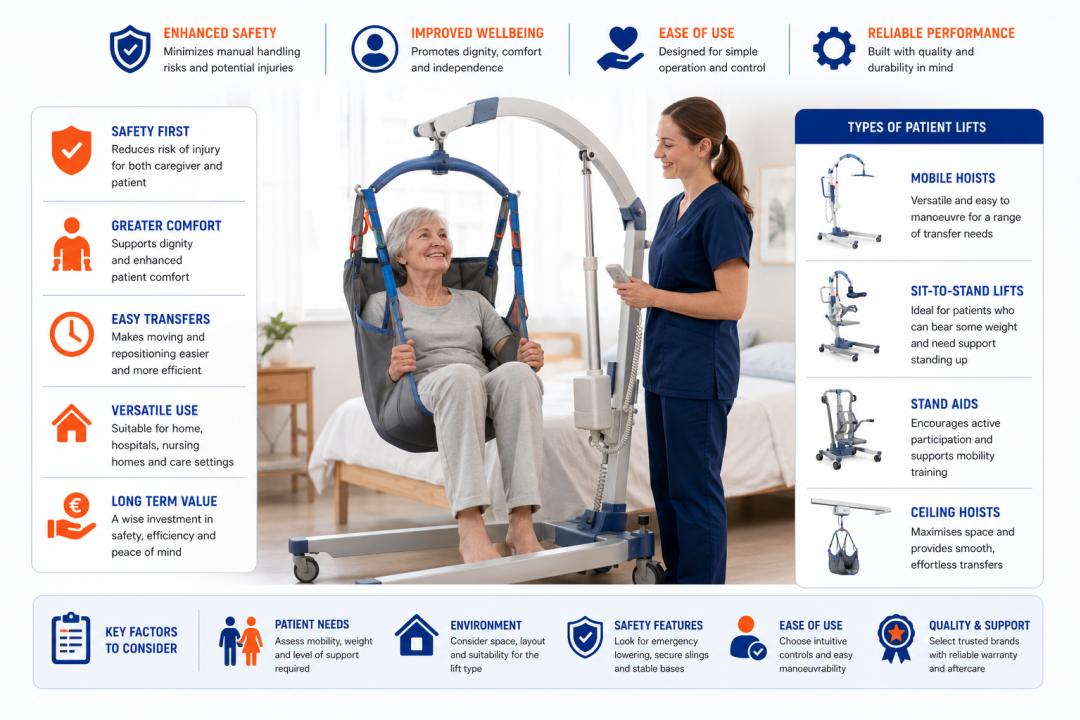
Full-Body Floor Lifts
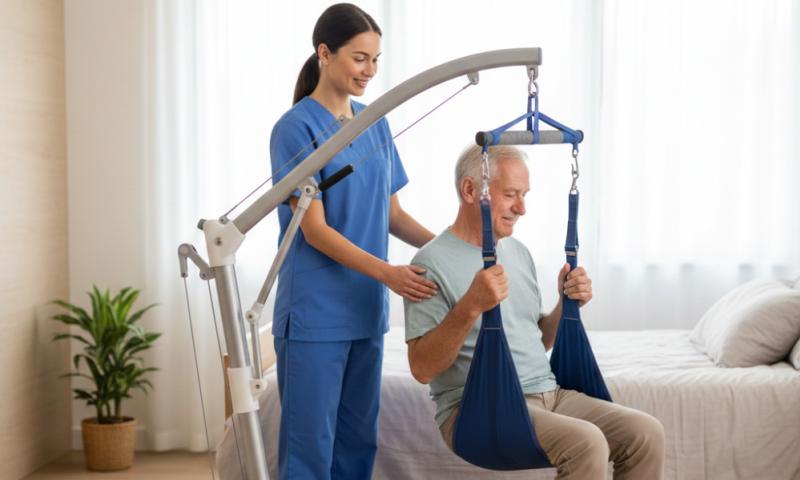
Full-body floor lifts are among the most common homecare transfer systems. These lifts use a sling to fully support the patient during transfers between beds, wheelchairs, and other locations.
Best for:
- Seniors with limited mobility
- Non-weight-bearing patients
- Long-term care situations
- Full transfer assistance
Floor lifts are available in manual hydraulic and electric-powered models.
Sit-to-Stand Patient Lifts
Sit-to-stand lifts assist seniors who still have partial strength and can bear some weight while standing.
These lifts are ideal for:
- Bathroom transfers
- Chair assistance
- Rehabilitation support
- Seniors with moderate mobility limitations
Sit-to-stand systems promote greater participation from the patient while reducing caregiver effort.
Ceiling-Mounted Patient Lifts
Ceiling lifts use overhead track systems to transfer patients smoothly between locations.
Benefits include:
- Reduced floor clutter
- Easier movement in small spaces
- Less physical effort for caregivers
- Smooth and controlled transfers
Ceiling lifts are often recommended for long-term home healthcare environments where transfers occur frequently.
Portable Patient Lifts
Portable lifts are lightweight systems designed for temporary care, travel, or multi-location caregiving situations. These lifts provide flexibility for families who require occasional transfer assistance outside the home.
Choosing the Right Patient Lift
Selecting the best patient lift depends on several important factors.
Patient Mobility Level
Understanding how much support the senior requires is essential. Some patients need full-body support, while others only require standing assistance.
Home Layout
Room size, doorway width, and bathroom accessibility can affect which lift system works best in a home environment.
Weight Capacity
Always choose a patient lift that safely supports the patient’s body weight. Bariatric lift options are available when needed.
Ease of Use
Simple controls, smooth movement, and easy sling attachment systems can make daily caregiving routines more efficient.
Frequency of Transfers
Families performing multiple daily transfers may benefit more from electric-powered lift systems.
Essential Safety Tips for Using Patient Lifts
Proper lift usage is critical for preventing accidents and injuries.
Caregivers should always:
- Inspect slings and straps regularly
- Follow manufacturer instructions carefully
- Lock wheelchair brakes before transfers
- Ensure the patient is positioned securely
- Never exceed the lift’s weight limit
- Use compatible slings only
- Keep transfer areas clear of obstacles
If possible, caregivers should also receive professional training before using advanced lift systems at home.
Long-Term Advantages of Patient Lifts
Patient lifts not only improve daily safety but also help families maintain long-term caregiving at home. These systems reduce caregiver fatigue, improve efficiency, and support safer aging in place for seniors who prefer remaining in familiar surroundings.
By reducing transfer-related risks, patient lifts can help prevent hospital visits and improve overall quality of life for both patients and caregivers.
Conclusion
Patient lifts have become an essential part of modern elderly home healthcare. From reducing fall risks to improving caregiver safety and patient comfort, these systems provide practical support for families managing mobility challenges at home. Whether choosing a floor lift, sit-to-stand model, or ceiling-mounted system, selecting the right equipment can significantly improve daily caregiving routines.
As more families invest in safer homecare solutions and reliable mobility aids, patient lifts continue to play a vital role in supporting senior independence and long-term care. For dependable healthcare equipment and trusted caregiving support solutions, many families continue turning to medguard healthcare.
Original article : https://zaggocare.org/patient-lifts-help-family-caregivers/