In today’s fast-paced digital era, businesses must adapt quickly to remain
competitive. Digital transformation is no longer optional—it is essential for
survival and growth. One of the most powerful drivers of this transformation is
Enterprise Mobility Solutions.
These solutions enable organizations to empower their workforce with mobile
technologies, streamline operations, improve customer experiences, and enhance
overall productivity.
Enterprise mobility goes beyond simply providing
employees with smartphones or tablets. It involves integrating mobile
applications, cloud services, data security, and enterprise systems into a
unified digital ecosystem. By adopting enterprise mobility solutions, companies
can ensure seamless communication, real-time access to business data, and flexible
work environments.
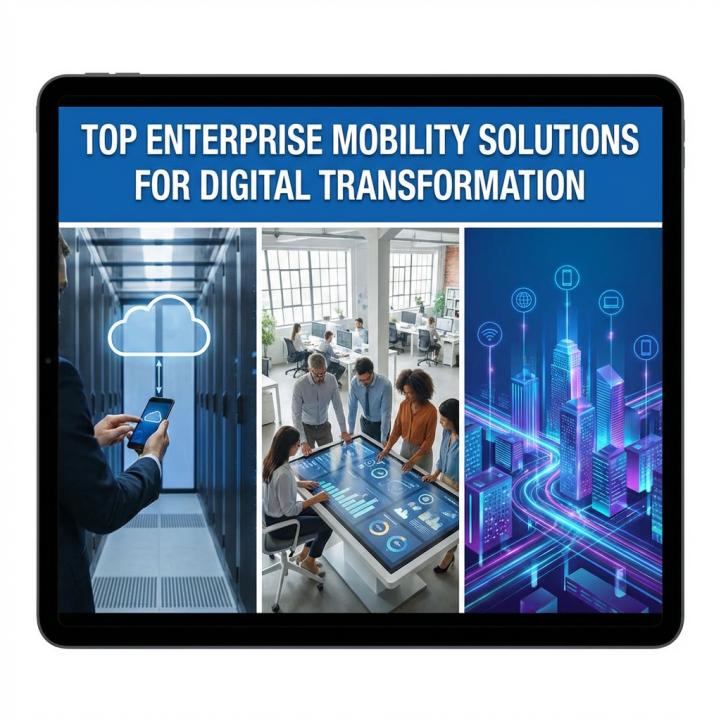
This blog explores the top enterprise mobility solutions for digital transformation, their benefits, key features, industry applications, and how businesses can successfully implement them.
Understanding Enterprise Mobility Solutions
Enterprise mobility solutions refer to a
combination of mobile technologies, applications, and services designed to
support business operations and workforce productivity. These solutions connect
employees, customers, and systems through secure mobile platforms.
Core components of enterprise mobility
include:
·
Mobile application development
·
Device and application management
·
Cloud integration
·
Data security and compliance
·
Analytics and reporting tools
Together, these elements create a digital workplace where employees can work efficiently from anywhere, at any time.
Why Enterprise Mobility is Crucial for Digital Transformation
Digital transformation focuses on improving
business processes using technology. Enterprise mobility plays a key role by
enabling:
1. Increased Workforce Productivity
Employees can access business tools and data
on the go, allowing them to respond faster to tasks, customers, and operational
challenges.
2. Enhanced Customer Experience
Mobile solutions allow businesses to provide
personalized, real-time services, improving engagement and satisfaction.
3. Operational Efficiency
Automation of workflows through mobile apps
reduces paperwork, eliminates delays, and minimizes errors.
4. Better Decision Making
With real-time analytics and dashboards,
managers can make informed decisions quickly.
5. Improved Collaboration
Mobile platforms support communication tools such as chat, video calls, and file sharing, improving teamwork across departments and locations.
Top Enterprise Mobility Solutions for Digital Transformation
1. Mobile Application Development Platforms
Custom enterprise mobile apps are the
foundation of mobility solutions. These applications are designed to meet
specific business needs such as inventory management, HR systems, sales
tracking, and customer support.
Key features include:
·
Cross-platform compatibility (iOS, Android, web)
·
Integration with enterprise systems like ERP and
CRM
·
User-friendly interfaces
·
Offline access and synchronization
·
Scalability for future growth
Custom mobile apps help organizations digitize internal processes and provide employees with efficient tools for daily tasks.
2. Enterprise Mobility Management (EMM)
Enterprise Mobility Management solutions help
organizations manage and secure mobile devices, applications, and data.
Core functions of EMM include:
·
Device management and monitoring
·
Application control and updates
·
Security policy enforcement
·
Remote data wipe and access control
·
Compliance reporting
EMM ensures that corporate data remains secure even when employees use personal devices (BYOD). It also simplifies IT administration and reduces security risks.
3. Cloud-Based Mobility Solutions
Cloud integration is a key part of enterprise
mobility. Cloud-based platforms allow businesses to store and access data
securely from any device.
Benefits of cloud-based mobility:
·
Real-time data synchronization
·
Reduced infrastructure costs
·
Improved scalability
·
High availability and reliability
·
Secure data backups
Cloud mobility enables seamless collaboration across departments and locations, supporting remote and hybrid work environments.
4. Internet of Things (IoT) Mobility Solutions
IoT-powered mobility solutions connect
devices, sensors, and systems to provide real-time insights and automation.
Applications include:
·
Asset tracking and monitoring
·
Predictive maintenance
·
Smart logistics and supply chain management
·
Healthcare patient monitoring
·
Smart manufacturing operations
IoT mobility enhances operational efficiency and enables businesses to make data-driven decisions based on real-time information.
5. Unified Communication and Collaboration Tools
Communication is the backbone of enterprise
operations. Mobility solutions that integrate communication tools help teams
stay connected.
Key features include:
·
Video conferencing
·
Instant messaging
·
File sharing
·
Virtual workspaces
·
Integration with business apps
These tools improve collaboration, reduce response time, and support remote work strategies.
6. Mobile Security and Data Protection Solutions
Security is one of the most critical aspects
of enterprise mobility. With increased mobile usage, organizations must protect
sensitive data from cyber threats.
Security solutions include:
·
Encryption of data
·
Multi-factor authentication
·
Secure VPN access
·
Threat detection and prevention
·
Compliance with regulations
Strong mobile security ensures safe access to business systems while protecting customer and organizational data.
7. Analytics and Business Intelligence (BI) Mobility Solutions
Analytics-driven mobility solutions provide
insights into business performance through mobile dashboards and reports.
Benefits include:
·
Real-time performance tracking
·
Predictive analytics
·
Customer behavior analysis
·
Sales and marketing insights
·
Operational trend monitoring
Mobile BI empowers executives and managers to make data-driven decisions anytime and anywhere.
Industry Applications of Enterprise Mobility Solutions
Healthcare
Enterprise mobility enables doctors and nurses
to access patient records securely, schedule appointments, and monitor patient
health remotely. It improves patient care, reduces paperwork, and enhances
efficiency.
Retail
Retailers use mobility solutions for inventory
management, customer engagement, mobile payments, and personalized promotions.
Manufacturing
Mobile solutions support quality control,
predictive maintenance, and workforce management on factory floors.
Finance
Banks and financial institutions use
enterprise mobility for secure transactions, customer support apps, and
compliance monitoring.
Logistics and Transportation
Mobility solutions enable route optimization, shipment tracking, and real-time communication between drivers and control centers.
Benefits of Enterprise Mobility Solutions for Businesses
Improved Operational Efficiency
Automation and mobile workflows reduce manual
processes and save time.
Higher Employee Engagement
Mobile tools empower employees and increase
job satisfaction.
Cost Reduction
Cloud-based solutions and automation reduce
infrastructure and operational costs.
Business Agility
Organizations can quickly adapt to market
changes and customer needs.
Competitive Advantage
Companies that embrace mobility gain an edge over competitors through innovation and faster service delivery.
Challenges in Implementing Enterprise Mobility Solutions
Despite the benefits, organizations may face
challenges such as:
·
Security and data privacy concerns
·
Integration with legacy systems
·
High initial investment
·
Employee training and adoption
·
Managing multiple devices and platforms
Addressing these challenges requires proper planning, technology selection, and expert support.
Best Practices for Successful Enterprise Mobility Implementation
1. Define Clear Objectives
Identify business goals such as productivity
improvement, cost reduction, or customer engagement.
2. Choose the Right Technology Stack
Select platforms that integrate easily with
existing systems and support future scalability.
3. Focus on Security
Implement strong security measures including
encryption and authentication.
4. User-Centric Design
Ensure mobile applications are easy to use and
meet employee needs.
5. Continuous Monitoring and Improvement
Track performance and update solutions regularly to stay competitive.
Future Trends in Enterprise Mobility
The future of enterprise mobility will be
shaped by emerging technologies such as:
·
Artificial Intelligence (AI) for automation and
analytics
·
5G connectivity for faster data transmission
·
Augmented Reality (AR) for training and support
·
Blockchain for secure transactions
·
Edge computing for real-time processing
These trends will further enhance digital transformation and create new opportunities for businesses.
How Enterprise Mobility Drives Digital Transformation Strategy
Enterprise mobility supports digital transformation
by:
·
Modernizing business processes
·
Improving customer interaction
·
Enhancing employee productivity
·
Enabling data-driven decision making
·
Supporting remote and hybrid work models
It acts as a bridge between traditional business operations and modern digital ecosystems.
Choosing the Right Enterprise Mobility Partner
To implement effective enterprise mobility
solutions, businesses should partner with experienced technology providers who
offer:
·
End-to-end mobility services
·
Custom application development
·
Security and compliance expertise
·
Cloud and IoT integration
·
Ongoing support and maintenance
A reliable partner ensures smooth implementation and long-term success.
Conclusion
Enterprise mobility solutions have become a
cornerstone of digital transformation. By enabling mobile access to business
systems, improving collaboration, and enhancing customer experiences, these
solutions empower organizations to operate more efficiently and competitively.
From mobile app development and cloud
integration to IoT and analytics, enterprise mobility offers a comprehensive
approach to modernizing business operations. While challenges exist, careful
planning, security measures, and the right technology partner can help
organizations achieve successful digital transformation.
As businesses continue to evolve in the digital age, adopting top enterprise mobility solutions is no longer just an option—it is a strategic necessity. Organizations that embrace mobility today will be better prepared for the future of work, innovation, and growth.