
Enterprise networks are becoming increasingly complex as organizations expand their digital operations, adopt cloud technologies, and support remote work environments. Managing these large-scale infrastructures manually can create operational inefficiencies, configuration inconsistencies, and increased downtime risks. As a result, automation has become a critical component of modern enterprise networking strategies.
Businesses today require networks that are scalable, secure, reliable, and capable of adapting quickly to changing operational demands. The increasing demand for modern network solutions has raised the value of professionals with expertise in automation-focused networking technologies. Certifications such as CCNP Enterprise Infrastructure help networking professionals understand how automation integrates with modern enterprise environments.
Automation in enterprise networking enables organizations to simplify network management, improve operational consistency, reduce human error, and accelerate service deployment. Understanding the role of automation is essential for businesses seeking operational efficiency and for professionals aiming to strengthen their networking expertise.
Understanding Network Automation
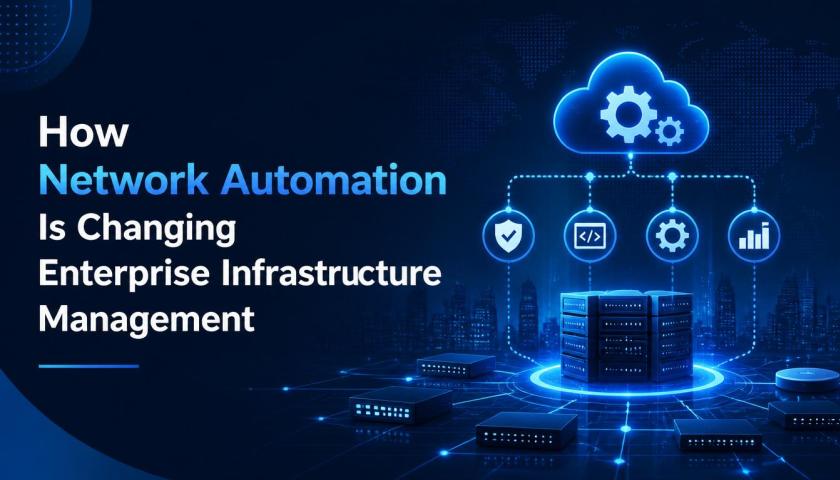
Network Automation refers to the use of software, scripts, and programmable tools to automate network configuration, deployment, monitoring, and management tasks.
Traditional network management often relies on manual configuration processes that consume time and increase the possibility of errors. Automation replaces repetitive administrative tasks with programmable workflows that improve consistency and efficiency.
Modern enterprise environments use automation to manage:
Device configurations
Network provisioning
Policy deployment
Security updates
Traffic management
Performance monitoring
Troubleshooting processes
Automation helps enterprises maintain stable network operations while supporting rapid infrastructure growth.
Why Automation Is Important in Enterprise Networking
Enterprise networks now support cloud applications, remote users, data centers, IoT devices, and distributed branch offices. Managing these environments manually becomes increasingly difficult as infrastructure complexity grows.
Reduced Human Errors
Manual configurations can result in inconsistent settings and operational issues. Automation helps standardize processes and reduce configuration mistakes.
Faster Network Deployment
Automation helps organizations implement new services and network configurations faster while minimizing the need for manual effort.
Improved Operational Efficiency
Automated processes reduce administrative workloads and allow IT teams to focus on strategic initiatives.
Enhanced Network Consistency
Standardized automated configurations improve reliability across enterprise environments.
Better Scalability
Automation enables organizations to manage growing infrastructures more efficiently without significantly increasing operational overhead.
Key Technologies Used in Network Automation
Several technologies support automation within enterprise networking environments.
Programmability in Modern Networks
Network programmability enables engineers to manage infrastructure through software-based methods instead of relying solely on command-line interfaces.
Application Programming Interfaces
APIs allow different systems and applications to communicate and exchange information automatically.
APIs help automate:
Configuration management
Monitoring tasks
Device provisioning
Policy updates
Software-Defined Networking
Software-Defined Networking divides the control plane and data plane to support centralized network administration and simplified management.
Benefits of SDN include:
Simplified network administration
Faster service deployment
Centralized visibility
Improved automation capabilities
Controller-Based Architectures
Controller-based networking platforms simplify infrastructure management through centralized automation and policy enforcement.
Scripting and Automation Tools
Scripting languages and automation tools play an important role in modern enterprise networking.
Python for Network Automation
Python is widely used for network automation because of its simplicity and flexibility.
Network engineers use Python for:
Device configuration
Network testing
Data collection
Automated troubleshooting
Log analysis
Configuration Management Tools
Configuration management tools help automate large-scale infrastructure deployments and policy management.
Common automation frameworks support:
Centralized configuration control
Template-based deployments
Automated updates
Compliance validation
Infrastructure as Code
Infrastructure as Code allows network configurations to be treated like software code.
Benefits include:
Version control
Faster deployment
Improved consistency
Simplified rollback procedures
Automation in Enterprise Network Operations
Automation impacts several operational areas within enterprise environments.
Automated Provisioning
Automated provisioning enables organizations to deploy devices and services more quickly.
Zero-Touch Provisioning
Zero-touch provisioning allows devices to configure themselves automatically after deployment.
This reduces:
Manual setup time
Deployment complexity
Human intervention
Policy-Based Configuration
Policy-based automation ensures consistent configurations across enterprise networks.
Automated Monitoring and Visibility
Continuous monitoring is essential for maintaining network performance and reliability.
Real-Time Network Analytics
Automation platforms collect and analyze performance data continuously.
Proactive Issue Detection
Automated monitoring tools can identify abnormal behavior before major disruptions occur.
Telemetry and Data Collection
Telemetry technologies provide real-time operational insights that help improve troubleshooting and optimization processes.
Automation and Network Security
Cybersecurity has become a major priority for enterprise organizations.
Automated Threat Detection
Automation tools can identify suspicious activities and respond to threats faster than manual processes.
Security Policy Enforcement
Automated security policies help maintain consistent protection across distributed environments.
Access Control Automation
Access control systems automate authentication and authorization processes for users and devices.
Security Compliance
Automation helps organizations maintain compliance with internal policies and regulatory requirements.
Role of Automation in Cloud Networking
Cloud computing continues to influence enterprise networking strategies.
Hybrid Cloud Management
Automation simplifies connectivity and resource management across hybrid environments.
Multi-Cloud Integration
Organizations using multiple cloud providers rely on automation for consistent policy management and orchestration.
Cloud-Based Network Management
Cloud-managed networking platforms simplify infrastructure administration through centralized dashboards and automation tools.
SD-WAN and Automation
SD-WAN technologies rely heavily on automation to optimize traffic management and application performance.
Dynamic Path Selection
Automation enables SD-WAN systems to select optimal traffic paths automatically.
Centralized Policy Management
Administrators can apply policies across multiple branch locations from a centralized platform.
Improved Application Performance
Automated traffic optimization improves user experience for cloud-based applications.
Artificial Intelligence and Intelligent Automation
Artificial intelligence is increasingly integrated into enterprise networking platforms.
AI-Driven Analytics
AI-powered systems analyze network data to identify trends and operational anomalies.
Predictive Maintenance
Predictive analytics help organizations address potential issues before failures occur.
Automated Troubleshooting
Intelligent automation platforms can identify root causes and recommend corrective actions.
Self-Healing Networks
Some modern enterprise infrastructures can automatically recover from certain operational issues without manual intervention.
Challenges of Network Automation
Although automation offers many benefits, organizations may face challenges during implementation.
Skill Gaps
Automation requires networking professionals to understand scripting, programmability, and software-based tools.
Integration Complexity
Integrating automation platforms with legacy infrastructure can be challenging.
Security Considerations
Improperly configured automation systems may introduce operational or security risks.
Change Management
Organizations must establish governance and testing procedures to manage automated changes effectively.
Best Practices for Implementing Network Automation
Successful automation strategies require careful planning and structured implementation.
Start with Repetitive Tasks
Organizations should begin automating routine operational processes before expanding automation initiatives.
Use Standardized Templates
Templates improve consistency and reduce configuration variability.
Implement Version Control
Version control systems help track configuration changes and improve rollback capabilities.
Monitor Automated Processes
Continuous monitoring ensures automation workflows operate correctly and securely.
Future of Automation in Enterprise Networking
Automation will continue shaping the future of enterprise infrastructure.
Future trends may include:
Intent-based networking
AI-driven orchestration
Advanced predictive analytics
Fully autonomous network operations
Increased cloud-native automation
Organizations investing in automation technologies can improve operational agility while reducing long-term management complexity.
Career Opportunities in Network Automation
Automation skills are becoming increasingly valuable within the networking industry.
Professionals experienced in automation technologies may pursue roles such as:
Network Automation Engineer
Enterprise Network Engineer
Infrastructure Architect
Cloud Network Specialist
DevNet Engineer
SD-WAN Specialist
As enterprise infrastructures evolve, demand for automation-focused networking professionals is expected to grow.
Conclusion
Automation plays a vital role in modern enterprise networking by improving operational efficiency, reducing manual errors, simplifying management, and enhancing scalability. From software-defined networking and cloud integration to AI-driven analytics and automated security enforcement, automation technologies continue transforming enterprise infrastructure operations.
Organizations that adopt automation can improve network reliability, accelerate deployments, and support evolving business requirements more effectively. At the same time, networking professionals who develop automation expertise can strengthen their career opportunities within the rapidly evolving IT industry.
Professionals looking to expand their enterprise networking knowledge often pursue advanced certifications and structured CCNP Enterprise Infrastructure Training programs to gain practical experience with automation technologies, programmable networks, and modern enterprise infrastructure solutions.