Introduction to Modern Enterprise Networking
The rapid evolution of digital technologies has significantly changed how organizations design, deploy, and manage their IT infrastructures. Enterprises today rely on highly scalable, software-driven, and cloud-integrated networks to support business operations across multiple locations and platforms.
In this evolving landscape, CCNP Enterprise Infrastructure plays an important role in validating the skills required to manage modern enterprise networks, especially as automation becomes a core component of infrastructure management.
Understanding Network Automation in Enterprise Environments
What Is Network Automation?
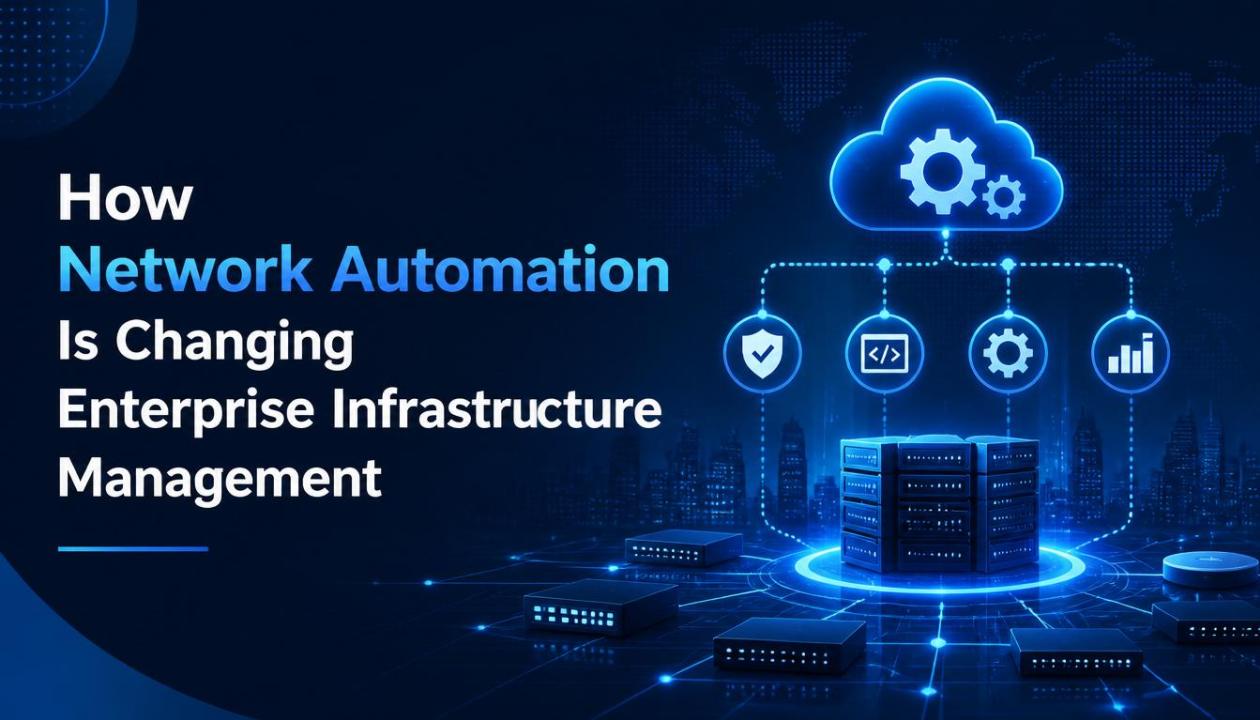
Network automation refers to the use of software tools, scripts, and programmable interfaces to manage, configure, monitor, and optimize network devices and services with minimal human intervention.
Instead of manually configuring each device, organizations use automation to:
Deploy network configurations consistently
Monitor performance in real time
Detect and resolve issues faster
Reduce manual operational tasks
Why Automation Is Becoming Essential
Enterprise networks are becoming more complex due to cloud adoption, hybrid work models, and distributed infrastructure. Manual management is no longer efficient or scalable.
Key reasons for automation adoption include:
Increasing network size and complexity
Need for faster deployment cycles
Demand for higher operational efficiency
Reduction of human configuration errors
Requirement for consistent policy enforcement
Role of Network Automation in Enterprise Infrastructure Management
Improving Operational Efficiency
Automation primarily helps improve operational efficiency.
Automation helps organizations:
Reduce repetitive manual tasks
Speed up configuration processes
Minimize human errors
Improve workflow consistency
This allows IT teams to focus on strategic initiatives instead of routine operations.
Enhancing Network Consistency
Consistency is critical in enterprise environments where multiple devices and locations must follow standardized configurations.
Automation ensures:
Uniform configuration across devices
Standardized security policies
Consistent routing and switching behavior
Reduced configuration drift
This leads to more stable and predictable network performance.
Core Technologies Driving Network Automation
Infrastructure as Code (IaC)
Infrastructure as Code is a key concept in modern network automation. It involves managing network infrastructure using code rather than manual configuration.
Benefits include:
Version control of configurations
Faster deployment cycles
Easier rollback of changes
Improved scalability
IaC helps organizations manage large-scale networks efficiently.
APIs and Programmability
Application Programming Interfaces (APIs) allow network devices to communicate with automation tools and platforms.
Key advantages include:
Seamless integration between systems
Automated configuration updates
Real-time monitoring and control
Simplified network management
APIs are essential for building automated enterprise networks.
Scripting and Automation Tools
Common scripting languages like Python are widely used in network automation.
These tools help professionals:
Automate repetitive tasks
Collect and analyze network data
Execute bulk configuration changes
Improve troubleshooting processes
Automation tools simplify complex network operations.
Benefits of Network Automation for Enterprises
Faster Deployment and Scalability
Automation enables rapid deployment of network services across multiple locations.
Organizations benefit from:
Quick onboarding of new devices
Faster rollout of services
Easy scalability for growing networks
Reduced deployment time
This is especially important for businesses experiencing rapid growth.
Improved Network Reliability
Automation reduces the risk of human error, which is a major cause of network failures.
It ensures:
Accurate configurations
Consistent system behavior
Reduced downtime
Faster issue resolution
Reliable networks improve overall business continuity.
Cost Optimization
By reducing manual effort and improving efficiency, automation helps organizations lower operational costs.
Cost-saving benefits include:
Reduced labor requirements
Fewer configuration errors
Optimized resource utilization
Lower maintenance overhead
This makes automation a cost-effective strategy for enterprises.
How Network Automation Affects Enterprise Infrastructure
Transformation of Traditional Network Operations
Traditional network management relied heavily on manual configuration and troubleshooting. Automation is transforming this approach into a more intelligent and proactive system.
Key changes include:
Shift from manual to automated workflows
Increased use of centralized management systems
Real-time monitoring and analytics
Automated incident response
This transformation improves overall network agility.
Integration with Cloud and Hybrid Environments
Modern enterprise networks often operate across hybrid environments that include both on-premises and cloud infrastructure.
Automation helps by:
Managing multi-cloud connectivity
Synchronizing configurations across environments
Enabling centralized control
Improving visibility across networks
This ensures seamless hybrid infrastructure management.
Skills Required for Network Automation Professionals
Programming and Scripting Knowledge
Professionals working in automated environments must understand scripting languages such as:
Python for automation workflows
JSON and YAML for data formatting
REST APIs for integration tasks
These skills are essential for modern network management.
Understanding of Networking Fundamentals
Strong foundational knowledge is still required, including:
Routing and switching concepts
Network design principles
Protocol behavior (OSPF, BGP, etc.)
Security fundamentals
Automation enhances these skills but does not replace them.
Familiarity with Automation Platforms
Professionals should have knowledge of tools such as:
Network management platforms
Configuration automation tools
Monitoring and analytics systems
Cloud orchestration tools
These platforms help streamline enterprise operations.
Network Automation and Security Enhancement
Strengthening Security Through Automation
Automation plays a key role in improving network security.
It helps organizations:
Enforce consistent security policies
Detect anomalies faster
Reduce configuration vulnerabilities
Automate patch management
This enhances overall security posture.
Supporting Zero Trust Architecture
Modern enterprises are adopting Zero Trust models that require continuous verification and strict access control.
Automation supports this by:
Enforcing identity-based policies
Monitoring user behavior continuously
Automating access control updates
Reducing manual security gaps
This makes networks more secure and resilient.
Role of CCNP Enterprise Infrastructure in Automation Skills
Building Foundational Automation Knowledge
Certifications like CCNP Enterprise Infrastructure help professionals develop foundational skills required for automation and modern networking.
They focus on:
Enterprise network design
Routing and switching technologies
Infrastructure management principles
Introduction to automation concepts
This prepares professionals for advanced network roles.
Bridging Traditional Networking and Automation
CCNP-level knowledge helps professionals transition from traditional networking to automated environments.
It enables them to:
Understand network programmability
Work with APIs and automation tools
Manage hybrid infrastructures
Improve operational efficiency
This makes the certification highly relevant in modern IT environments.
Career Opportunities in Network Automation
Growing Demand for Skilled Professionals
Organizations are actively seeking professionals who understand both networking and automation.
Industries hiring include:
Information Technology services
Cloud computing companies
Telecommunications
Financial services
Healthcare organizations
Job Roles in Network Automation
Common roles include:
Network Automation Engineer
Infrastructure Engineer
DevNet Specialist
Cloud Network Engineer
Systems Architect
These roles offer strong career growth opportunities.
Future of Network Automation in Enterprise Networking
AI-Driven Network Management
Artificial intelligence is expected to further transform network automation by enabling predictive analytics and self-healing networks.
Future capabilities include:
Predictive fault detection
Automated network optimization
Intelligent traffic management
AI-based security enforcement
Increased Adoption of Fully Automated Networks
Enterprises are gradually moving toward fully automated network environments where minimal human intervention is required.
Trends include:
End-to-end automation of network operations
Centralized orchestration platforms
Real-time adaptive networks
Autonomous infrastructure systems
Conclusion
Network automation is fundamentally transforming how enterprise infrastructure is managed by improving efficiency, reliability, scalability, and security. Organizations are increasingly adopting automated solutions to manage complex and distributed network environments effectively.
Professionals with knowledge aligned to CCNP Enterprise Infrastructure are well-positioned to understand and contribute to this transformation, as automation continues to play a central role in modern enterprise networking strategies.