
Introduction: The Growing Importance of Enterprise AI
Artificial Intelligence has rapidly become a cornerstone of digital transformation for modern organizations. Enterprises across industries are investing heavily in AI technologies to improve efficiency, automate complex processes, and generate valuable insights from data. From predictive analytics in finance to intelligent automation in manufacturing and personalized customer experiences in retail, AI has the potential to reshape how businesses operate and compete.
However, despite the enthusiasm and increasing investments, many organizations struggle to successfully implement AI at scale. While proof-of-concept projects often demonstrate promising results, turning those experiments into enterprise-wide solutions remains difficult. This gap between experimentation and full-scale deployment highlights a set of obstacles known as enterprise AI adoption challenges. These challenges are not only technical but also organizational, strategic, and cultural in nature. Understanding these barriers is essential for enterprises aiming to move beyond pilot projects and unlock the true value of AI-driven transformation.
Understanding What Enterprise AI Adoption Really Means
Enterprise AI adoption refers to the integration of artificial intelligence technologies into large-scale business operations and decision-making systems. Unlike small startup environments where AI can be implemented quickly, enterprises operate within complex ecosystems consisting of legacy infrastructure, multiple departments, regulatory requirements, and vast volumes of data.
When enterprises adopt AI, they aim to embed intelligent systems across different business functions. This could involve automating supply chain decisions, enhancing customer support with conversational AI, improving fraud detection systems, or optimizing operational processes through predictive analytics. However, deploying AI across such large organizational structures requires careful planning, infrastructure readiness, and strong governance.
Because enterprise environments are highly interconnected and often built on legacy technologies, AI implementation becomes more complex. These complexities contribute significantly to the enterprise AI adoption challenges that many organizations face when attempting to scale AI solutions.
The Rising Demand for AI in Enterprises
The growing interest in AI adoption is driven by the increasing need for businesses to remain competitive in a data-driven economy. Enterprises are dealing with massive volumes of data generated from digital platforms, customer interactions, connected devices, and internal systems. AI technologies provide the ability to process this data quickly and extract meaningful insights that can drive strategic decisions.
Organizations are also under pressure to improve operational efficiency and deliver better customer experiences. AI-powered automation can reduce manual workloads and streamline repetitive tasks, allowing employees to focus on higher-value activities. At the same time, machine learning models enable businesses to predict customer behavior, optimize supply chains, and reduce operational risks.
While the benefits of AI adoption are clear, enterprises often encounter numerous barriers when transitioning from traditional systems to AI-powered operations. These obstacles form the foundation of the most common enterprise AI adoption challenges experienced across industries.
Data Fragmentation and Quality Issues
One of the most significant challenges in enterprise AI adoption is the lack of accessible and high-quality data. AI systems depend heavily on large datasets to train models and generate accurate predictions. However, many organizations struggle with fragmented data environments where information is stored across multiple platforms, departments, and databases.
In large enterprises, data often exists in silos created by independent systems or organizational structures. Marketing teams, finance departments, supply chain units, and customer service platforms may all maintain separate datasets that are not easily integrated. When data remains disconnected, AI models cannot access the full context required to produce meaningful insights.
Additionally, poor data quality can further limit AI effectiveness. Inconsistent formatting, incomplete records, and outdated datasets can lead to inaccurate model outputs. As a result, enterprises must invest in data management strategies such as centralized data platforms, data governance frameworks, and real-time integration pipelines to overcome this major enterprise AI adoption challenge.
Legacy Infrastructure and Integration Barriers
Another critical barrier to AI adoption in enterprises is the presence of legacy IT infrastructure. Many organizations still rely on outdated systems that were designed decades ago and are not capable of supporting modern AI workloads. These systems often lack the computational power, scalability, and flexibility required to deploy machine learning models effectively.
Legacy infrastructure also creates integration challenges when enterprises attempt to connect AI tools with existing business applications. Integrating AI systems with enterprise resource planning (ERP), customer relationship management (CRM), or supply chain platforms can require significant engineering effort.
The modernization of IT infrastructure is therefore a key step toward overcoming enterprise AI adoption challenges. Enterprises are increasingly migrating workloads to cloud-based environments that offer scalable computing resources and advanced AI development platforms. Cloud infrastructure allows organizations to experiment with AI models, deploy them efficiently, and scale them across multiple business functions.
Talent Shortages and Skills Gap
Successful AI implementation requires specialized expertise in fields such as machine learning, data science, and AI engineering. However, the demand for skilled professionals in these areas far exceeds the available talent pool. As a result, many enterprises struggle to build internal teams capable of designing, deploying, and maintaining AI systems.
The shortage of AI talent represents a major enterprise AI adoption challenge, especially for organizations that are just beginning their AI transformation journey. Without experienced professionals, enterprises may find it difficult to select the right technologies, develop reliable models, or manage the lifecycle of AI applications.
To address this issue, many organizations are investing in employee training programs that help existing staff develop AI-related skills. Others choose to collaborate with specialized AI development partners who provide expertise and support throughout the implementation process. Combining internal knowledge with external expertise can accelerate AI adoption and reduce the risks associated with talent shortages.
Uncertain Return on Investment for AI Projects
One of the most common concerns among enterprise leaders is the uncertainty surrounding the return on investment for AI initiatives. Unlike traditional software projects, AI implementations often involve experimentation, iterative model training, and ongoing optimization. This makes it difficult for organizations to predict the exact financial outcomes of AI investments.
Executives may hesitate to allocate large budgets to AI projects if the expected benefits are unclear. This hesitation often slows down AI adoption or limits the scale of deployments. Without clear performance metrics and business objectives, AI initiatives may fail to gain long-term executive support.
Addressing this enterprise AI adoption challenge requires organizations to focus on high-impact use cases where AI can deliver measurable value. Examples include reducing fraud losses, improving supply chain forecasting accuracy, or automating customer service operations. Demonstrating tangible results from early projects helps build confidence in AI investments and encourages further adoption.
Governance, Ethics, and Regulatory Compliance
As AI systems become more influential in business decision-making, concerns related to ethics, transparency, and regulatory compliance have become increasingly important. AI models may inadvertently introduce biases, produce inaccurate predictions, or operate in ways that are difficult for humans to interpret.
Enterprises must ensure that AI systems are transparent, fair, and aligned with regulatory requirements. This includes protecting sensitive data, maintaining audit trails for AI decisions, and ensuring that models do not discriminate against specific groups.
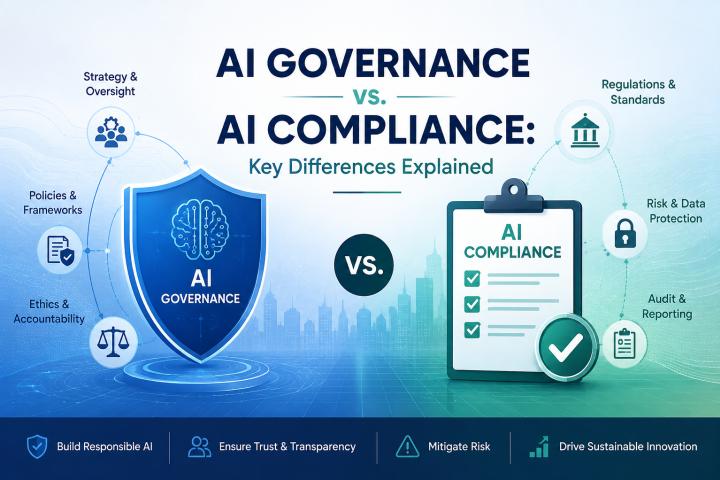
Establishing strong governance frameworks is essential to overcoming this enterprise AI adoption challenge. Organizations are beginning to adopt responsible AI principles that emphasize fairness, accountability, and transparency in AI development. Implementing regular model audits and monitoring systems helps maintain trust in AI technologies and reduces potential risks.
Organizational Resistance to Technological Change
Technological transformation often triggers resistance within organizations, particularly when employees fear that automation could replace their roles. AI adoption may require changes in workflows, new tools, and different skill sets, which can create uncertainty among staff members.
This cultural resistance can slow down AI implementation and limit collaboration between technical teams and business units. Employees who are unfamiliar with AI technologies may hesitate to adopt new systems or rely on automated decision-making tools.
Overcoming this enterprise AI adoption challenge requires strong leadership and effective change management strategies. Organizations must communicate the benefits of AI clearly and emphasize that AI is intended to augment human capabilities rather than replace them. Providing training programs and involving employees in AI initiatives can help build confidence and encourage adoption.
Difficulty Scaling AI Beyond Pilot Projects
Many enterprises successfully develop AI prototypes or pilot projects that demonstrate the potential of machine learning technologies. However, moving from experimental models to production-level systems is often far more complex. Scaling AI requires reliable infrastructure, automated deployment pipelines, and continuous monitoring of model performance.
Without proper operational frameworks, AI models may degrade over time as data patterns change. Enterprises must therefore implement systems that allow models to be retrained and updated regularly. This operational discipline is commonly referred to as MLOps, which combines machine learning development with modern software engineering practices.
Adopting MLOps strategies helps enterprises manage the full lifecycle of AI models and overcome one of the most persistent enterprise AI adoption challenges—the transition from experimentation to enterprise-scale deployment.
Building a Strategic Roadmap for Successful AI Adoption
To navigate the complexities of AI implementation, enterprises must develop a clear and structured adoption strategy. This strategy should begin with identifying business problems that AI can solve effectively. Instead of deploying AI for experimentation alone, organizations should prioritize initiatives that align with core business objectives.
A successful AI roadmap also includes investments in data infrastructure, cloud computing resources, and workforce development. Cross-functional collaboration between IT teams, data scientists, and business leaders ensures that AI solutions address real operational needs.
By focusing on long-term strategy rather than short-term experimentation, enterprises can gradually overcome enterprise AI adoption challenges and establish a sustainable AI ecosystem within their organizations.
The Future of Enterprise AI Adoption
As AI technologies continue to evolve, the barriers to adoption are gradually decreasing. Advances in cloud computing, pre-trained models, and AI development platforms are making it easier for enterprises to deploy intelligent systems. At the same time, the rise of generative AI and autonomous agents is expanding the range of applications available to businesses.
In the coming years, enterprises that successfully overcome AI adoption challenges will be able to unlock significant competitive advantages. AI-driven organizations will operate with greater efficiency, make faster decisions, and deliver highly personalized experiences to customers.
The enterprises that invest today in building strong AI foundations—through data readiness, governance frameworks, and skilled teams—will be best positioned to lead the next phase of digital transformation.
Conclusion
AI has the potential to revolutionize how enterprises operate, innovate, and compete in the modern economy. However, the journey toward large-scale AI implementation is not without obstacles. From data fragmentation and legacy systems to talent shortages and governance concerns, organizations must navigate several enterprise AI adoption challenges before achieving successful deployment.
Overcoming these challenges requires a comprehensive strategy that combines technology modernization, workforce development, and strong leadership commitment. Enterprises that approach AI adoption with a clear roadmap and a focus on measurable outcomes will be able to move beyond pilot projects and fully integrate AI into their business operations.
As the adoption of artificial intelligence continues to accelerate, organizations that address these challenges effectively will gain a powerful advantage in an increasingly intelligent and automated business landscape.