Energy consumption inside data centers has become difficult to ignore lately. Not just because of operating costs, although those are rising too. It is also because modern infrastructure keeps expanding faster than many facilities originally anticipated. More cloud demand, more AI processing, more storage requirements. The growth sounds exciting from a technology perspective but behind the scenes power consumption has quietly become one of the industry's biggest operational concerns.
That’s why discussions on how to reduce energy use in data centers are getting much more practical than theoretical now.
Most facilities already understand efficiency matters. The harder question is where meaningful reductions actually happen without sacrificing uptime or performance.
Why Data Centers Consume More Energy Than Expected
Cooling systems often use enormous power
Servers generate significant heat continuously. Once workloads increase, cooling demands rise almost immediately alongside them.
Cooling infrastructure can sometimes use almost as much energy as the computing systems themselves. At scale, small inefficiencies add up quickly.
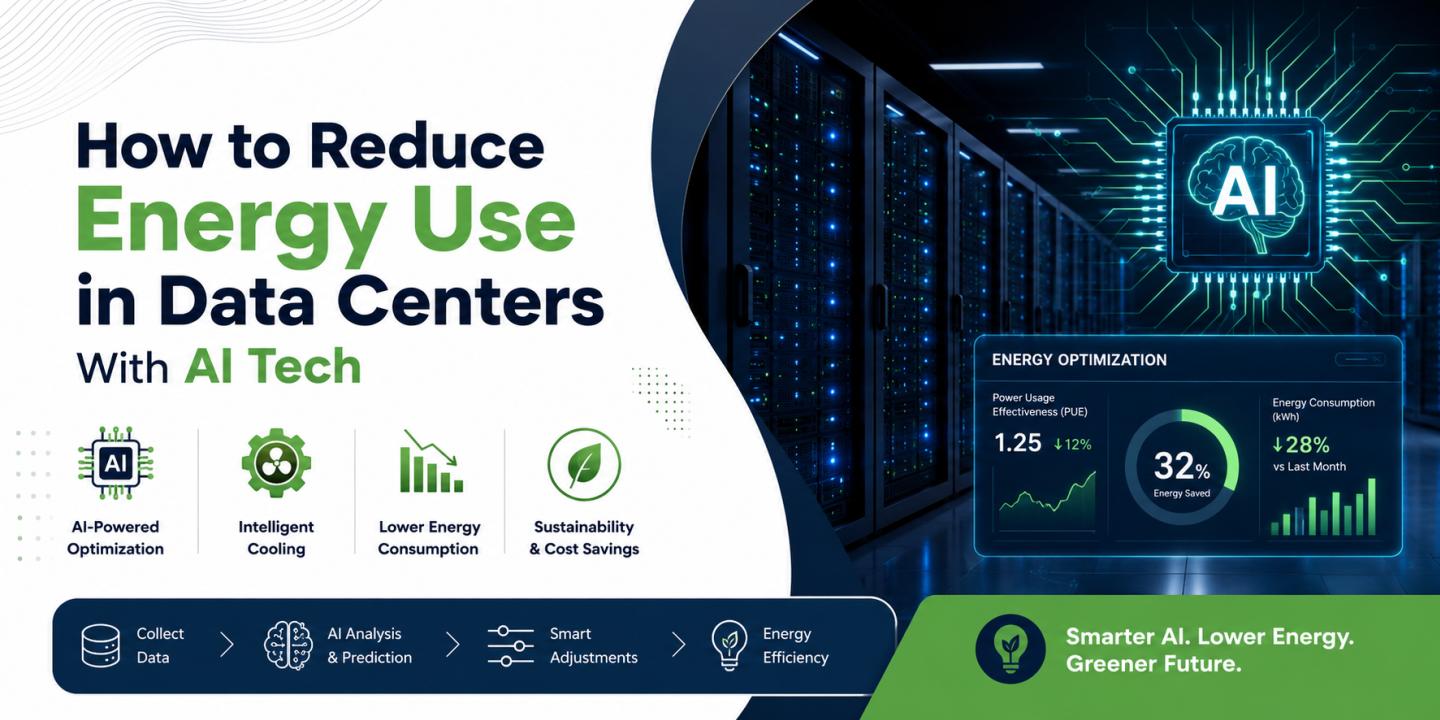
That’s where AI-based optimization has begun to shift the conversation about how to reduce energy use in data centers in a more realistic direction.
Workloads fluctuate constantly
One challenge many facilities face is unpredictability.
Traffic spikes, storage demand changes, and processing loads shift throughout the day. Traditional systems usually respond with fixed operating patterns instead of adapting dynamically.
That approach often wastes energy unnecessarily during lower-demand periods.
How AI Helps Improve Cooling Efficiency
Predictive adjustments reduce unnecessary strain
A real time view of temperature changes, airflow patterns and server activity is available through AI systems.
The system predicts cooling demand rises and adjusts proactively, avoiding waiting for overheating risks. That little change improves efficiency more than many facilities initially expect.
Why predictive cooling matters
Older cooling setups tend to operate aggressively all the time as a safety precaution.
AI-driven systems reduce that constant overcompensation by making smarter adjustments based on actual environmental conditions instead of static assumptions.
Airflow management becomes more precise
Some equipment receives too much cooling and other areas are undercooled. AI systems detect those imbalances much more quickly than manual monitoring can normally do.
Over time, the optimized airflow reduces energy waste and equipment stress.
The broader concept of data center infrastructure addresses how computing, cooling, networking and power systems work together operationally. You can take a look here: https://en.wikipedia.org/wiki/Data_center
Understanding that interconnected structure helps explain why efficiency improvements rarely come from only one area alone.
Why Automation Is Becoming Essential for Energy Reduction
Manual monitoring no longer scales efficiently
Modern facilities process huge amounts of operational data every second.
Of course human teams still matter, but as infrastructure grows it becomes increasingly difficult to trust manual oversight completely. Automation systems can help identify inefficiencies much faster.
The convergence of AI optimization with broader oil & gas automation technology trends is an indication of how industrial sectors are addressing operational efficiency problems with intelligent automation.
Real-time decision making reduces waste
Automated systems can react instantly to energy demand changes.
That speed matters because delays in cooling adjustments or workload balancing often lead to unnecessary energy consumption across entire facilities.
AI improves workload distribution
Not all servers need to be running at full capacity at the same time.
It can also intelligently reallocate workloads and alleviate the burden on overworked systems, and it can lower power load during periods of lower demand.
That balancing process helps stabilize overall efficiency.
How Robotics and Smart Manufacturing Influence Data Center Operations
Industrial automation trends are crossing industries
Interestingly, some efficiency ideas originally improved inside manufacturing environments are now influencing data center operations too.
Some ideas for improving efficiency in the manufacturing environment interesting. But not exclusive to that environment are now being applied to data center operations.
The same principles are often applied to technologies related to food & beverage factory robots or automated production monitoring: predictive maintenance, efficiency optimization, and real-time operational adjustments.
The industries are quite different, but the automation logic overlaps many times in a surprising way.
Predictive maintenance reduces equipment inefficiency
Equipment rarely fails without warning signs.
AI systems monitor performance patterns and identify potential issues before breakdowns occur. Preventing overheating, airflow restrictions, or component failures early helps reduce both downtime and unnecessary energy use.
That preventive approach usually improves operational stability overall.
Why Machine Tending Solutions Relate to AI Efficiency
Operational consistency matters
One reason automation improves efficiency is consistency.
Systems connected through advanced machine tending solutions can maintain optimized operational patterns more reliably than manual adjustments alone. AI removes much of the guesswork involved in repetitive monitoring tasks.
Small efficiency gains become significant at scale
This is something people outside the industry sometimes underestimate.
A tiny efficiency improvement inside one server rack may seem insignificant. Across an entire data center operating continuously, however, those savings become substantial over time.
That scaling effect is what makes AI optimization so valuable operationally.
Frequently Asked Questions
Why is oil & gas automation technology relevant to data centers?
Many principles behind oil & gas automation technology involve predictive monitoring and efficiency optimization, which are increasingly applied inside data center environments too.
How do machine tending solutions support efficiency?
Advanced machine tending solutions help maintain operational consistency, automate repetitive processes, and improve energy management across connected systems.
Conclusion
Data centers are being squeezed to pack in more workloads without letting energy consumption run amok. That challenge continues to grow as well with AI processing and cloud infrastructure and digital demand all continuing to grow at rapid rates.
This is why conversations on how to reduce energy use in data centers have become more operational and strategic than ever. AI-enabled monitoring, predictive automation and smarter infrastructure management are no longer nice-to-have upgrades. In many facilities, they are fast becoming part of the groundwork for long-term efficiency and sustainability itself.