The online grocery sector is witnessing an unprecedented rate of growth due to the shift in customer demands, which have become more convenient and faster. In today's time, every entrepreneur around the globe is establishing their businesses in the field of grocery delivery. Thanks to mobile applications, artificial intelligence, automation, and logistics management, it has never been easier to establish a business in the grocery delivery field.
Customers in today's world are looking for immediate delivery, personalized services, varied payment options, and an effective ordering system. Such companies would continue to prosper in the domain of e-commerce.
In this blog post, we are sharing some of the best and most profitable ideas for the grocery delivery business.
Why the Online Grocery Industry Is Growing Rapidly
There has been a considerable rise in the demand for grocery shopping online in recent years. Mobile-based shopping is preferred by consumers since it saves them time and offers a wide range of products.
Several factors are driving this growth, including:
- Increased smartphone usage
- Fast internet connectivity
- Growth of digital payment systems
- Demand for contactless delivery
- Busy life>
- Expansion of quick commerce services
Modern consumers want groceries delivered directly to their homes with minimal waiting time. This trend has created huge opportunities for entrepreneurs looking to enter the digital grocery market.
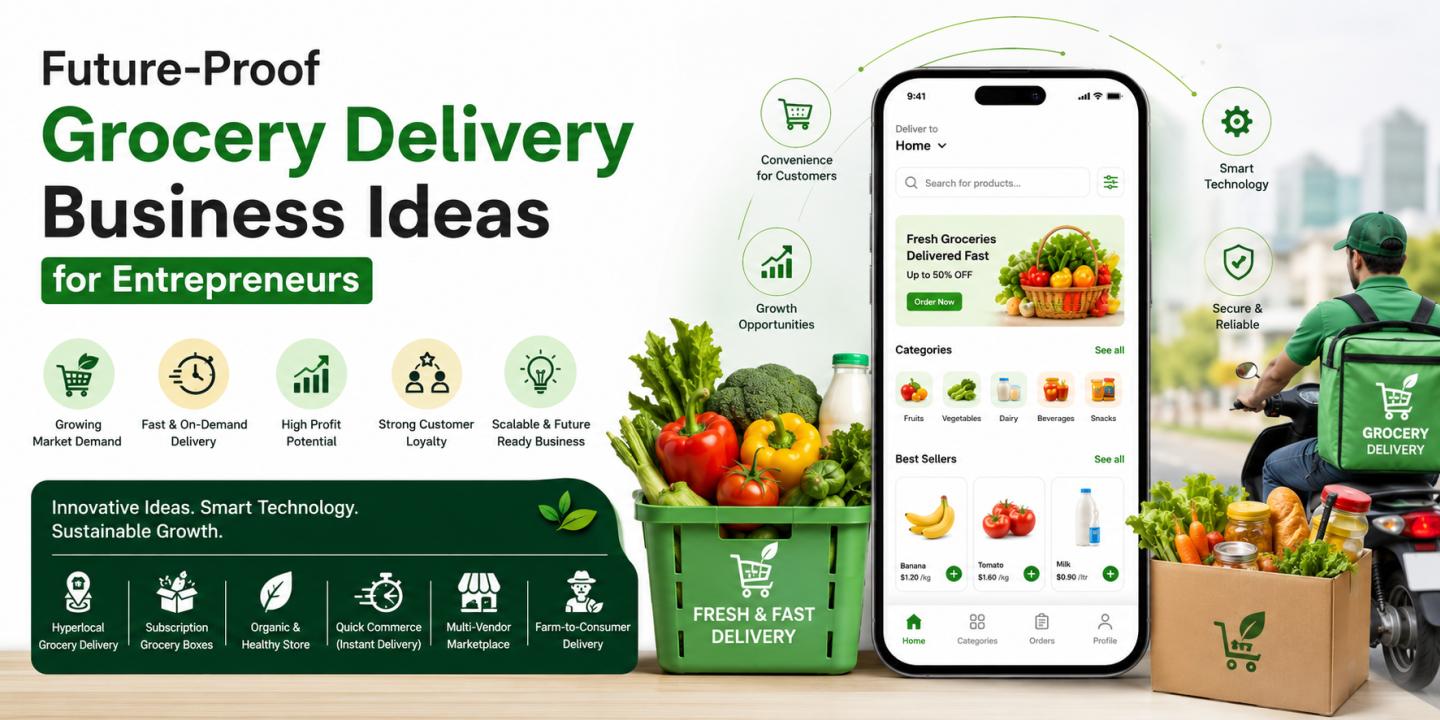
Hyperlocal Grocery Delivery Business
Another highly profitable business model in the e-commerce industry is hyperlocal grocery delivery. In this model, the businesses work with the local grocery stores to deliver goods to consumers within a small geographical area.
The amount of capital required for this business model is low since there will be no need for entrepreneurs to have their own stock.
Key Benefits
- Lower operational costs
- Faster deliveries
- Easy business scalability
- Better local market penetration
- Reduced inventory management risks
Many startups are investing in hyperlocal platforms because they offer quick market entry and strong revenue potential.
Subscription-Based Grocery Delivery
Subscription grocery services are gaining popularity in people who like receiving their essential items on a regular basis. Organizations can provide weekly or monthly subscriptions for their groceries, dairy items, fruits, vegetables, and basic necessities.
This model helps businesses generate recurring revenue while improving customer retention.
Popular Subscription Ideas
- Daily milk and bread delivery
- Weekly organic grocery boxes
- Monthly household essentials kits
- Healthy meal ingredient packages
- Fresh produce subscription plans
Subscription models provide stable cash flow and improve long-term customer engagement.
Organic and Healthy Grocery Store
Organic and natural foods are gaining popularity among health-conscious customers. Entrepreneurs can start grocery websites that specialize in organic groceries, gluten-free foods, vegan food products, and other healthy life>
A niche grocery business focused on wellness can attract premium customers willing to spend more on quality products.
Features to Include
- Product origin transparency
- Nutritional information
- Personalized dietary recommendations
- Health-focused product categories
- Subscription meal plans
This business model has excellent long-term growth potential as health awareness continues to rise globally.
AI-Powered Smart Grocery Platform
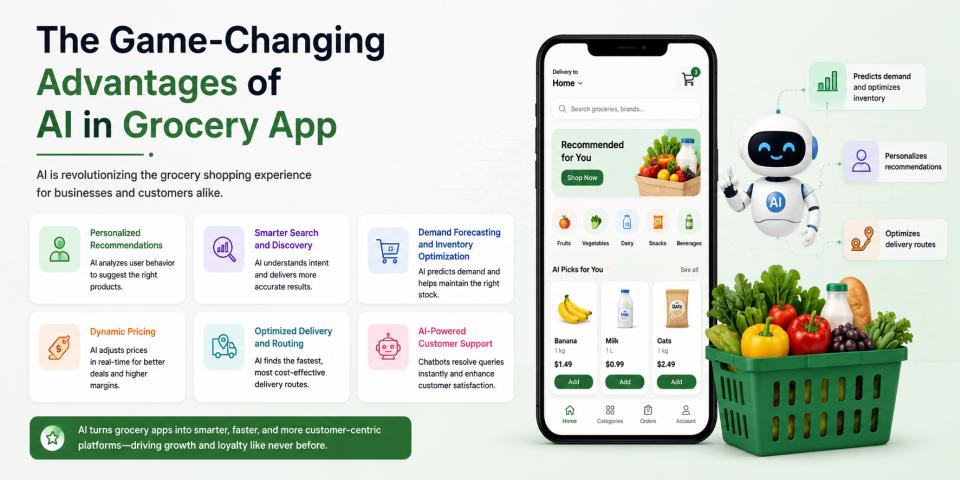
The field of artificial intelligence is revolutionizing the grocery sector by creating better customer experiences and optimizing processes. Entrepreneurs can create intelligent grocery platforms that can leverage AI in recommendation generation, demand forecasting, route optimization, and behavioral analytics.
Companies can work in conjunction with an experienced Grocery delivery app development firm to incorporate cutting-edge AI-based solutions in their grocery platform.
AI Features for Grocery Apps
- Smart product recommendations
- AI-based chatbots
- Predictive inventory management
- Personalized offers and discounts
- Automated customer support
AI-powered grocery businesses are becoming increasingly competitive in the modern e-commerce landscape.
Quick Commerce and Instant Delivery Apps
Quick commerce is one of the biggest trends in online grocery delivery. Customers now expect deliveries within 10 to 30 minutes. Entrepreneurs can launch instant grocery delivery businesses that focus on ultra-fast fulfillment services.
These businesses usually operate through dark stores or micro-warehouses strategically located near customers.
Key Requirements
- Efficient delivery fleet
- Real-time order management
- Optimized delivery routing
- Inventory synchronization
- Strong logistics network
Businesses investing in on-demand grocery delivery app solutions are benefiting from rising consumer demand for instant convenience.
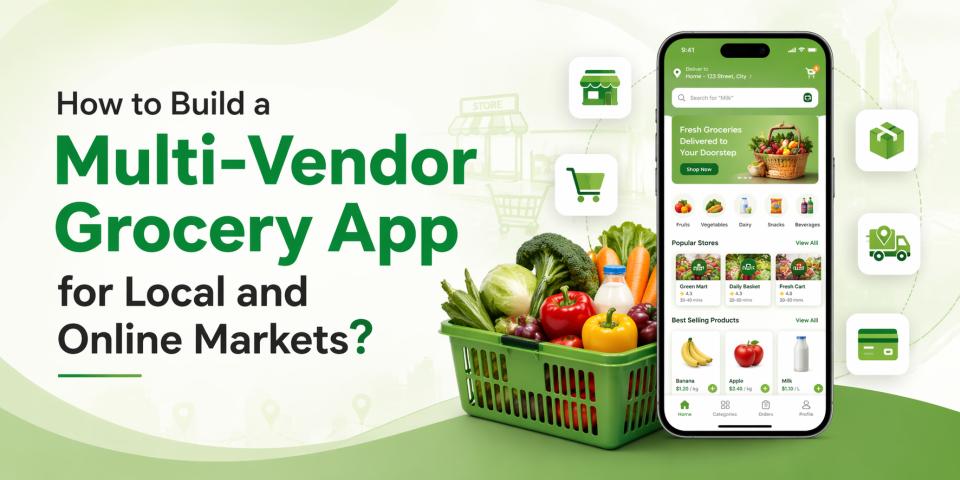
Multi-Vendor Grocery Marketplace
A multi-vendor grocery marketplace allows multiple grocery stores and vendors to sell products through a single platform. Entrepreneurs earn revenue through commissions, featured listings, subscriptions, and delivery fees.
This business model is highly scalable and suitable for entrepreneurs targeting large markets.
Advantages of Multi-Vendor Platforms
- Large product selection
- Multiple revenue streams
- Easy scalability
- Strong customer retention
- Increased market reach
Marketplace models are becoming increasingly popular because they provide flexibility for both vendors and customers.
Farm-to-Consumer Grocery Delivery
Consumers are becoming more interested in fresh and locally sourced products. Farm-to-consumer delivery businesses connect local farmers directly with customers, eliminating middlemen and ensuring fresher products.
This model supports local agriculture while providing healthier options to consumers.
Popular Product Categories
- Fresh fruits and vegetables
- Organic dairy products
- Farm-fresh eggs
- Natural honey and grains
- Seasonal produce boxes
This sustainable grocery business model has strong future potential as consumers prioritize freshness and transparency.
Cloud Kitchen and Grocery Hybrid Model
Entrepreneurs can combine grocery delivery with cloud kitchen services to create hybrid food and grocery platforms. Customers can order groceries and ready-to-eat meals from the same application.
This model increases revenue opportunities while improving customer convenience.
Business Benefits
- Increased average order value
- Multiple customer segments
- Improved operational efficiency
- Better resource utilization
Hybrid business models are helping startups create diversified revenue streams in the food and grocery industry.
Smart Features Every Grocery App Should Include
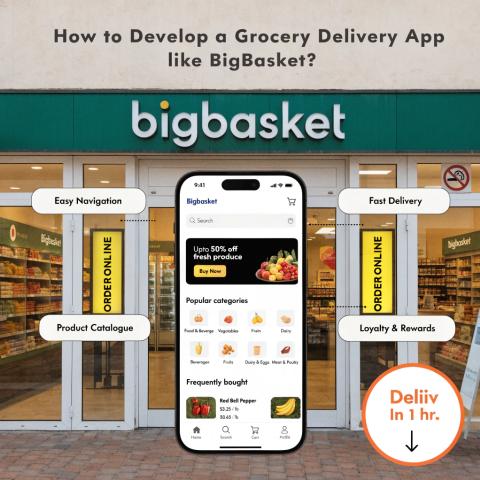
Modern grocery platforms require advanced features to remain competitive and user-friendly. Businesses investing in grocery delivery app development services should focus on delivering seamless customer experiences.
Essential Features
- User-friendly interface
- Real-time order tracking
- Secure payment gateways
- Push notifications
- Voice search integration
- AI-powered recommendations
- Loyalty and reward programs
- Multi-language support
These features improve customer engagement and increase long-term retention.
Importance of Advanced Technology in Grocery Businesses
Technology plays a major role in the success of modern grocery delivery platforms. Businesses using advanced digital solutions can streamline operations, improve logistics, and deliver personalized experiences.
Professional grocery app development services help businesses integrate innovative technologies such as:
- Artificial Intelligence
- Machine Learning
- Cloud Computing
- IoT-enabled inventory systems
- Blockchain-based payment security
Technology-driven grocery businesses are more likely to achieve long-term scalability and operational efficiency.
Revenue Models for Grocery Delivery Businesses
Entrepreneurs can generate revenue through multiple monetization strategies depending on their business model.
Common Revenue Sources
- Delivery charges
- Vendor commissions
- Subscription plans
- Featured product listings
- In-app advertisements
- Premium memberships
Businesses investing in on-demand grocery delivery app development can build scalable revenue models while expanding customer reach.
Challenges in Grocery Delivery Businesses
Although the grocery delivery industry offers significant opportunities, entrepreneurs must also address several operational challenges.
Common Challenges
- Delivery logistics management
- Inventory control
- Customer retention
- Seasonal demand fluctuations
- High competition
- Maintaining delivery speed
Businesses can overcome these challenges by adopting modern automation systems and investing in reliable grocery delivery software development solutions.
Future Trends in Grocery Delivery Businesses
The grocery industry will continue evolving with the adoption of advanced technologies and changing customer expectations.
Emerging Trends
- Drone and autonomous delivery
- AI-powered shopping assistants
- Voice-enabled ordering systems
- Smart refrigerators with auto-ordering
- Sustainable packaging solutions
- Data-driven customer personalization
Entrepreneurs who adopt these trends early can gain a strong competitive advantage in the digital grocery market.
Conclusion
There are plenty of opportunities available to entrepreneurs when it comes to setting up an online grocery store. There are various types of profitable businesses you can venture into in this rapidly growing sector, including hyper-local grocery delivery systems, subscription-based models, artificial intelligence-driven grocery applications, and instant delivery systems.
In the current era, customers demand convenience, efficiency, and personalization. Those companies which utilize the latest technologies and offer efficient delivery systems have better chances to survive in the extremely competitive environment of the online grocery store business.
Working with professional technology providers that offer services of grocery delivery application development will play a vital role in developing an efficient platform for your business.
Given the importance of technology in the retail sector, the future of online grocery delivery looks promising indeed.