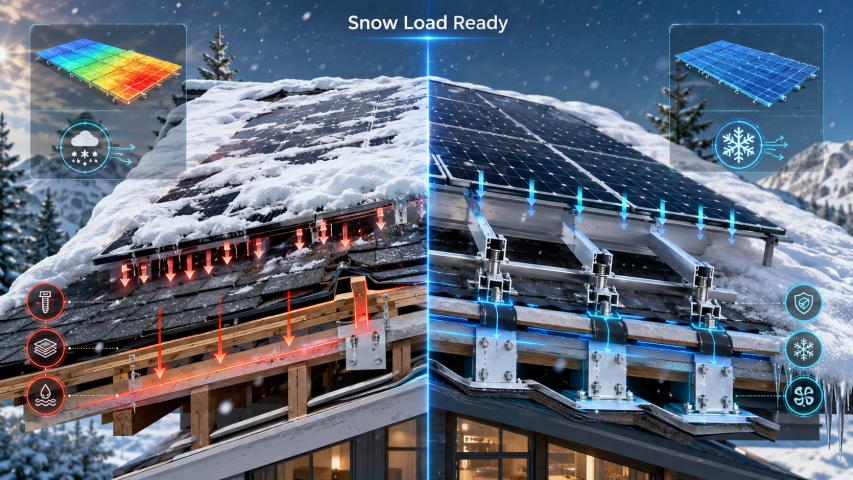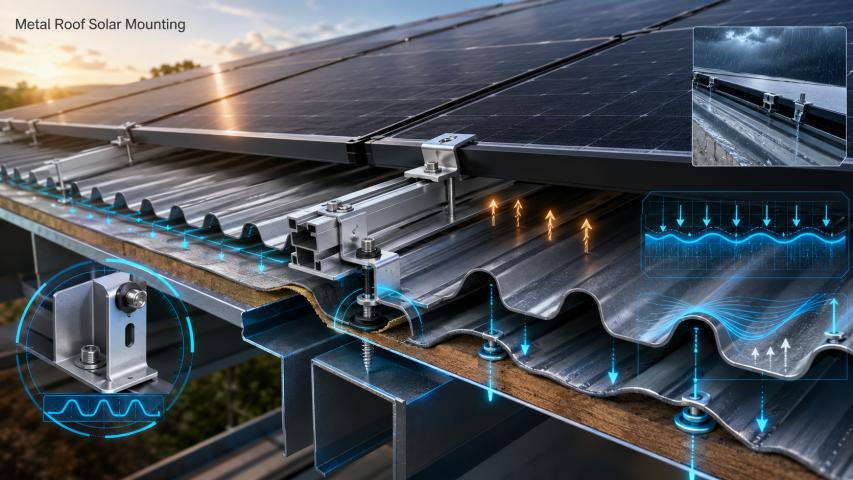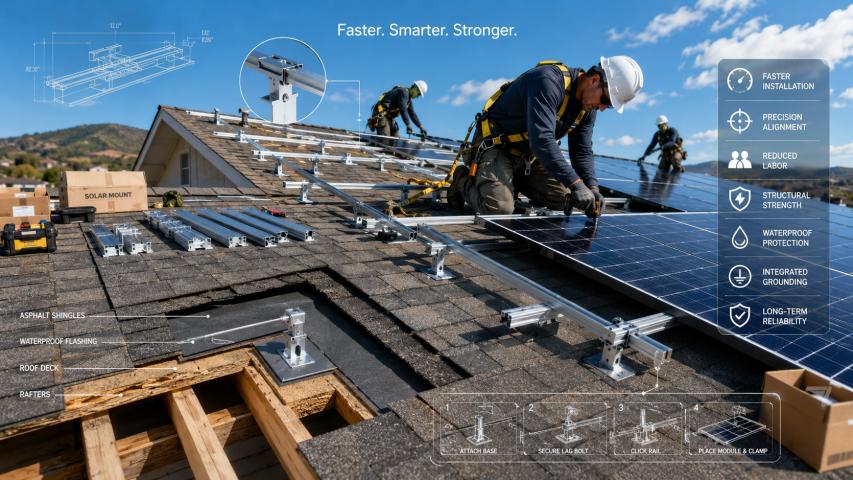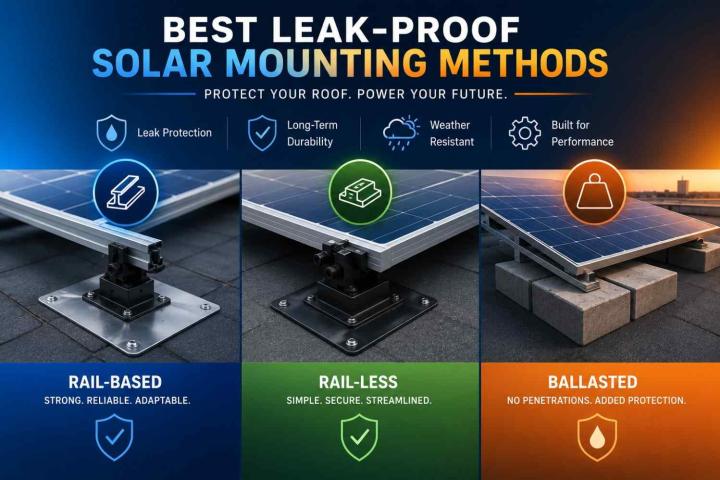
Most roof leaks associated with solar installations don’t occur immediately after the panels are installed. In many cases, the problems show up years later, after repeated heat cycles, heavy rain, strong winds, or winter expansion stress starts to stress the roof penetrations.
A small gap around a lag bolt or flashing edge may not seem serious at first. But once water starts working beneath shingles or underlayment, the damage can quietly spread for months before anyone inside the building notices. That’s why waterproofing has become one of the biggest discussions in modern solar mounting.
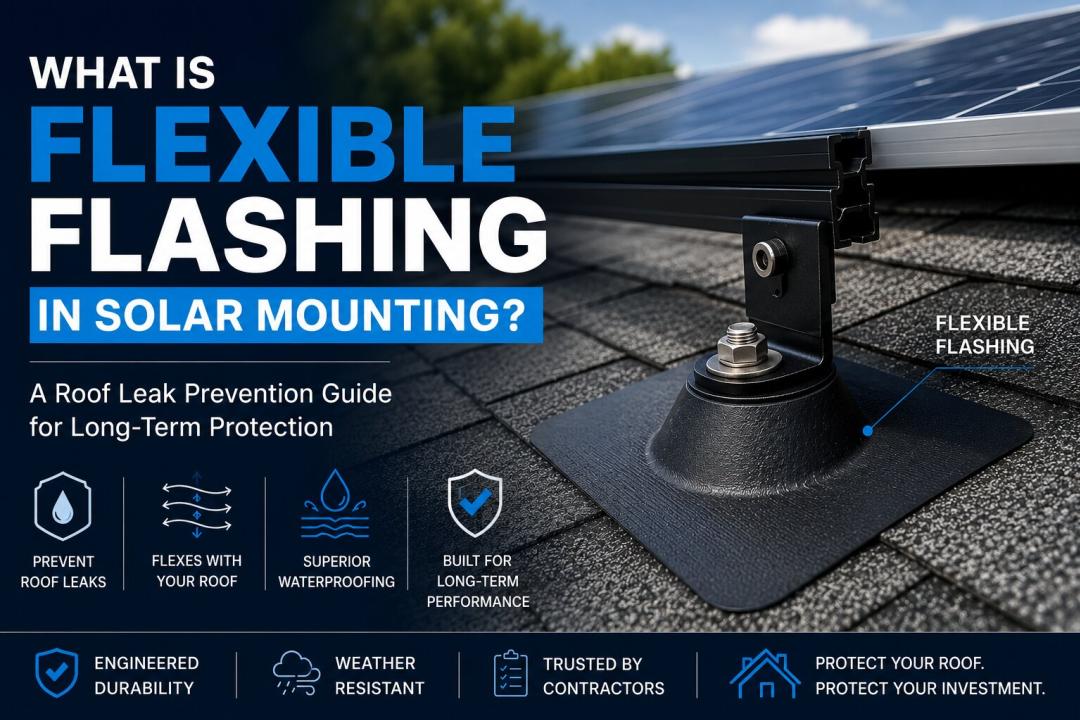
The U.S. Department of Energy also recommends evaluating roof condition before solar installation because roof durability and waterproofing directly affect long-term system performance. Flexible flashing helps address part of that problem by creating a waterproof seal that moves with the roof rather than resisting it.
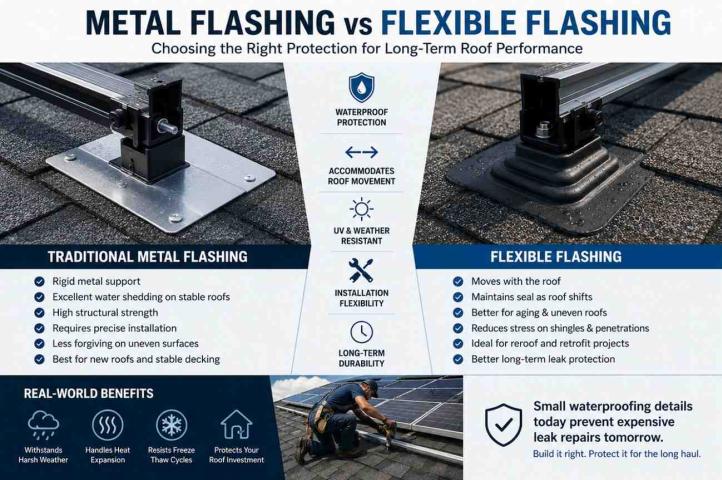
Unlike rigid flashing systems that rely heavily on fixed positioning and sealant alone, flexible flashing is designed to accommodate natural roof movement over time. That added flexibility helps reduce stress around penetrations and lowers the chance of future leaks.
Why Flexible Flashing Matters in Solar Mounting
Every rooftop solar installation requires attachment points that penetrate the roofing surface. Those penetrations naturally become vulnerable areas if waterproofing is not handled correctly.
Over time, roofs deal with constant environmental stress, such as:
- Thermal expansion and contraction
- Wind uplift pressure
- Heavy rain exposure
- Snow and ice buildup
- Aging shingles and underlayment
- Minor structural shifting
Traditional rigid flashing can sometimes lose sealing pressure as the roof moves beneath it. Flexible flashing helps absorb that movement while maintaining waterproof protection around the mounting hardware.
This becomes especially important on:
- Asphalt shingle roofs
- Residential reroof projects
- Older roofing systems
- High-wind regions
- Areas with extreme temperature swings
Many contractors prefer working with a properly engineered waterproof solar mount system because long-term leak prevention depends heavily on how well the attachment assembly handles movement after installation.
How Flexible Flashing Works
Flexible flashing systems use waterproof materials that maintain compression around roof penetrations while accommodating minor roof movement over time.
Most systems include components like:
- Flexible waterproof membranes
- Compression sealing around lag bolts
- UV-resistant gasket materials
- Water-shedding flashing channels
- Corrosion-resistant metal parts
The goal is simple: keep water moving away from the penetration while maintaining a tight seal, even as the roof expands and contracts.
In real-world roofing conditions, surfaces are rarely perfect. Installers often deal with uneven decking, brittle shingles, or slight roof waviness near ridge areas. Flexible flashing helps compensate for those irregularities without creating excessive pressure that could crack shingles later.
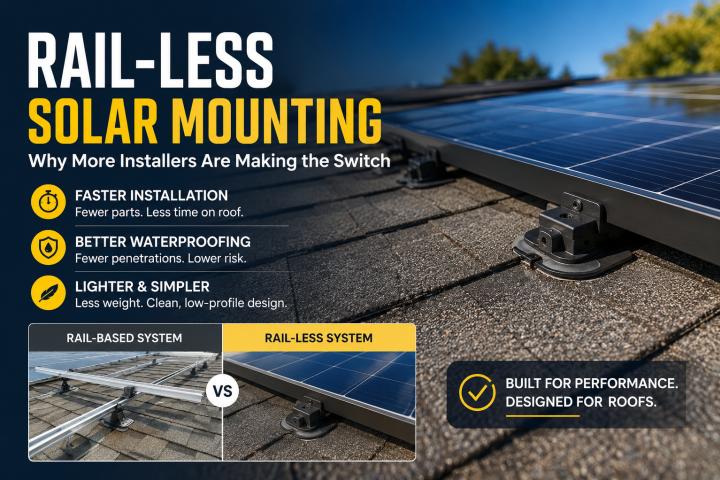
The mounting rail layout also affects waterproofing performance. Poor attachment spacing or excess rail tension can transfer stress directly into roof penetrations over time.
That’s why experienced installers usually evaluate how flat roof solar installation challenges affect drainage flow, roof movement, and structural attachment spacing before installation begins.
Common Leak Problems: Flexible Flashing Helps Prevent
Many solar roof leaks develop gradually rather than appearing immediately after installation.
Flexible flashing helps reduce issues such as:
- Sealant shrinkage around penetrations
- Water intrusion beneath shingles
- Cracking caused by thermal movement
- Gaps around rigid flashing edges
- Moisture buildup near drainage areas
- Corrosion around exposed hardware
It can also improve waterproofing reliability on reroof projects where older roofing materials already have minor surface inconsistencies.
A flashing system that moves naturally with the roof generally performs better over the long term than one that relies solely on rigid waterproofing details.
Real-World Flexible Flashing Example in Solar Mounting
A reroof project in a high-heat southern climate showed why flexible flashing matters in practical installation conditions.
The home had aging architectural shingles with slight surface unevenness near several attachment points. Standard rigid flashing would have created uneven pressure beneath parts of the assembly.
Instead, installers used a mounting approach with flexible flashing components that better conformed to the roof surface.
That helped reduce:
- Pressure gaps beneath flashing
- Shingle stress during installation
- Small water-entry voids
- Long-term movement around lag bolts
After several storm seasons and prolonged exposure to summer heat, the roof remained dry, with no leaks from penetration.
Final Thoughts
Flexible flashing has become an important part of modern solar waterproofing because roofs are constantly exposed to movement, weather, and aging materials.
A mounting system that can adapt to those conditions helps reduce the risk of future leaks and long-term maintenance issues around roof penetrations.
For contractors and property owners alike, the waterproofing system beneath the panels often matters just as much as the solar equipment mounted above them.