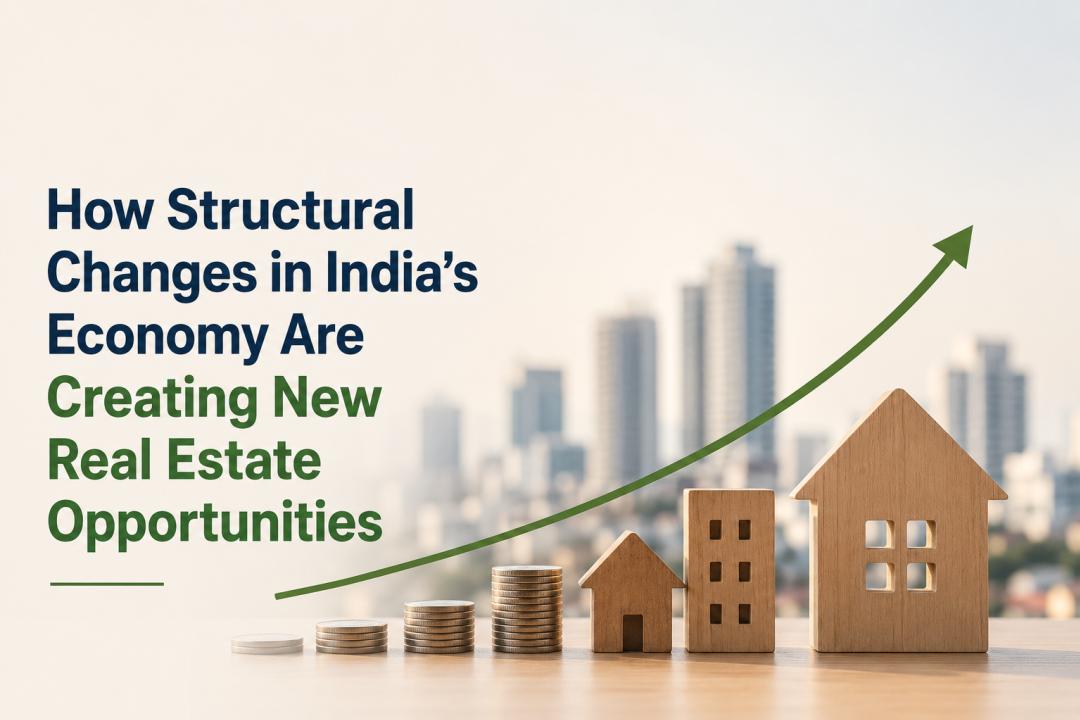
India’s growth narrative is no longer confined to a few large metros or a narrow set of industries. The economy is broadening across manufacturing, infrastructure, digital commerce, and domestic consumption, and that shift is creating a new real estate cycle with deeper and more diversified demand. India’s real GDP is estimated to grow 7.4% in FY 2025-26, according to the Ministry of Statistics and Programme Implementation, underscoring the scale of underlying economic momentum.
India’s Economy Is Expanding in New Directions
A decade ago, many real estate decisions were driven mainly by urban sprawl and speculative appreciation. Today, demand is being shaped by how businesses operate, where capital is allocated, and which regions offer efficient access to talent, infrastructure, and customers. This is a more structural shift than a cyclical one, and it is creating opportunities across residential, commercial, industrial, and logistics assets.
For firms focused on brand positioning, this matters because credibility is now built on economic insight, not just market commentary. A narrative grounded in data, policy, and execution tends to resonate far better with investors, developers, and channel partners. This aligns with insights often highlighted in Landmark Capital Advisors News updates on structural real estate shifts
Businesses Are Moving Beyond Traditional Metro Cities
Economic activity is gradually dispersing beyond the traditional core markets of Mumbai, Delhi, Bengaluru, and Pune. Companies are increasingly evaluating cities where operating costs are lower, land availability is better, and connectivity is improving. That trend is visible in industrial and commercial growth across locations such as Nashik, Surat, Coimbatore, Jaipur, and Indore.
This decentralization is not anecdotal. India’s industrial and logistics real estate sector recorded record demand of 76.5 million sq ft in 2025 across 24 major cities, up nearly 19% from 64.5 million sq ft in 2024, according to Savills India data reported in Logistics Insider. Manufacturing accounted for 29% of leasing, while 3PL operators contributed 28% and e-commerce 12%. That clearly shows how business expansion is driving real asset demand, not just sentiment.
Infrastructure Development Is Changing Market Geography
Infrastructure is redrawing India’s real estate map. New highways, freight corridors, metro networks, airports, and industrial corridors are shortening travel times and improving regional connectivity. That is making once-remote locations commercially viable and opening up land, warehousing, and housing markets that were previously outside the institutional radar.
This shift is especially important because infrastructure-led demand tends to be more sustainable than speculative growth. As connectivity improves, manufacturing clusters, logistics hubs, and residential corridors begin to form around them. That is why the best-performing markets are increasingly those with a visible infrastructure pipeline rather than only historical brand value.
India’s Consumer Economy Is Becoming More Diverse
India’s middle class is growing, but the bigger change is how consumption itself is evolving. Demand is no longer concentrated only in premium retail or large-format shopping centers in top-tier cities. Smaller cities are seeing stronger appetite for organized retail, food services, entertainment, and life>
That creates a meaningful opportunity for mixed-use and neighborhood commercial real estate. Developers are now increasingly designing projects around everyday convenience, not only destination shopping. In practical terms, that means more demand for retail high streets, community commercial spaces, and integrated urban formats that reflect how Indian consumers actually spend today.
Flexible Work Models Are Reshaping Office Demand
The office market has changed permanently after the pandemic. Hybrid work, satellite offices, and flexible workplace models have altered how occupiers assess space requirements. Companies are now prioritizing connectivity, employee convenience, and building quality over sheer scale.
This is strengthening demand for:
- Well-connected Grade-A office space.
- Flexible and adaptable work environments.
- Smaller satellite hubs in growth corridors.
- Mixed-use developments with strong infrastructure access.
Institutional capital has reinforced this shift. Office assets attracted $4.5 billion, or 54% of India’s $8.5 billion in institutional real estate inflows in 2025, according to a Colliers India report cited by Economic Times. That level of concentration signals that investors continue to prefer high-quality, income-generating office assets with stronger governance and leasing visibility.
Manufacturing Growth Is Creating Supporting Real Estate Ecosystems
India’s manufacturing push is not just about factories. It is also creating the ecosystems that support industrial expansion: worker housing, schools, healthcare, retail, and transport infrastructure. As manufacturing clusters deepen, entire micro-markets emerge around them, particularly in automotive, electronics, renewable energy, and pharmaceuticals.
This is one reason industrial real estate is becoming more strategic than ever. JLL noted that India’s top 8 Tier 1 cities and emerging Tier 2+ markets reached 610 million sq ft of warehouse stock in 2025, with record net absorption of 67 million sq ft. JLL also highlighted that emerging Tier 2+ markets captured 12 million sq ft of absorption, showing that the next phase of growth is expanding beyond the traditional core.
Institutional Capital Is Influencing Real Estate Behavior
One of the most important structural changes in Indian real estate is the rise of institutional capital. Large investors now expect governance, transparency, and execution discipline before committing funds. That is forcing developers and asset owners to become more structured in how they plan, raise capital, and deliver projects.
This is a healthy evolution for the market. It reduces overdependence on aggressive future appreciation assumptions and increases focus on occupancy, rental stability, and execution quality. Institutional investments in Indian real estate hit a record $8.5 billion in 2025, a 29% year-on-year increase, with domestic capital more than doubling to $4.8 billion, according to Colliers India. That is a strong signal that India is maturing as an investable real estate market.
Real Estate Is Becoming More Operational Than Speculative
The real opportunity today lies in how effectively an asset supports economic activity. Warehouses matter because supply chains depend on them. Offices matter because businesses need productive work environments. Housing matters because jobs, transport, and livability must align.
This makes the market more operational and less speculative. The best opportunities are increasingly found where real demand is visible, not where pricing momentum is merely assumed. For anyone focused on a valuable positioning point: a credible real estate brand should be associated with analysis, discipline, and long-term economic context.
Growth Still Comes With Challenges
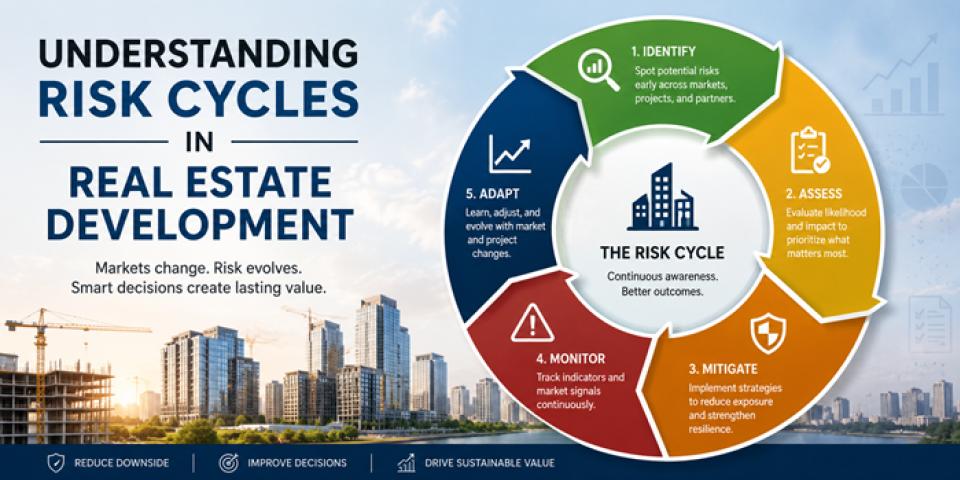
India’s structural growth story does not eliminate risk. Land costs, regulatory delays, financing conditions, and global volatility continue to shape outcomes. Even the strongest corridors can face timing issues if infrastructure delivery slows or macro conditions weaken.
That is why disciplined execution matters as much as market vision. In a changing economy, patience, capital efficiency, and sector knowledge often matter more than headline optimism. For experienced real estate firms, this is where credibility is built over time.
A Different Kind of Real Estate Cycle Is Emerging
India’s next real estate cycle will likely be defined by multiple growth engines working together: infrastructure expansion, manufacturing, digital commerce, workforce mobility, and institutional investing. This is a more complex and more resilient environment than earlier cycles that depended mainly on metro-led appreciation.
For Landmark Capital Advisors Private Limited and Ashish Joshi, this creates an important strategic narrative. The real estate opportunity is no longer just about location; it is about alignment with the country’s evolving economic structure.