The biggest time sink for small marketing agencies isn't creative
work or strategy — it's prospecting. Finding potential clients,
collecting their contact information, and organizing it into usable
lists eats up hours that could be spent on billable work.
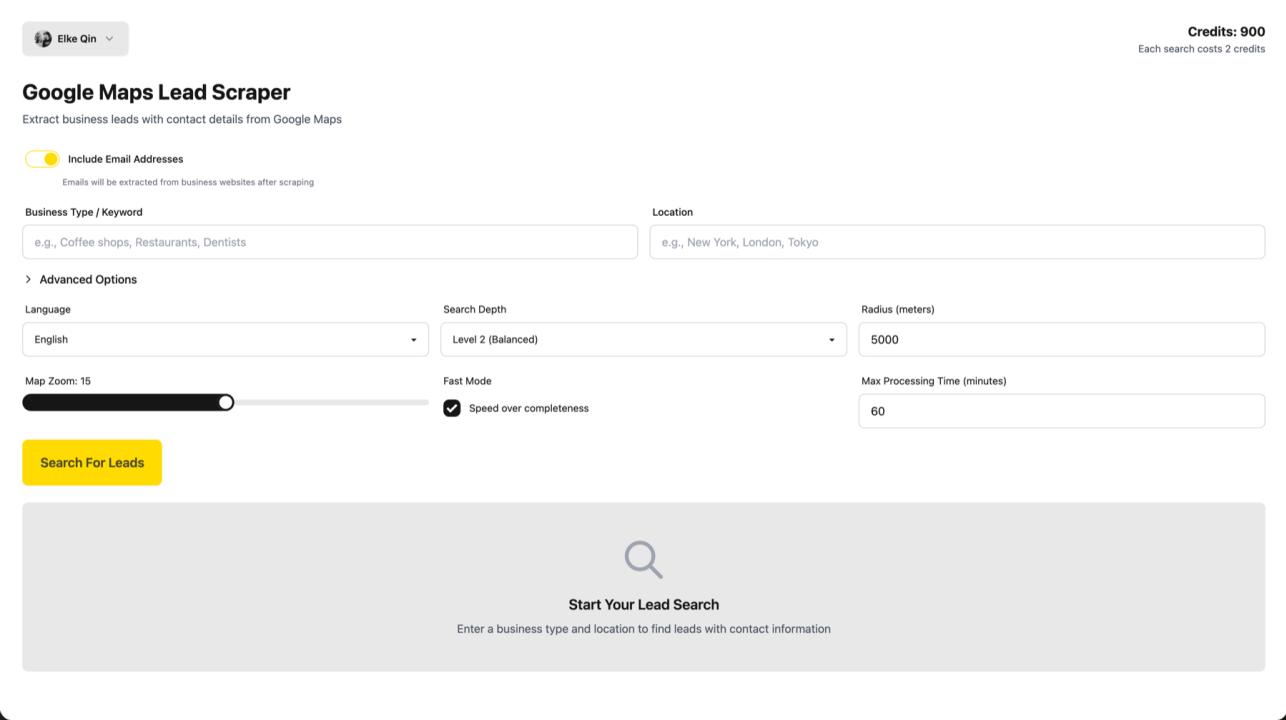
A typical agency workflow for building a local business lead list
looks something like this: open Google Maps, search for a business
type in a target area, click on each result individually, copy the
phone number, address, and website into a spreadsheet, then repeat
this process hundreds of times. For a list of 200 businesses, this
takes 3-4 hours of tedious manual work.
AI-powered data extraction tools are changing this equation
dramatically. Instead of clicking through results one by one, these
platforms automate the entire collection process. A search that
previously took half a day now takes less than a minute.
The practical impact for agencies is significant. Client onboarding
becomes faster because prospect lists can be delivered same-day
instead of requiring 2-3 days of research. Campaign launches happen
sooner because the data gathering phase shrinks from days to
minutes. And team members previously assigned to manual research can
focus on higher-value tasks like outreach strategy and relationship
building.
The data quality argument matters too. Manual copying introduces
errors — transposed digits in phone numbers, incomplete addresses,
outdated information that wastes time during outreach. Automated
extraction with AI validation catches these issues before they reach
the CRM.
For agencies evaluating these tools, the key factors are speed, data
accuracy, export compatibility with existing CRM systems, and
coverage across different languages and regions. Tools like
GMapsScraper AI (https://gmapsscraper.io) address all four by
offering 30-second extraction, AI-powered validation, CSV export for
HubSpot and Salesforce, and support for 18 languages.
The shift from manual to automated prospecting isn't just about
saving time. It changes the economics of client acquisition
entirely. When building a lead list costs minutes instead of hours,
agencies can pursue smaller accounts profitably and test new markets
without significant upfront research investment.
For small teams competing against larger agencies with dedicated
research departments, AI-powered lead extraction levels the playing
field. The technology handles the data collection at scale, while
the small team focuses on what actually wins clients: personalized
outreach and creative strategy.