
In a startup, hiring has never been simply filling out roles, it’s about predicting outcomes. Every candidate you hire either fuels your growth or dampens it in silence. The problem is that most hiring methods do not provide you with forward-looking signals. You are often responding to resumes, interviews and gut, that’s where AI hiring analytics starts to tip the scales.
If you realize the potential of AI hiring tools for startups, you progress from reactive hiring to predictive hiring. You’re no longer simply assessing what a candidate has done, you’re looking for patterns that signal what they might do next. This is the transformation that makes AI predictive hiring possible, and it’s one of the most critical competitive advantages a startup can establish early.
Right from early stages of using AI hiring software, you’ll find something that stands out, your hiring process is now all about clear signal rather than volume. Rather than manually screening hundreds of resumes, you start to interpret behavioural, cognitive, and experiential data in an organized manner. And this is where AI talent analytics begins to reveal deeper insights that traditional hiring workflows overlook.
The Case For Signal-Based Thinking When Hiring Startups
The startups exist in environments characterized by uncertainty. Startups don’t need people who can work within established systems like large organizations with stable systems, they need people who are agile and fast and operate on the edges without much structure. But most hiring systems still use static indicators such as past job titles or company brands.
The problem is straightforward: resumes are retrospective documents. There are many pleasurable ah-ha moments for founders in here3 However the biggest thing is performance of a startup is future behavior.
When you’re focused on traditional hiring performance metrics, like years of experience or educational background, you’re often measuring comfort, not capability. AI turns this around, by mining correlations between candidate traits and business outcomes.
Rather than querying the past (e.g. "Has this candidate managed a team before?"), AI can identify trends such as how quickly someone can reach a decision, the depth of rural-thinking demonstrated in problem-solving and how consistently they execute across varying environments to set standards for their performance. These signals are significantly more indicative of startup success.
Moving Beyond Surface-Level Resume Screening
Many recruitment practices still rely heavily on AI resume parsing to extract structured information from resumes. This is an improvement over manual screening, which is still more limited. Parsing tells you what’s there, it doesn’t tell you what matters.
This is exactly where many founders start realizing the gap, the things your ATS is missing about candidates. Your applicant tracking system may organize resumes efficiently, but it rarely interprets them meaningfully.
Data extraction is different from insight generation.
Through contextualizing candidate information, AI-driven hiring systems counter the parsing process. They’re reviewing how experiences fit together, how often candidates have acted with impact and whether their contributions are relevant to startup-specific challenges.
Using AI to Identify High-Signal Candidate Traits
And when you apply AI hiring analytics, the emphasis will be on finding high-signal features which are statistically significant with regards to startup performance. These are not always clear from a resume.
Some signals are more predictive than others, including:
- Ownership throughout previous roles
- Frequency of measurable impact
- Adaptability across different domains
- Speed of learning and iteration
- Decision-making under uncertainty
These traits are something AI models can quantify by observing large datasets of successful and unsuccessful hires. With time, they start identifying the patterns that a human recruiter might miss.
For example, one candidate who has consistently pursued ambiguous roles and produced measurable outcomes may come in ahead of one with a more “impressive” but structured career path.
This is where talent analytics powered by AI becomes a strategic asset, not just a tool.
Building a Predictive Hiring Framework
When we are talking about predictive hiring using AI, the term tool may be misleading. Your AI is only as good as the context in which it exists.
The first step is to determine what success looks like for your startup. This goes beyond job descriptions. You need to identify:
- What Company Behaviours Spur Growth
- Which characteristics are tied to high performance
- Patterns Among Your Top Employees What Are
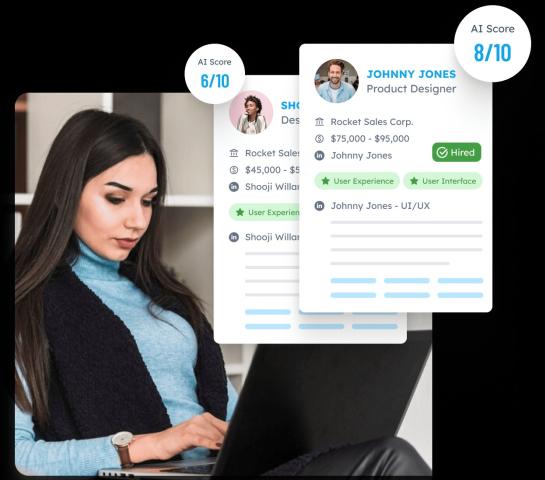
Once these parameters are defined, AI systems can start comparing candidate information against them. This is where AI hiring tools for startups come into their own, because they don’t merely filter candidates, but also rank them by expected impact.
How to Integrate AI in Your Hiring Process
One of the biggest mistakes startups make is adding AI as a layer instead of integrating it. To generate genuine value from your AI hiring software, it needs to be integrated throughout your hiring funnel.
During sourcing, AI can uncover candidates that fit patterns of superior performance, even if they don’t fall within traditional filters.
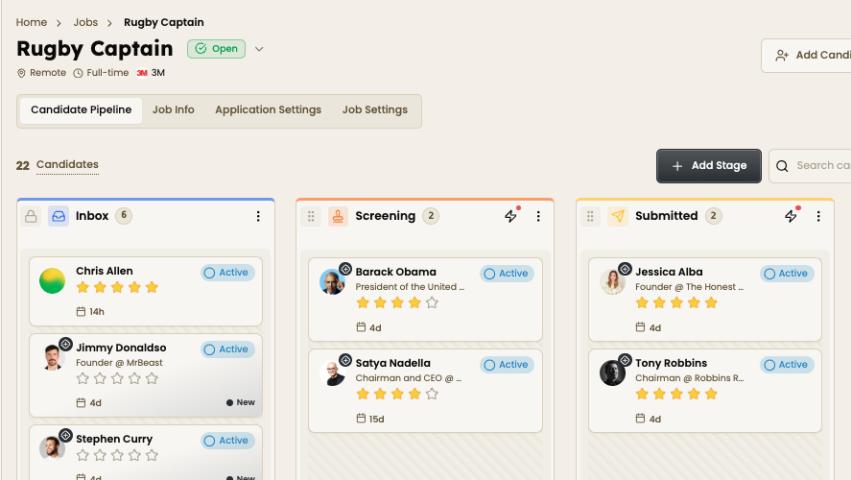
When screening, it can rank candidates by predicted outcome rather than keyword matches.
AI can help during interviews by tracking responses, identifying inconsistencies in candidates’ answers and highlighting aspects that need further probing.
Even after hiring, AI trains its models for continual improvement through correlation of hiring outcomes with performance data. This feedback loop is what makes AI hiring analytics more and more accurate over time.
Reducing Bias While Improving Accuracy
Another of the non-obvious benefits of AI talent analytics is reducing subjective biased Human decision-making is often affected by unconscious preferences, school prestige, previous employers or even communication >
But that only works if the system is trained properly. If designed poorly, AI models can not eliminate bias but exacerbate it. Which is why it’s so important to regularly audit your models and make sure that the performance metrics by which you hire are geared towards real-world results, as opposed to incorrect assumptions.
Done correctly, AI does not substitute for human judgment, it refines it.
How to Measure the Impact of AI Hiring
You will only hear the real value of predictive hiring with AI when you measure the outcomes over time. You stop measuring short-term indicators (e.g. time-to-hire) and start tracking long term impact.
Key indicators include:
- Employee performance over 6–12 months
- Retention rates of AI-selected candidates
- Contribution to key business metrics
- Speed of onboarding and productivity
These are the hiring performance metrics that count in a startup context.
This data provides feedback into your system and helps continuously improve your AI hiring analytics. The end result is a hiring machine that gets more accurate with each decision.
The Strategic Advantage for Startups
Early adopters of AI hiring tools for startups get a massive head start. Where your competitors are still relying on gut and manual processes, you are building a data-driven hiring system that compounds over time.
This advantage isn’t merely operational, it’s strategic.
Less suffering equals better execution; stop hiring badly. Faster growth results from better execution. And faster growth gives your margin for error in other areas.
Hiring becomes a leverage point rather than a bottleneck.
The Future of Hiring Signals
Over time, as AI systems develop further hiring signals will become a more advanced concept. We are moving toward systems that can assess not just résumés and interviews but actual work simulations, patterns of communication, group collaboration and groups.
That will mean AI resume parsing is only one tiny component of a very large ecosystem.
The true value of the tools you adopt will come from how well you can interpret this multi-dimensional, complex data to help you make better decisions.
Startups that recognize this evolution in its early days will be equipped to attract teams who are not only qualified, but inherently wired for the high demands of growth environments.
Final Thoughts
The point of using AI hiring analytics is not automating recruitment, it’s updating your mindset towards hiring. AI-based predictive hiring does away with frail signals of the past and stays focused on what matters.
AI talent analytics data, improved hiring performance metrics, and integrated AI hiring software establish a self-teaching system that continually enhances its outcomes.
In a startup, each hire is critical. AI enables you to make those decisions with clearer, more precise foresight and confidence.
And in a world where small decisions can have outsized outcomes, that edge is hard to overlook.