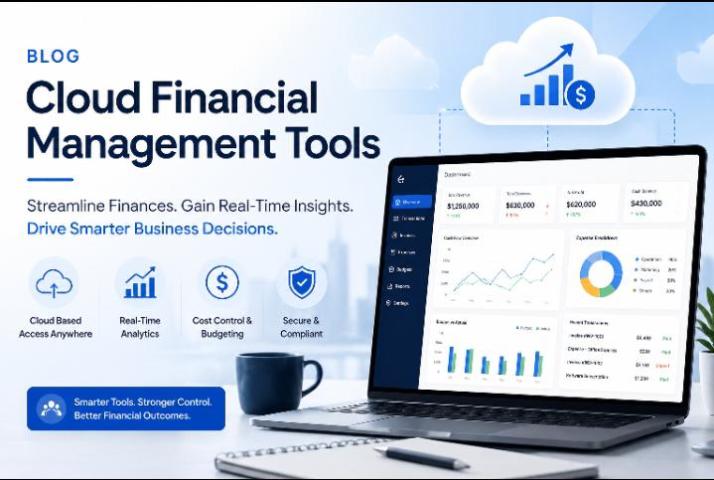
Cloud computing has transformed how businesses build, deploy, and scale applications. The flexibility to provision resources on demand has accelerated innovation across industries. However, this convenience comes with a challenge: cloud spending can quickly become difficult to control.
Many organizations move to the cloud expecting lower infrastructure costs, only to discover that cloud bills increase month after month. Unused resources, overprovisioned instances, poor visibility, and lack of accountability often lead to unnecessary spending. As cloud environments become more complex, businesses need a structured approach to managing costs.
This is where a FinOps Platform for Cloud Cost Optimization play a critical role. They help organizations gain visibility into cloud spending, optimize resource usage, and align cloud investments with business goals. FinOps has emerged as a framework that brings together engineering, finance, and business teams to maximize the value of cloud investments while maintaining financial accountability.
What Is Cloud Financial Management?
Cloud Financial Management (CFM) is the practice of monitoring, analyzing, forecasting, and optimizing cloud costs across an organization. It goes beyond simply tracking monthly bills. Instead, it focuses on understanding where cloud resources are being used, who is consuming them, and whether that usage is delivering business value.
Unlike traditional IT budgeting, cloud costs are highly dynamic. Teams can spin up new environments in minutes, scale workloads automatically, and consume services on demand. While this flexibility is beneficial, it can also create financial unpredictability if costs are not actively managed.
- Effective cloud financial management enables organizations to:
- Gain real-time visibility into cloud spending
- Allocate costs accurately across teams and departments
- Forecast future cloud expenses
- Identify waste and optimization opportunities
- Improve accountability for cloud usage
- Align cloud investments with business outcomes
Why Cloud Costs Are Difficult to Manage
As cloud adoption grows, organizations often face challenges such as:
Lack of Visibility
Many businesses struggle to understand exactly where their cloud budget is being spent. Costs may be distributed across multiple accounts, teams, applications, and cloud providers. Without proper reporting and allocation, identifying cost drivers becomes difficult.
Resource Waste
Idle virtual machines, unattached storage volumes, unused databases, and oversized workloads frequently contribute to cloud waste. These resources continue generating charges even when they provide little or no business value.
Multi-Cloud Complexity
Organizations increasingly operate across AWS, Azure, and Google Cloud. Managing spending across multiple environments introduces additional complexity, especially when each provider has different pricing structures and reporting mechanisms.
Rapid Scaling
Cloud environments can scale rapidly, sometimes faster than financial oversight processes can keep up. Development teams may launch resources to meet business needs without fully understanding the long-term cost implications.
These challenges highlight why traditional cost management methods are no longer sufficient.
The Rise of FinOps
FinOps, short for Financial Operations, has become the leading framework for cloud cost management. Rather than treating cloud spending as solely a finance concern, FinOps encourages collaboration between engineering, finance, and business stakeholders. The goal is to maximize business value while maintaining financial responsibility.
The FinOps lifecycle typically follows three stages:
Inform
Teams gain visibility into cloud spending through reporting, tagging, cost allocation, and dashboards. The objective is to understand where money is being spent and who is responsible for those costs.
Optimize
Organizations identify opportunities to reduce waste and improve efficiency. This may include rightsizing resources, purchasing commitments, eliminating unused assets, and improving workload placement.
Operate
Teams establish governance policies, automate optimization processes, and continuously monitor cloud environments to ensure long-term efficiency.
How Cloud Financial Management Tools Support FinOps
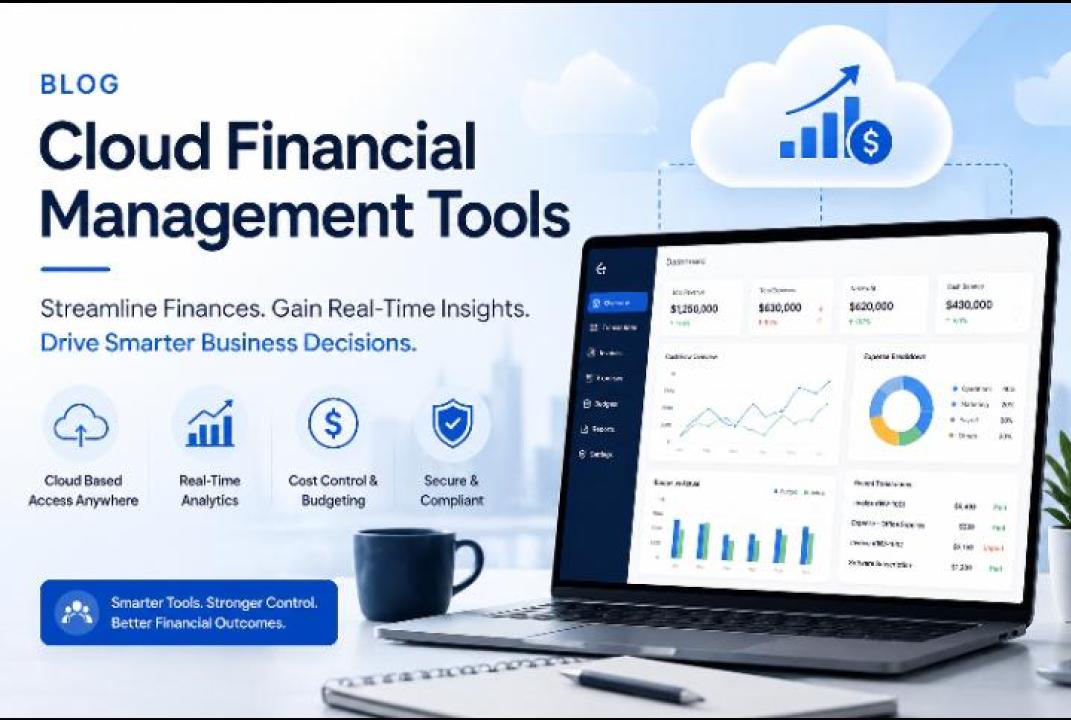
Modern cloud financial management tools provide the technology needed to implement FinOps practices at scale.
These platforms centralize cloud cost data and transform it into actionable insights that engineering and finance teams can use to make informed decisions.
Key capabilities often include:
- Cost Visibility and Reporting: Comprehensive dashboards provide detailed insights into cloud spending across accounts, services, projects, and teams. This visibility helps organizations identify spending trends and cost anomalies before they become major issues.
- Cost Allocation and Chargeback: Organizations can allocate cloud costs to business units, departments, products, or customers. This creates accountability and helps teams understand the financial impact of their cloud usage.
- Forecasting and Budgeting: Historical usage patterns can be used to predict future cloud spending. Accurate forecasting allows finance teams to plan budgets more effectively and avoid unexpected expenses.
- Anomaly Detection: Unexpected cost spikes can occur due to configuration errors, traffic surges, or forgotten resources. Automated monitoring helps detect these anomalies quickly so corrective action can be taken.
- Optimization Recommendations: Many platforms provide recommendations for rightsizing, commitment management, storage optimization, and workload efficiency. These insights help organizations continuously improve cloud utilization.
Why a FinOps Platform for Cloud Cost Optimization Matters
While basic cloud provider tools offer cost reporting, they often lack the advanced visibility, automation, and governance capabilities needed by growing organizations.
A dedicated FinOps Platform for Cloud Cost Optimization provides a more comprehensive approach by combining financial management, operational intelligence, and automation.
- Improved Financial Accountability: Teams gain ownership of their cloud spending and understand how their decisions impact overall costs. This encourages more responsible resource usage.
- Faster Cost Reduction: Automated optimization recommendations help identify savings opportunities that might otherwise go unnoticed. Rightsizing resources and eliminating waste can significantly reduce monthly cloud bills.
- Better Business Alignment: A FinOps platform helps organizations evaluate cloud spending in terms of business outcomes rather than focusing solely on reducing costs. This ensures that optimization efforts support growth and innovation.
- Operational Efficiency: Automation reduces the manual effort required to gather data, create reports, and monitor cloud environments. Teams can spend more time driving strategic initiatives and less time managing spreadsheets.
The Future of Cloud Cost Management
Cloud spending continues to grow as organizations adopt AI, containerized workloads, and multi-cloud architectures. At the same time, financial accountability is becoming increasingly important. Industry research shows that many organizations still struggle with cloud cost visibility and optimization, making FinOps a critical capability for modern businesses.
The future of cloud financial management will likely include greater automation, AI-powered forecasting, and intelligent optimization engines capable of making real-time cost-saving decisions. Organizations that embrace these practices early will be better positioned to control spending while maintaining agility and innovation.
Conclusion
Cloud adoption delivers tremendous business benefits, but it also introduces financial complexity. Without proper oversight, cloud costs can quickly spiral beyond expectations.
Implementing robust cloud financial management tools allows organizations to gain visibility, improve accountability, and make smarter spending decisions. When combined with a dedicated FinOps Platform for Cloud Cost Optimization, businesses can move beyond reactive cost tracking and establish a proactive strategy that continuously maximizes cloud value.
As cloud environments become more sophisticated, organizations that invest in FinOps practices and cloud financial management capabilities will be better equipped to balance innovation, performance, and cost efficiency.
Cloud Financial Management (CFM) is the practice of monitoring, analyzing, forecasting, and optimizing cloud costs across an organization. It goes beyond simply tracking monthly bills. Instead, it focuses on understanding where cloud resources are being used, who is consuming them, and whether that usage is delivering business value.
Unlike traditional IT budgeting, cloud costs are highly dynamic. Teams can spin up new environments in minutes, scale workloads automatically, and consume services on demand. While this flexibility is beneficial, it can also create financial unpredictability if costs are not actively managed.
- Effective cloud financial management enables organizations to:
- Gain real-time visibility into cloud spending
- Allocate costs accurately across teams and departments
- Forecast future cloud expenses
- Identify waste and optimization opportunities
- Improve accountability for cloud usage
- Align cloud investments with business outcomes
Why Cloud Costs Are Difficult to Manage
As cloud adoption grows, organizations often face challenges such as:
Lack of Visibility
Many businesses struggle to understand exactly where their cloud budget is being spent. Costs may be distributed across multiple accounts, teams, applications, and cloud providers. Without proper reporting and allocation, identifying cost drivers becomes difficult.
Resource Waste
Idle virtual machines, unattached storage volumes, unused databases, and oversized workloads frequently contribute to cloud waste. These resources continue generating charges even when they provide little or no business value.
Multi-Cloud Complexity
Organizations increasingly operate across AWS, Azure, and Google Cloud. Managing spending across multiple environments introduces additional complexity, especially when each provider has different pricing structures and reporting mechanisms.
Rapid Scaling
Cloud environments can scale rapidly, sometimes faster than financial oversight processes can keep up. Development teams may launch resources to meet business needs without fully understanding the long-term cost implications.
These challenges highlight why traditional cost management methods are no longer sufficient.
The Rise of FinOps
FinOps, short for Financial Operations, has become the leading framework for cloud cost management. Rather than treating cloud spending as solely a finance concern, FinOps encourages collaboration between engineering, finance, and business stakeholders. The goal is to maximize business value while maintaining financial responsibility.
The FinOps lifecycle typically follows three stages:
Inform
Teams gain visibility into cloud spending through reporting, tagging, cost allocation, and dashboards. The objective is to understand where money is being spent and who is responsible for those costs.
Optimize
Organizations identify opportunities to reduce waste and improve efficiency. This may include rightsizing resources, purchasing commitments, eliminating unused assets, and improving workload placement.
Operate
Teams establish governance policies, automate optimization processes, and continuously monitor cloud environments to ensure long-term efficiency.
Lack of Visibility
Many businesses struggle to understand exactly where their cloud budget is being spent. Costs may be distributed across multiple accounts, teams, applications, and cloud providers. Without proper reporting and allocation, identifying cost drivers becomes difficult.
Resource Waste
Idle virtual machines, unattached storage volumes, unused databases, and oversized workloads frequently contribute to cloud waste. These resources continue generating charges even when they provide little or no business value.
Multi-Cloud Complexity
Organizations increasingly operate across AWS, Azure, and Google Cloud. Managing spending across multiple environments introduces additional complexity, especially when each provider has different pricing structures and reporting mechanisms.
Rapid Scaling
Cloud environments can scale rapidly, sometimes faster than financial oversight processes can keep up. Development teams may launch resources to meet business needs without fully understanding the long-term cost implications.
These challenges highlight why traditional cost management methods are no longer sufficient.
The Rise of FinOps
FinOps, short for Financial Operations, has become the leading framework for cloud cost management. Rather than treating cloud spending as solely a finance concern, FinOps encourages collaboration between engineering, finance, and business stakeholders. The goal is to maximize business value while maintaining financial responsibility.
The FinOps lifecycle typically follows three stages:
Inform
Teams gain visibility into cloud spending through reporting, tagging, cost allocation, and dashboards. The objective is to understand where money is being spent and who is responsible for those costs.
Optimize
Organizations identify opportunities to reduce waste and improve efficiency. This may include rightsizing resources, purchasing commitments, eliminating unused assets, and improving workload placement.
Operate
Teams establish governance policies, automate optimization processes, and continuously monitor cloud environments to ensure long-term efficiency.
How Cloud Financial Management Tools Support FinOps
Modern cloud financial management tools provide the technology needed to implement FinOps practices at scale.
These platforms centralize cloud cost data and transform it into actionable insights that engineering and finance teams can use to make informed decisions.
Key capabilities often include:
- Cost Visibility and Reporting: Comprehensive dashboards provide detailed insights into cloud spending across accounts, services, projects, and teams. This visibility helps organizations identify spending trends and cost anomalies before they become major issues.
- Cost Allocation and Chargeback: Organizations can allocate cloud costs to business units, departments, products, or customers. This creates accountability and helps teams understand the financial impact of their cloud usage.
- Forecasting and Budgeting: Historical usage patterns can be used to predict future cloud spending. Accurate forecasting allows finance teams to plan budgets more effectively and avoid unexpected expenses.
- Anomaly Detection: Unexpected cost spikes can occur due to configuration errors, traffic surges, or forgotten resources. Automated monitoring helps detect these anomalies quickly so corrective action can be taken.
- Optimization Recommendations: Many platforms provide recommendations for rightsizing, commitment management, storage optimization, and workload efficiency. These insights help organizations continuously improve cloud utilization.
Why a FinOps Platform for Cloud Cost Optimization Matters
While basic cloud provider tools offer cost reporting, they often lack the advanced visibility, automation, and governance capabilities needed by growing organizations.
A dedicated FinOps Platform for Cloud Cost Optimization provides a more comprehensive approach by combining financial management, operational intelligence, and automation.
- Improved Financial Accountability: Teams gain ownership of their cloud spending and understand how their decisions impact overall costs. This encourages more responsible resource usage.
- Faster Cost Reduction: Automated optimization recommendations help identify savings opportunities that might otherwise go unnoticed. Rightsizing resources and eliminating waste can significantly reduce monthly cloud bills.
- Better Business Alignment: A FinOps platform helps organizations evaluate cloud spending in terms of business outcomes rather than focusing solely on reducing costs. This ensures that optimization efforts support growth and innovation.
- Operational Efficiency: Automation reduces the manual effort required to gather data, create reports, and monitor cloud environments. Teams can spend more time driving strategic initiatives and less time managing spreadsheets.
The Future of Cloud Cost Management
Cloud spending continues to grow as organizations adopt AI, containerized workloads, and multi-cloud architectures. At the same time, financial accountability is becoming increasingly important. Industry research shows that many organizations still struggle with cloud cost visibility and optimization, making FinOps a critical capability for modern businesses.
The future of cloud financial management will likely include greater automation, AI-powered forecasting, and intelligent optimization engines capable of making real-time cost-saving decisions. Organizations that embrace these practices early will be better positioned to control spending while maintaining agility and innovation.
Conclusion
Cloud adoption delivers tremendous business benefits, but it also introduces financial complexity. Without proper oversight, cloud costs can quickly spiral beyond expectations.
Implementing robust cloud financial management tools allows organizations to gain visibility, improve accountability, and make smarter spending decisions. When combined with a dedicated FinOps Platform for Cloud Cost Optimization, businesses can move beyond reactive cost tracking and establish a proactive strategy that continuously maximizes cloud value.
As cloud environments become more sophisticated, organizations that invest in FinOps practices and cloud financial management capabilities will be better equipped to balance innovation, performance, and cost efficiency.

How Cloud Financial Management Tools Support FinOps
Modern cloud financial management tools provide the technology needed to implement FinOps practices at scale.
These platforms centralize cloud cost data and transform it into actionable insights that engineering and finance teams can use to make informed decisions.
Key capabilities often include:
- Cost Visibility and Reporting: Comprehensive dashboards provide detailed insights into cloud spending across accounts, services, projects, and teams. This visibility helps organizations identify spending trends and cost anomalies before they become major issues.
- Cost Allocation and Chargeback: Organizations can allocate cloud costs to business units, departments, products, or customers. This creates accountability and helps teams understand the financial impact of their cloud usage.
- Forecasting and Budgeting: Historical usage patterns can be used to predict future cloud spending. Accurate forecasting allows finance teams to plan budgets more effectively and avoid unexpected expenses.
- Anomaly Detection: Unexpected cost spikes can occur due to configuration errors, traffic surges, or forgotten resources. Automated monitoring helps detect these anomalies quickly so corrective action can be taken.
- Optimization Recommendations: Many platforms provide recommendations for rightsizing, commitment management, storage optimization, and workload efficiency. These insights help organizations continuously improve cloud utilization.
- Cost Visibility and Reporting: Comprehensive dashboards provide detailed insights into cloud spending across accounts, services, projects, and teams. This visibility helps organizations identify spending trends and cost anomalies before they become major issues.
Why a FinOps Platform for Cloud Cost Optimization Matters
While basic cloud provider tools offer cost reporting, they often lack the advanced visibility, automation, and governance capabilities needed by growing organizations.
A dedicated FinOps Platform for Cloud Cost Optimization provides a more comprehensive approach by combining financial management, operational intelligence, and automation.
- Improved Financial Accountability: Teams gain ownership of their cloud spending and understand how their decisions impact overall costs. This encourages more responsible resource usage.
- Faster Cost Reduction: Automated optimization recommendations help identify savings opportunities that might otherwise go unnoticed. Rightsizing resources and eliminating waste can significantly reduce monthly cloud bills.
- Better Business Alignment: A FinOps platform helps organizations evaluate cloud spending in terms of business outcomes rather than focusing solely on reducing costs. This ensures that optimization efforts support growth and innovation.
- Operational Efficiency: Automation reduces the manual effort required to gather data, create reports, and monitor cloud environments. Teams can spend more time driving strategic initiatives and less time managing spreadsheets.
The Future of Cloud Cost Management
Cloud spending continues to grow as organizations adopt AI, containerized workloads, and multi-cloud architectures. At the same time, financial accountability is becoming increasingly important. Industry research shows that many organizations still struggle with cloud cost visibility and optimization, making FinOps a critical capability for modern businesses.
The future of cloud financial management will likely include greater automation, AI-powered forecasting, and intelligent optimization engines capable of making real-time cost-saving decisions. Organizations that embrace these practices early will be better positioned to control spending while maintaining agility and innovation.
Conclusion
Cloud adoption delivers tremendous business benefits, but it also introduces financial complexity. Without proper oversight, cloud costs can quickly spiral beyond expectations.
Implementing robust cloud financial management tools allows organizations to gain visibility, improve accountability, and make smarter spending decisions. When combined with a dedicated FinOps Platform for Cloud Cost Optimization, businesses can move beyond reactive cost tracking and establish a proactive strategy that continuously maximizes cloud value.
As cloud environments become more sophisticated, organizations that invest in FinOps practices and cloud financial management capabilities will be better equipped to balance innovation, performance, and cost efficiency.