The digital transformation of businesses has accelerated significantly over the past decade. Organizations are constantly searching for innovative ways to improve efficiency, reduce operational costs, and enhance customer experiences. One of the most impactful technologies driving this transformation is cloud-based applications.
Cloud applications have fundamentally changed how businesses manage data, collaborate with teams, and deliver services to customers. By leveraging cloud computing, organizations can access scalable resources, improve operational agility, and adapt quickly to changing market demands.
Understanding Cloud Applications
Cloud applications are software solutions hosted on remote servers and accessed through the internet. Unlike traditional software that relies heavily on local infrastructure, cloud applications provide businesses with greater flexibility and accessibility.
These applications allow employees, customers, and stakeholders to access information and services from virtually anywhere, making them an essential component of modern business operations.
Key Features of Cloud Applications
Cloud-based solutions offer several advantages, including:
- Remote accessibility
- Automatic software updates
- Enhanced scalability
- Improved collaboration
- Reduced infrastructure costs
These features help businesses streamline operations while maintaining high levels of performance and reliability.
Why Businesses Are Moving to the Cloud
Traditional systems often require substantial investments in hardware, maintenance, and upgrades. Cloud applications eliminate many of these challenges by providing on-demand access to resources and services.
As a result, businesses can focus more on innovation and growth rather than managing complex IT infrastructure.
Improving Operational Efficiency
One of the biggest advantages of cloud applications is their ability to optimize business processes and improve productivity.
Streamlining Workflows
Cloud platforms enable teams to collaborate in real time, share documents instantly, and manage projects more effectively. Employees can access critical business information without being restricted by physical office locations.
Benefits include:
- Faster communication
- Improved teamwork
- Reduced administrative tasks
- Better resource management
- Increased productivity
These improvements help organizations operate more efficiently and respond quickly to changing business needs.
Automating Business Processes
Many cloud applications include automation capabilities that reduce manual workloads. Businesses can automate repetitive tasks such as data entry, reporting, scheduling, and customer communications.
Automation not only saves time but also minimizes human error and improves overall operational accuracy.
Supporting Business Growth and Scalability
As organizations grow, their technology requirements become more complex. Cloud applications provide the flexibility needed to scale operations without significant infrastructure investments.
Adapting to Changing Demands
Cloud resources can be adjusted based on business needs. Whether an organization experiences seasonal demand fluctuations or rapid expansion, cloud applications can accommodate increased workloads efficiently.
This scalability ensures businesses maintain performance while controlling costs.
Building Future-Ready Solutions
Many organizations partner with a professional cloud application development company to create customized cloud solutions tailored to their operational goals. These applications help businesses improve efficiency, enhance security, and support long-term growth strategies.
By investing in cloud-based technologies, organizations can create a strong foundation for future innovation and digital transformation.
Enhancing Customer Experiences
Customer expectations continue to evolve as digital interactions become increasingly important. Businesses must provide seamless and reliable experiences across multiple channels.
Delivering Better Services
Cloud applications enable organizations to provide faster response times, personalized experiences, and consistent service delivery.
Examples include:
- Online customer portals
- Mobile applications
- Self-service platforms
- Customer relationship management systems
- E-commerce solutions
These tools help businesses strengthen customer relationships and improve satisfaction levels.
Ensuring Continuous Availability
Cloud infrastructure is designed to provide high availability and minimal downtime. This reliability ensures customers can access services whenever they need them, improving trust and loyalty.
Strengthening Security and Data Management
Data security remains a top concern for organizations operating in today's digital environment. Modern cloud providers invest heavily in advanced security measures to protect sensitive information.
Advanced Security Features
Cloud platforms commonly offer:
- Data encryption
- Multi-factor authentication
- Automated backups
- Threat monitoring
- Disaster recovery solutions
These capabilities help businesses protect critical assets while maintaining compliance with industry regulations.
Centralized Data Access
Cloud applications create a centralized environment where employees can securely access information from authorized devices and locations. This improves collaboration while maintaining data integrity and security.
The Role of Web Development in Cloud Adoption
Successful cloud implementation often requires robust web applications capable of integrating with cloud infrastructure.
Building Scalable Business Platforms
Many businesses collaborate with a trusted php web development company USA to develop secure and scalable applications that support cloud-based operations. These solutions enable organizations to manage customer interactions, business workflows, and data processing more effectively.
Modern web applications also provide the flexibility needed to integrate with various cloud services and third-party tools.
Supporting Digital Transformation
Cloud-ready applications allow businesses to modernize legacy systems, improve efficiency, and create better digital experiences for customers and employees alike.
Future Trends in Cloud Applications
Cloud technology continues to evolve rapidly, introducing new opportunities for businesses to innovate and improve operations.
Artificial Intelligence Integration
Cloud platforms increasingly incorporate artificial intelligence and machine learning capabilities to automate tasks, generate insights, and enhance decision-making.
Hybrid and Multi-Cloud Strategies
Organizations are adopting hybrid and multi-cloud environments to improve flexibility, reduce risks, and optimize performance across different workloads.
Greater Business Agility
Future cloud solutions will continue to help businesses respond more effectively to market changes, customer demands, and technological advancements.
Conclusion
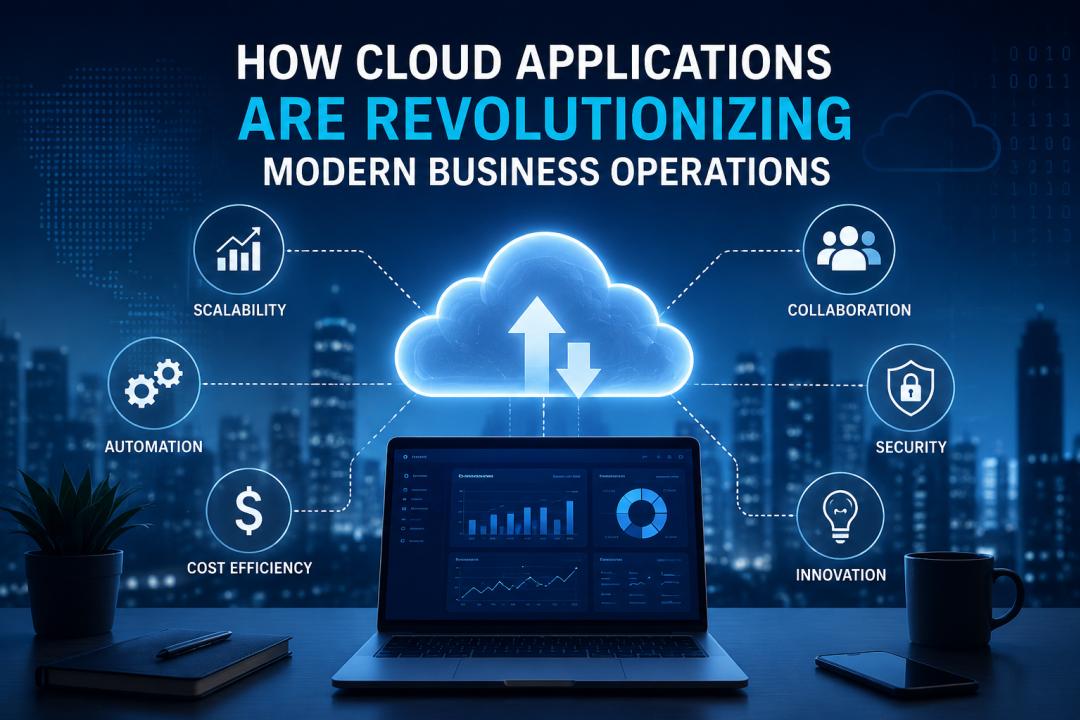
Cloud applications are revolutionizing modern business operations by providing scalability, flexibility, security, and improved efficiency. From streamlining workflows and enhancing collaboration to supporting customer engagement and business growth, cloud-based solutions have become essential for organizations seeking long-term success.
By leveraging cloud computing and investing in modern cloud technologies, businesses can build resilient digital infrastructures that support innovation, competitiveness, and sustainable growth in an increasingly connected world.
FAQs
1. What are cloud applications?
Cloud applications are software solutions hosted on remote servers and accessed through the internet.
2. How do cloud applications improve business operations?
They enhance efficiency, collaboration, scalability, and accessibility while reducing infrastructure costs.
3. What is cloud computing?
Cloud computing is the delivery of computing resources and services over the internet on demand.
4. Are cloud applications secure?
Yes, most cloud platforms offer encryption, backups, access controls, and advanced security measures.
5. Why are cloud applications important for business growth?
They provide the flexibility and scalability needed to support expansion, innovation, and digital transformation.