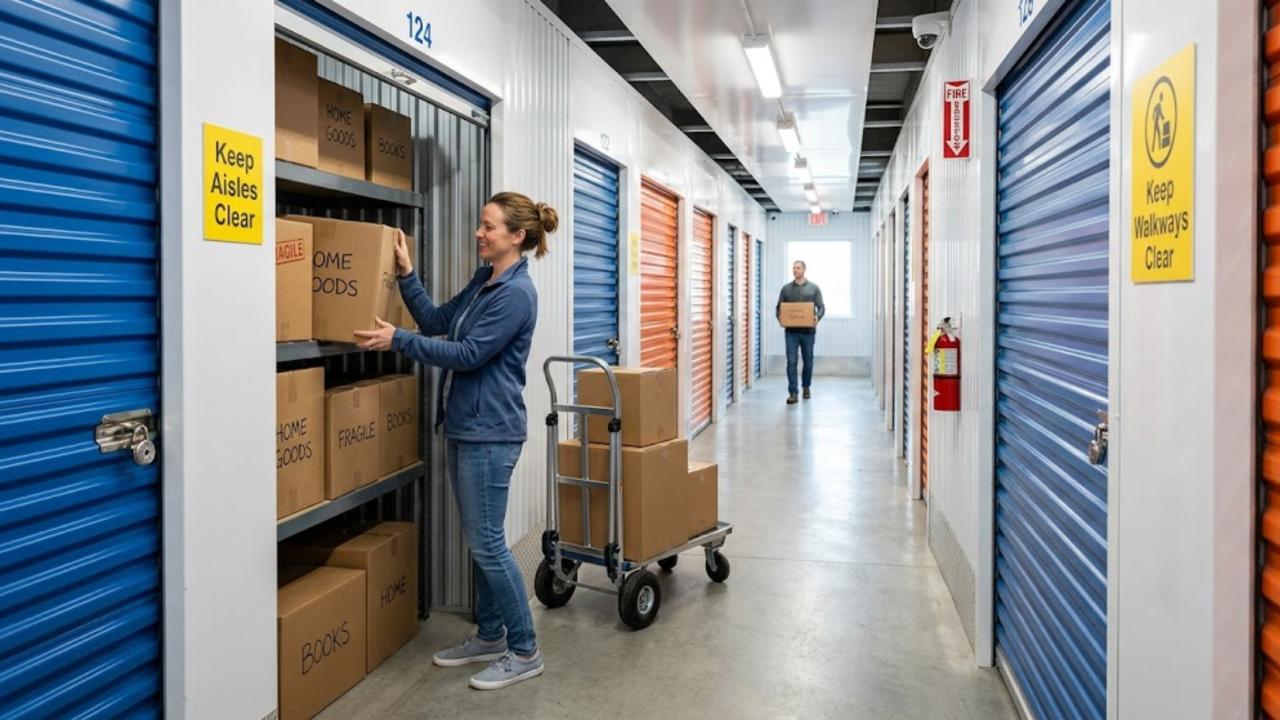
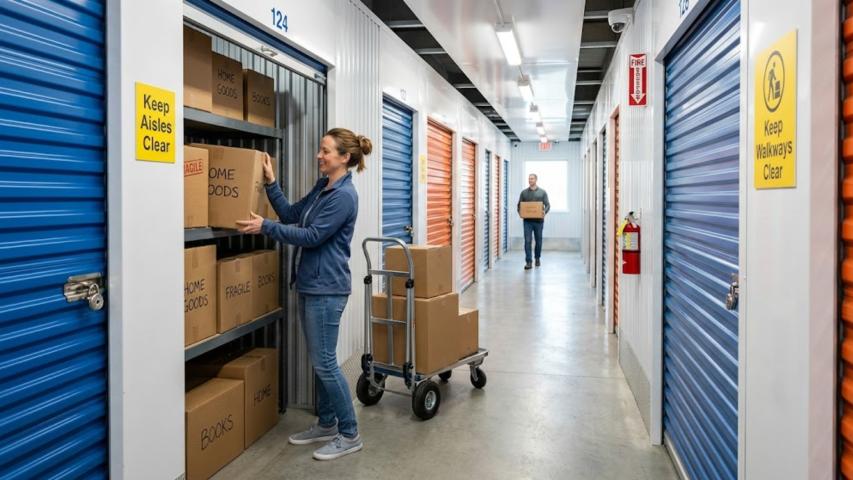
Renting a storage space is one of the most effective and efficient ways to declutter your home, navigate a major life transition, or expand your business operations. However, many first-time renters forget that a commercial storage facility functions much like a shared residential neighborhood or an apartment community.
Because you are sharing hallways, driveways, loading docks, and security gates with hundreds of other individuals, your actions directly impact the experiences of those around you.
Self-storage etiquette keeps locations clean and safe for all users. Whether you are looking for climate-controlled storage or the cheap storage units in Corpus Christi, being polite to those around you goes a long way.
Here are 20 rules of storage etiquette. We divided them into 5 groups so you can quickly find all the info you need to be a great storage customer.
1. Loading Dock and Driveway Manners (Drop-Off Zone)
The loading dock is one of the busiest and most complicated sections of any storage facility. To help avoid congestion and maximize efficiency, understand how your parking and use of the available tools and equipment can impact other customers.
- Park to the Side: Never park to block the path to any bay, storage lane, or driving lane. Always pull your vehicle to the side of the loading zone, or park within the storage bay lines, to ensure that other vehicles can easily move through the zone without having to wait.
- Be Fast/Move: The loading dock is not an extended parking area. The moment you finish unloading your large, bulky items, move your vehicle to the main parking space. You may not spend hours organizing and arranging the items within your dock area.
- Return Communal Flatbeds: Hand trucks and flatbed carts are courtesy tools that management provides to everyone. The moment you are finished using a flatbed, it must be returned to the front office or the designated storage bay, and must not be left abandoned inside the storage unit or blocking the hallway.
- Keep Your Engine Off While Staged: If you are unloading inside a covered or enclosed driveway, turn your vehicle’s engine off. In contrast, you unload to prevent carbon monoxide and exhaust buildup in the facility.
- Yield to Incoming Vehicles: Driveways aren't always designed to accommodate bulky vehicles. A good practice is to drive at 5 mph and give renters the right of way, especially those who are backing out or trying to maneuver around large vehicles.
2. Inside Your Space: Safety and Compliance
What happens behind closed doors has an impact on the whole building. For everyone’s sake, you are responsible for maintaining a clean, legal, and compliant self storage unit.
- Prohibited Items: There are clear reasons why you should never store liquids, chemicals, foods and plants that can spoil, or illegal items. These self-storage prohibitions are in place to protect the facility from pests, fire, or other damage.
- Store Inside: Make sure everything you own is contained in the storage unit you were assigned. Even for a short period, allowing your items to stick out into the aisles is a tripping hazard and against fire safety laws.
- Use a Premium Disc Lock: Make sure your space is secured with a quality heavy-duty disc lock every time you leave. Don’t be negligent and use a standard padlock.
- Prohibited Human or Animal Activities: Self-storage facilities are only for storage. You shouldn’t attempt to live, sleep, exercise, or conduct a business activity in a storage unit. They all violate the self-storage facility rules and laws of the city.
- DO’s and DON’Ts of Storage Units: Stick to the exact rules your facility manager has for what you can and cannot do with the utilities. Don’t make changes to the storage unit like drilling holes in the walls, hanging heavy items from the ceiling grid or structural supports, or using the electrical outlets that are shared with other units unless you obtain express written permission from the facility manager.
3. Packing and Organizing Like a Pro
An organized space minimizes the time you spend rummaging through boxes and ensures your unit does not become a structural hazard to neighboring walls.
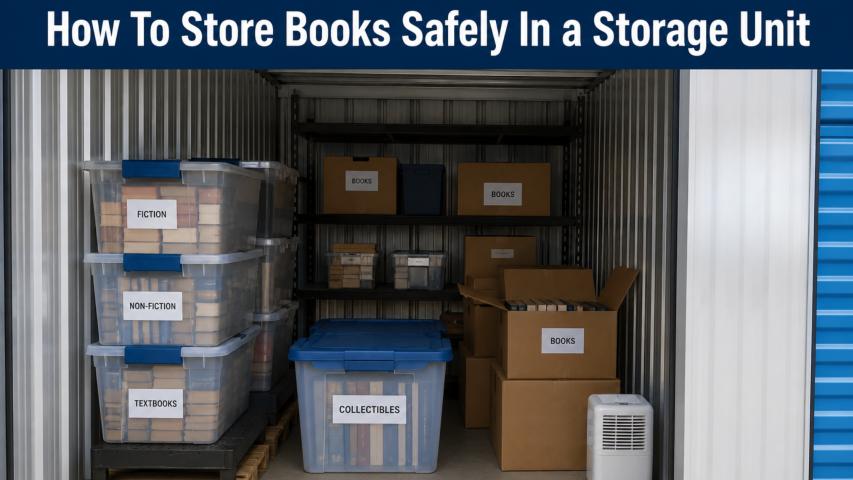
- Create an Accessible Center Aisle: When arranging your unit, leave a clear, walkable pathway straight down the center. This smart design allows you to access items at the very back of the space without having to drag half of your boxes out into the communal corridor.
- Stack Heaviest Items First: You need to use your heaviest furniture/totes to make a base and place lighter items ( cardboard boxes) on top. Stacking these boxes neatly prevents unstable, leaning towers from becoming a severe safety hazard to you or your neighbors.
- Leave Space for Airflow: You shouldn’t put your items directly on the metal walls of storage units. You need to leave a small gap to improve the airflow. This prevents moisture and also helps fight the problem of mildew.
- Label Everything Visually: Don't put yourself through more stress later on, and make sure labels are facing out. Not only does this help keep your storage unit organized, but it also makes it easy to find the stuff you need.
- Adapt Your Strategy to Your Life Situation: Always tailor your packing methodology to your specific long-term or short-term goals. For instance, if you are actively clearing out rooms to renovate your property, you can find highly practical advice on streamlining your setup by reviewing these smart renovation storage tips.
4. Community Care and Facility Respect
Treating the shared infrastructure with respect preserves low rental rates and fosters a welcoming environment for all tenants utilizing the property.
- Take Your Trash Home: The commercial dumpsters located on the property are strictly intended for facility maintenance and staff use. Never use them to discard unwanted furniture, old mattresses, or bags of household garbage; always pack your trash out with you.
- Strictly Respect Gate Access Hours: Always check and abide by the posted gate access schedule. Trying to tailgate behind another vehicle after the facility has closed, or attempting to force your way inside past access hours, triggers security alarms and strains relations with management.
- Report Problems Right Away: If you see anything that looks broken, like a flickering bulb or an electronic gate that’s not working, let the front office know. They can fix these things before they become a bigger problem for everybody.
- Look After Your Kids and Pets: There are huge moving trucks and machinery in a storage facility that can be very dangerous. For your safety, make sure to keep pets in the car and keep children close by your side at all times.
- Be Considerate of Your Noise Levels: Music and talking during phone calls is fine while you sort through your assets, but keep in mind that noise carries in the storage facility. Be considerate and think of your fellow renters.
5. Long-Term Renter Responsibility
Being a stellar community member involves consistent communication and proactive oversight of your account and physical space over time.
- Keep Your Contact Information Updated: If you change your phone number, move to a new physical address, or switch your primary email, update the front office immediately so they can reach you seamlessly in the event of an emergency.
- Check on Your Unit Every Few Months: It is not a good idea to walk away and leave your goods for a year. You should check every few months to make sure your goods are okay, locks are fine, and the space is not too dirty.
- Stay On Top of Your Payments: Set up an auto-pay plan so that your payments are on time each month. Consistent payments help you avoid late fees and the hassle of having your gate access temporarily overlocked by management.
- Let Staff Know If You Are Leaving: If you decide you want to clear out your personal storage space, you need to give the storage facility management the notice that's been agreed to in your contract. This is the polite thing to do so the team can clear the space for a new customer.
- Unit Etiquette: Take all of your property with you, including your lock, when you finish your time with the unit. It is nice to keep the place clean, and maybe even a little helpful, and it makes sure you get your deposit back.
Your Checklist for Stress-Free Storage
Proper storage etiquette is based on one principle: consideration. This means treating the staff and other renters, as well as the property, with respect. When self storage best practices are used, along with professional storage unit rental advice, you are able to keep your belongings safe and help improve the community.
Renting a storage unit doesn't have to be a hassle. If you plan, fit your belongings into the space well, and follow the rules, the process should be easy for you. Being considerate to the staff and other renters on a daily basis goes a long way, and it helps keep the storage rental units neat and pleasant for everyone.