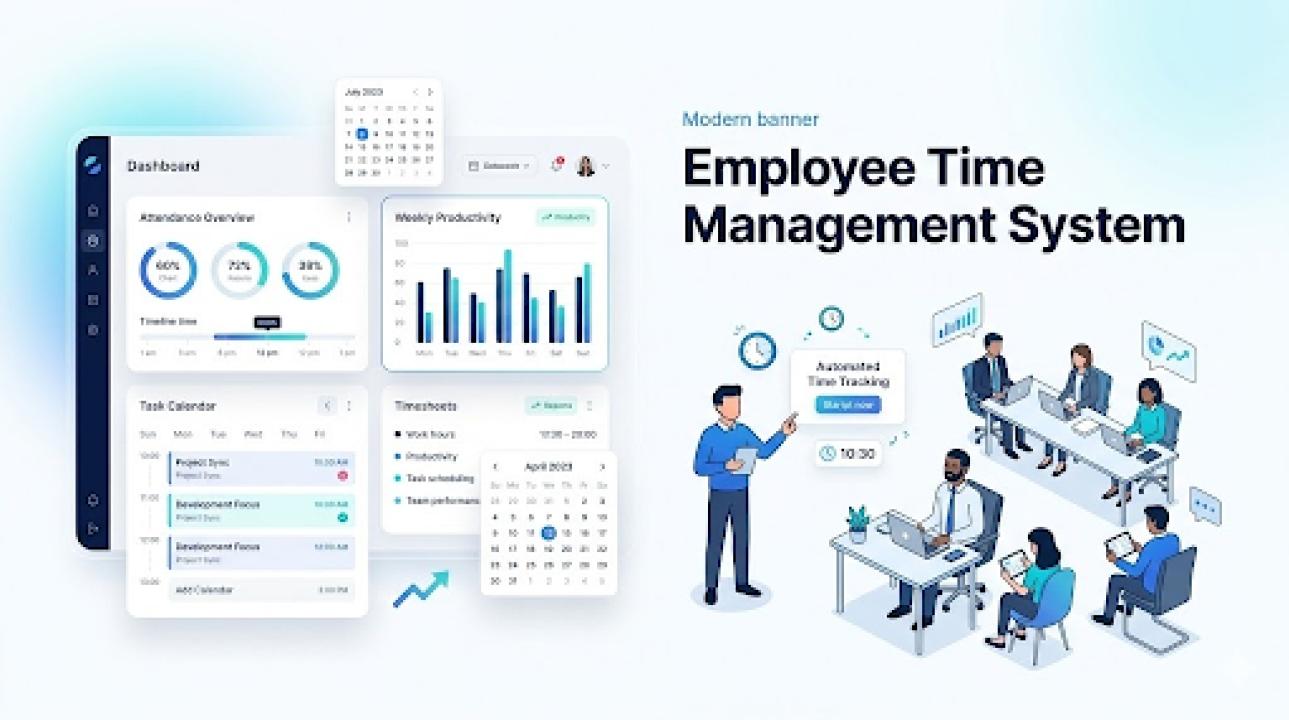
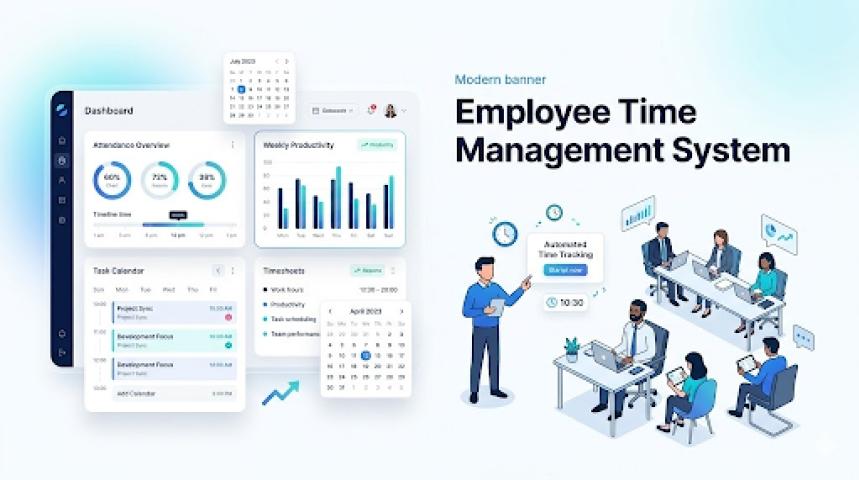
An Employee Time Management System is a digital solution designed to help organizations track, manage, and optimize how employees spend their working hours. In today’s fast-paced work environment, managing time manually is no longer practical. Businesses need accurate data, real-time insights, and automation to improve productivity and reduce operational gaps. This is where an employee time management system becomes a crucial business tool rather than just a basic attendance tracker.
At its core, an employee time management system records working hours, breaks, overtime, and task durations. However, modern systems go far beyond simple clock-in and clock-out features. They integrate with payroll, project management, and performance analytics, allowing companies to make informed decisions based on actual work patterns.
How Does an Employee Time Management System Work?
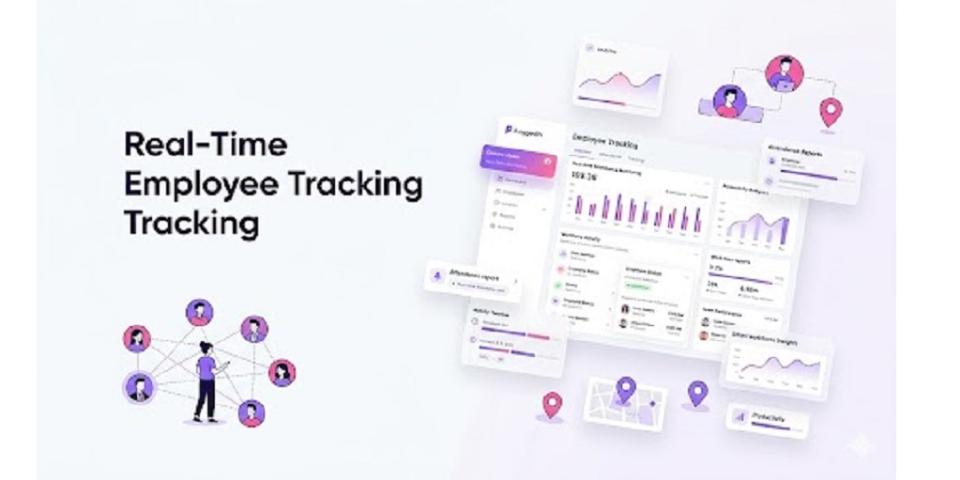
An employee time management system typically works through web or mobile platforms. Employees log their time using secure login methods such as apps, browsers, biometric devices, or location-based check-ins. Managers can then view detailed reports showing attendance trends, productivity levels, and time allocation across projects or departments.
Automation is a key advantage. Once time data is captured, the system automatically calculates total hours, overtime, late entries, and absences. This eliminates human error and ensures transparency between employees and management. Some advanced systems also offer alerts and reminders, helping teams stay disciplined with their schedules.
Why Is an Employee Time Management System Important for Productivity?
Time is one of the most valuable resources in any organization. Without proper tracking, businesses often suffer from inefficiencies, missed deadlines, and inaccurate payroll processing. An employee time management system provides clear visibility into how time is being used, making it easier to identify productivity gaps and areas for improvement.
By analyzing time reports, managers can understand which tasks consume the most hours and whether workloads are balanced. This insight helps in reallocating resources, improving planning, and preventing employee burnout. When employees know their time is tracked fairly, it also encourages accountability and better focus during work hours.
What Are the Key Features of an Employee Time Management System?
A reliable employee time management system includes several essential features. Time tracking is the foundation, but reporting and analytics play an equally important role. Customizable reports allow businesses to review daily, weekly, or monthly performance data with ease.
Integration capabilities are another major feature. When connected with payroll or HR systems, time data flows seamlessly, reducing administrative workload. Many systems also support remote and hybrid work models by enabling mobile access and location-based tracking. This flexibility makes them suitable for modern, distributed teams.
How Does an Employee Time Management System Help with Payroll Accuracy?
Payroll errors can damage employee trust and create compliance issues. An employee time management system ensures that payroll calculations are based on accurate, real-time data rather than estimates or manual entries. Overtime, leave, and deductions are automatically calculated according to company policies.
This accuracy not only saves time for HR teams but also reduces disputes related to salary and working hours. Employees feel more confident knowing that their efforts are recorded correctly, which improves overall workplace satisfaction.
Can an Employee Time Management System Support Remote Work?
With the rise of remote and hybrid work environments, tracking employee time has become more challenging. An employee time management system solves this problem by offering cloud-based access, mobile apps, and flexible tracking options. Employees can log their hours from approved locations while managers maintain full visibility.
This system also helps ensure compliance with work policies, even when teams are spread across different locations. It creates a structured work environment without micromanaging, allowing employees to manage their time independently.
Why Is an Employee Time Management System a Smart Long-Term Investment?
Investing in an employee time management system delivers long-term benefits for businesses of all sizes. It reduces administrative costs, improves productivity, enhances transparency, and supports data-driven decision-making. Over time, the insights gained from time tracking help organizations refine workflows and improve overall efficiency.