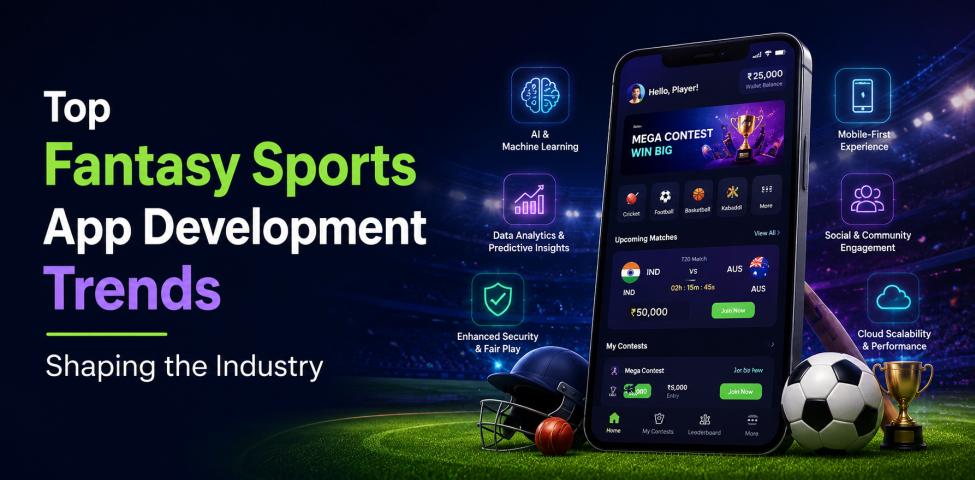
The fantasy sports market still shows outstanding growth because of the large number of users participating in online sports-related activities. As a result of improvements in artificial intelligence, data analysis, blockchain, and immersive technology, the market has never changed as fast. At the same time, companies and entrepreneurs need some innovations to attract more users and make profits using the next-generation apps.
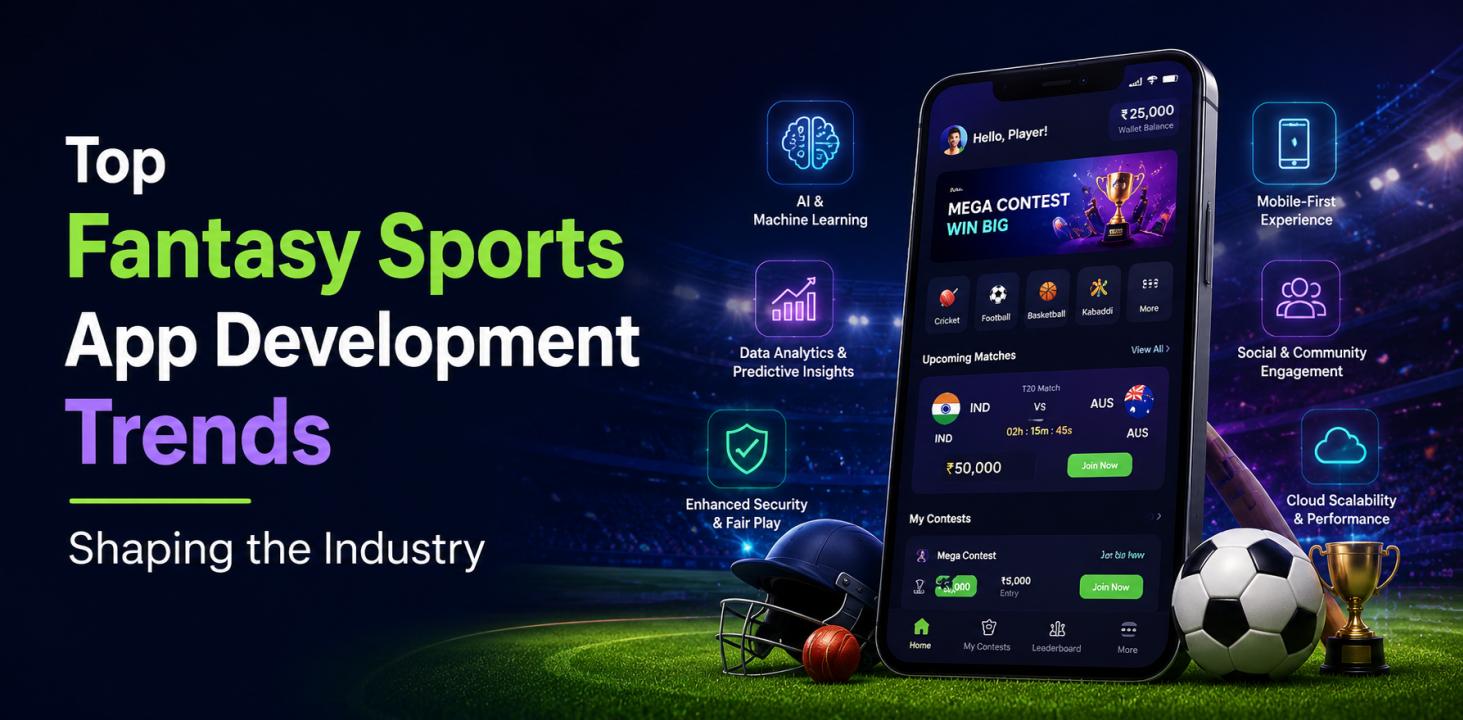
In order to develop successful strategies and invest in fantasy sports app development in 2026, one needs to have some knowledge about trends and innovations that will change the way users use such applications.
1. AI-Powered Personalization
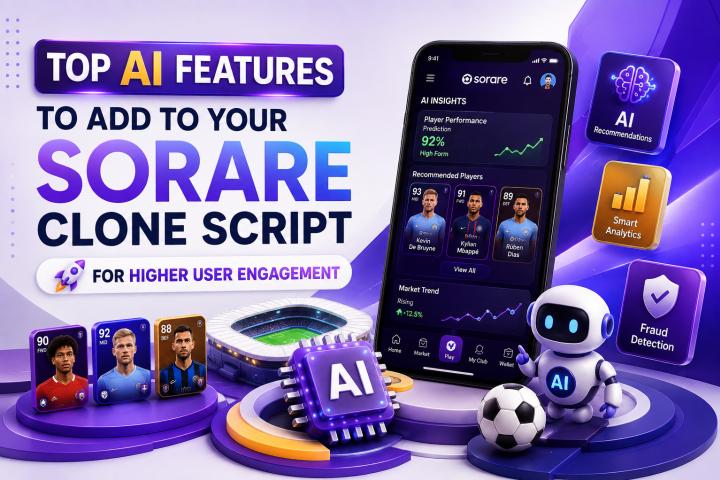
AI technology is being used increasingly as an integral part of fantasy sports websites. The AI technology will be able to use user behavior data, data about players, and their historical performance to provide personalized recommendations.
Key benefits include the following:
- Customized team suggestions
- Intelligent player insights
- Personalized notifications
- Enhanced user engagement
- Improved retention rates
AI-driven personalization helps users make informed decisions while creating a more interactive and enjoyable experience.
2. Real-Time Analytics and Predictive Insights
Users look forward to accessing live data and predictive analytics. With the development of modern technologies for processing data, real-time information regarding the performance of players, injuries, match stats, and scoring is accessible.
Predictive analytics tools have the ability to predict the performance of players by considering trends and the present situation, and help users choose wisely.
3. Blockchain Integration for Transparency
Blockchain technology is gaining popularity within the fantasy sports ecosystem. It provides transparent transaction records, secure payment systems, and tamper-proof contest management.
Benefits of blockchain implementation include:
- Increased trust among users
- Secure prize distribution
- Transparent scoring systems
- Enhanced fraud prevention
- Improved transaction security
This trend is expected to become a major differentiator for future fantasy sports platforms.
4. Cross-Platform Experiences
Present-day customers keep changing from smartphones to tablets, laptops, and smart gadgets during the course of the day. This is why companies have started to concentrate on cross-platform experience.
Applications that ensure synchronization of user data on several devices enhance accessibility and ease of use while ensuring consistency on all platforms.
5. Integration of Augmented Reality and Virtual Reality
AR and VR technologies are revolutionizing the entertainment industry. Fantasy sports websites are now incorporating such technology to provide users an interactive experience in terms of viewing player statistics, the performance of teams, and match details.
Potential use cases include:
- Virtual draft rooms
- Interactive player comparisons
- Immersive match experiences
- Real-time visual statistics
These features create deeper engagement and make fantasy gaming more entertaining.
6. Voice-Enabled Features
Voice assistants continue to gain popularity among consumers. Fantasy sports applications are integrating voice search and voice command capabilities to improve accessibility.
Users can:
- Check player statistics
- Receive score updates
- Manage teams
- Join contests
- Get performance insights
Voice technology helps simplify user interactions and enhances convenience.
7. Advanced Social Engagement Features
Community engagement remains one of the strongest drivers of user retention. Social features are becoming increasingly sophisticated in 2026.
Popular additions include:
- Live chat functionality
- Private leagues
- Social sharing tools
- Community forums
- Friend challenges
- Interactive leaderboards
These capabilities foster stronger user connections and encourage long-term platform participation.
8. Expansion Beyond Traditional Sports
While football, cricket, basketball, and baseball remain dominant, fantasy platforms are expanding into emerging sports and esports competitions.
New opportunities include:
- Esports fantasy leagues
- Motorsport fantasy contests
- Mixed sports competitions
- Regional sporting events
Diversification allows platforms to attract broader audiences and enter untapped markets.
9. Enhanced Security and Data Protection
Cybersecurity remains a top priority as fantasy sports platforms handle sensitive user information and financial transactions.
Key security measures include the following:
- Multi-factor authentication
- Data encryption
- Secure payment gateways
- Biometric verification
- Fraud detection systems
A reliable fantasy sports app development company understands the importance of implementing robust security frameworks to protect both businesses and users.
10. Cloud-Based Infrastructure
Cloud technology enables fantasy sports platforms to handle millions of users during major sporting events without compromising performance.
Advantages include:
- Improved scalability
- Faster deployment
- Reduced infrastructure costs
- Enhanced reliability
- Better disaster recovery
Cloud-native architectures are becoming the preferred choice for modern digital sports platforms.
11. Hyper-Fast Live Streaming Integration
Users increasingly prefer platforms that combine fantasy participation with live match viewing. Integrated streaming capabilities enable users to monitor contests while watching games in real time.
This creates a more engaging ecosystem where users can instantly react to live sporting events and adjust strategies accordingly.
12. Greater Focus on User Experience Design
User experience remains a critical success factor. Businesses are investing heavily in intuitive interfaces, streamlined navigation, and visually appealing dashboards.
An experienced fantasy sports app developer focuses on creating seamless interactions that reduce complexity while maximizing engagement.
13. Automation in Platform Management
Automation is helping operators manage contests, user onboarding, customer support, and performance monitoring more efficiently.
Automated systems improve operational efficiency by:
- Reducing manual workloads
- Improving response times
- Enhancing platform stability
- Increasing user satisfaction
As platforms scale, automation will become an essential component of long-term growth.
14. Demand for Custom Solutions
Businesses are increasingly seeking tailored platforms that align with specific market requirements and business objectives.
Professional mobile app development services enable organizations to build customized solutions with unique features, branding elements, and monetization strategies that differentiate them from competitors.
15. Growth of Enterprise-Grade Sports Platforms
Big companies have developed an ecosystem for different kinds of sports, tournaments, payment options, and users.
With increasing needs and advanced practices in developing software for fantasy sports, businesses can develop platforms that are scalable enough to handle global customers and other operational requirements.
Choosing the Right Technology Partner
Selecting the right development partner is critical for long-term success. Businesses should evaluate experience, technical expertise, portfolio quality, and scalability capabilities before making a decision.
A trusted fantasy sports software development company can help organizations navigate evolving industry trends and build future-ready platforms that remain competitive in a rapidly changing market.
Conclusion
The fantasy sports era is about to usher in a technology-powered era, including artificial intelligence, blockchain, immersive technologies, cloud computing, and analytics.
Companies that adopt these technology trends early will be well-positioned to attract users, engage them, and generate revenue. As technology changes over time, being up-to-date with the latest technological advancements will be the key to success in the fiercely competitive realm of the fantasy sports industry in the years to come, including 2026.