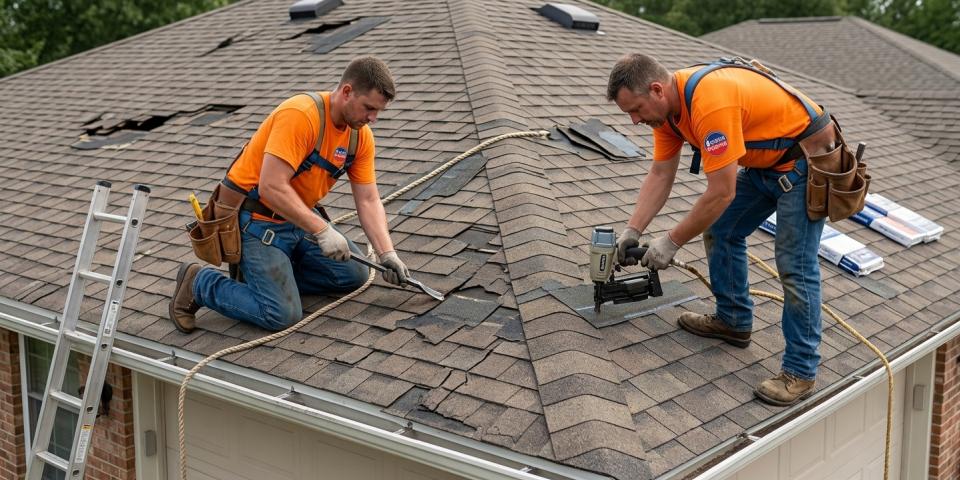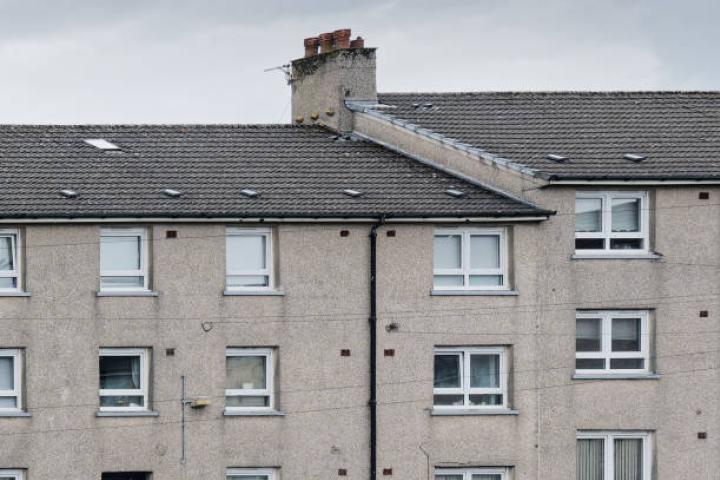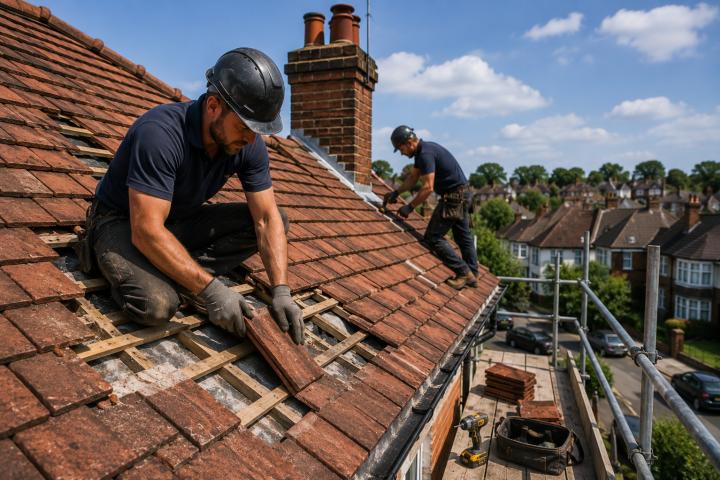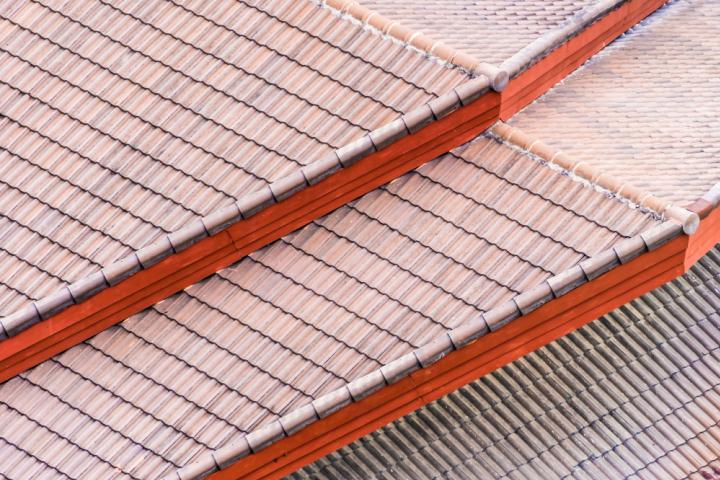
A neighbor of mine re-shingled his detached garage last spring and ran out of material with two rows left to go. He had measured the building carefully: 24 feet by 20 feet, a tidy 480 square feet. He bought shingles for 480 square feet plus a little extra, felt good about it, and still ended up making a second trip to the store on a Saturday afternoon when nothing gets done quickly.
The mistake wasn't his tape measure. It was that he measured the ground.
A roof is bigger than the box it sits on
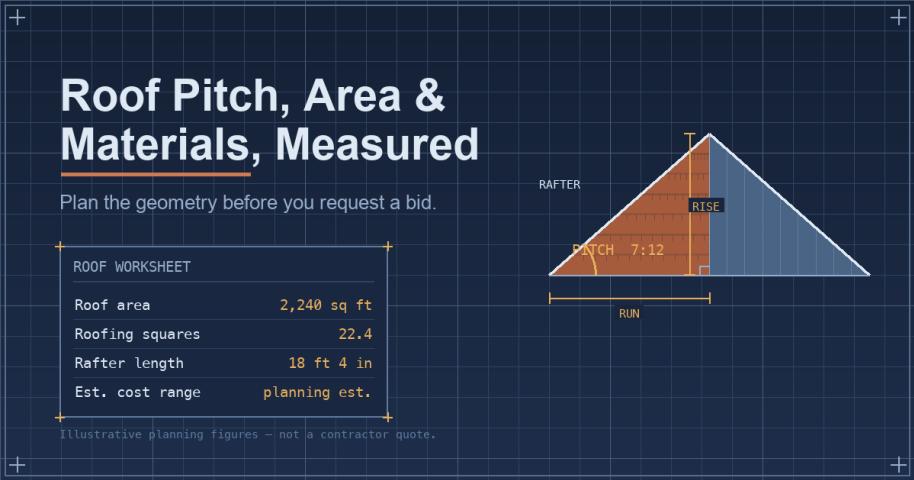
The footprint of a building tells you how much floor is underneath the roof. It does not tell you how much roof there is, because a roof is tilted, and a tilted surface covers more area than the flat rectangle below it. The steeper the slope, the bigger the gap between the two numbers.
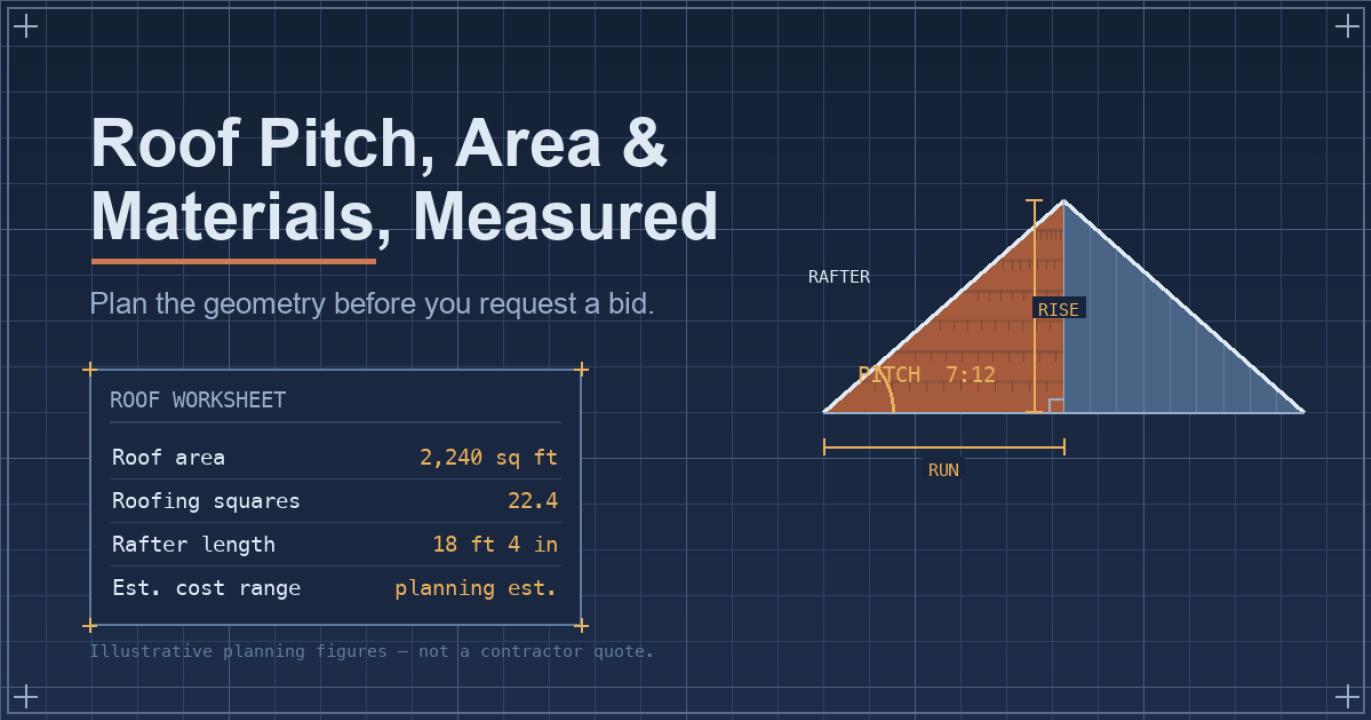
His garage had a fairly ordinary 6-in-12 pitch, meaning the roof rises 6 inches for every 12 inches it runs horizontally. That slope stretches the true surface area to about 537 square feet, not 480. That's a difference of 57 square feet, more than half a "square" of roofing (roofers count in squares of 100 square feet). Add the normal 10 to 15 percent you lose to waste, starter courses, and cut-off at the ridge, and the shortfall from measuring the footprint alone is enough to send anyone back for more bundles.
This is the part people underestimate. A flat rectangle feels like a complete measurement. It looks precise. But it quietly ignores the one dimension that matters most for how much material lands on the roof.
You can get most of the way from the ground
The good news for a simple roof is that you don't need to climb up to get a workable number, and honestly you shouldn't be up there unless you're set up for it. Two things get you close:
- The footprint. Measure the length and width of the building at ground level, and don't forget any roof overhang past the walls, usually 12 to 18 inches on each side.
- The pitch. You can estimate this from the ground with a level and a tape, or by standing back and counting the courses of a known-height siding board against the gable. For a garage or shed you can often read it off the gable end without leaving the driveway.
Once you have those two, the footprint gets multiplied by a slope factor that comes from the pitch, and that's your roof area. The arithmetic isn't hard, but the slope factor for each pitch involves a square root, which is where a lot of driveway math goes sideways. This is the point where I'd rather let a tool do the conversion: a set of free roof pitch and area calculators will turn a footprint and a pitch into a slope-corrected area, and the same geometry gives you rafter length if you're framing rather than just covering. Treat whatever number comes out as a planning estimate, not a purchase order.
Where "simple" stops being simple
All of the above works because a garage roof is usually two plain rectangles meeting at a ridge. The moment your roof has valleys, hips, dormers, or a section at a different pitch, ground measurement gets unreliable fast. Valleys and hips add diagonal cuts and extra waste that a footprint-times-slope-factor number won't capture. A cross-gabled house can hide a surprising amount of roof behind its own angles.
There's also everything the surface area never mentions: tear-off of the old layers, the condition of the decking underneath, flashing around chimneys and skylights, ridge vent, ice-and-water membrane where code requires it, and how hard your particular roof is to reach and walk. Those line items are where a contractor's quote separates from a homeowner's back-of-envelope figure, and they're specific to your house and your local prices. A calculator can't see any of it.
The measurement tells you how much roof you have. It does not tell you what it costs to put a new one on, and it never replaces someone standing on the actual decking.
So what is this actually good for
Knowing your real roof area is worth the ten minutes even if you never buy a single bundle yourself. If you're covering a shed, a garage, a carport, or a small addition, it tells you roughly how much material to order and keeps you from that Saturday second trip. If you're hiring out a bigger job, it gives you a sanity check: when a quote lists 32 squares and your own footprint math suggests something closer to 21, that's a fair question to ask, not an accusation.
Measure the footprint. Read the pitch. Let the slope factor do its work, and respect the point where your roof gets complicated enough that a number from the ground stops being trustworthy. For a plain gable that covers most of the honest answer. For anything with valleys and dormers, it's the start of a good conversation with someone who's going to be standing up there.