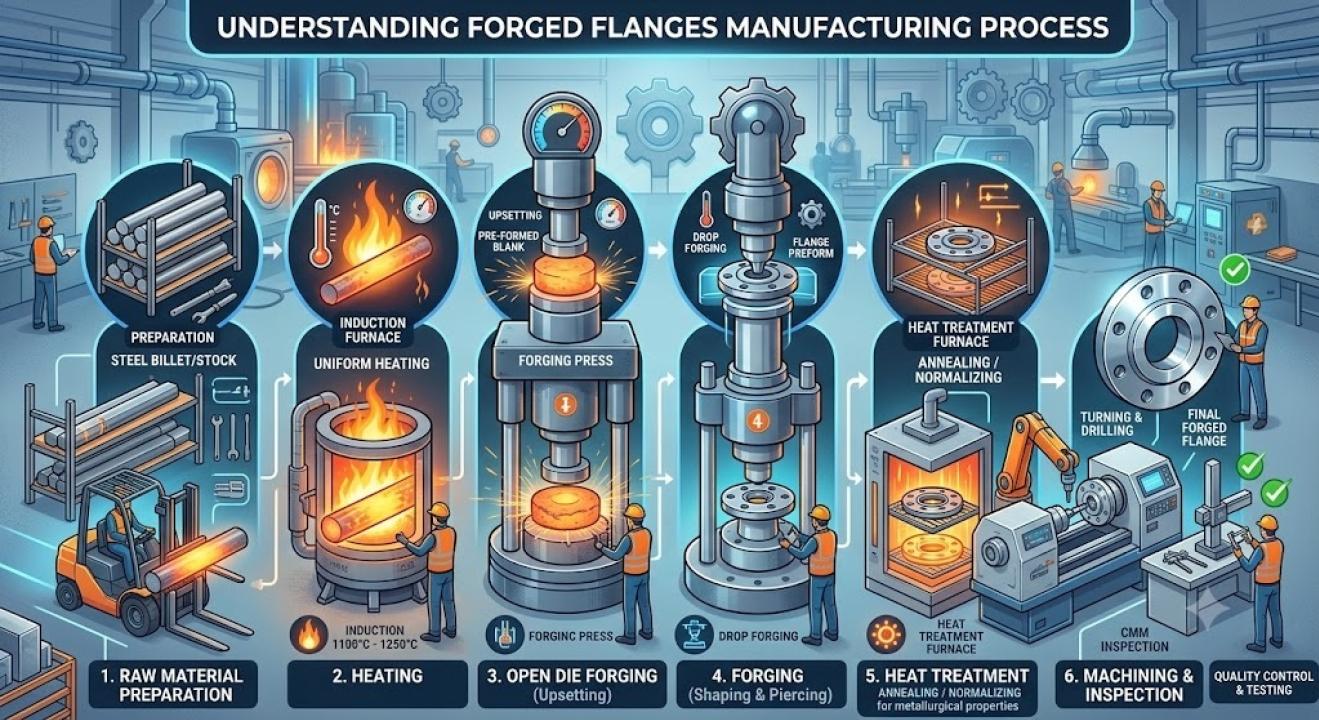
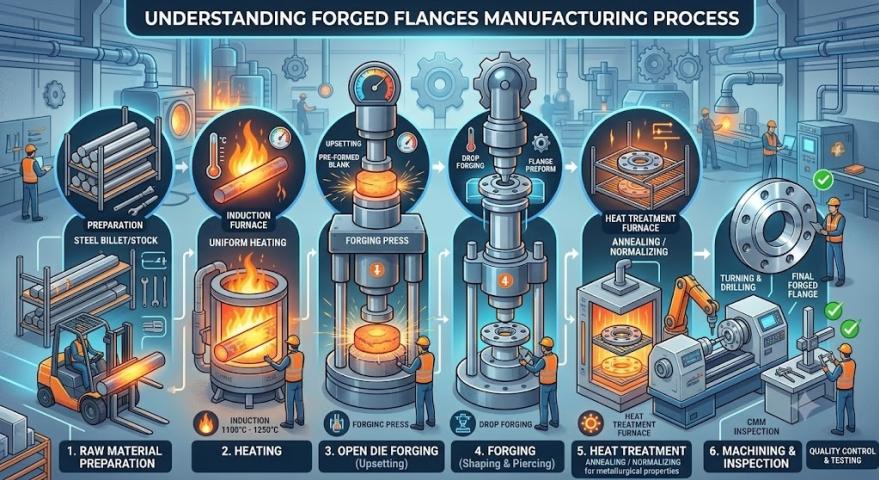
The manufacturing process of forged flanges starts with selecting the quality raw material that is to be forged such as alloy steel, duplex steel, carbon steel or stainless steel depending on your requirements and the standard established by the industry you are in. The metal is then heated to an appropriate forging temperature and formed into shape with the use of either high-tension or low-tension hammers or hydraulic presses until the proper dimensions and properties are achieved from the four castings. After the forging process is completed, the flanges are heat treated in order to enhance their mechanical performance, then they are precision machined to produce accurate bolt holes, bore diameters and surface finishes. After machining, rigorous and systematic quality inspection procedures are conducted to ensure that the finished products meet various international standards such as ASME, ASTM, DIN or EN. The manufacturing process by which forged flanges are created provides a finished product that is superior in strength, leak-proof nature, corrosion-resistance and durability for use in demanding environments found in oil and gas production, power generation, chemical processing and other heavy industrial piping systems.
Forged flanges price in India
Forged flange cost in India is determined by many things including type of flange, material grade, size, pressure rating, manufacturing standard, and quantity ordered. Typically, the lowest costs are associated with carbon steel forged flanges. Stainless steel, alloy steel, duplex, and super duplex materials have higher prices than carbon steel due to their superior corrosion resistance or mechanical property enhancement potential. In addition to these variables, custom machining, specialty coatings, testing requirements, and compliance with international standards (ASME, ASTM, DIN and EN) will have an influence on final price. Indian forgings Suppliers can provide excellent price points because of technical manufacturing capability, availability of raw materials, and production efficiency; therefore, India is one of the most popular locations where both Domestic and International purchasers find competitively priced high-quality forged flanges.
Benefits of using Forged flanges
Flanges that are forged possess many advantages including being very durable, strong, and dependable for industries that utilize piping systems with high pressure and temperature requirements. The process of forging improves the grain structure of the metal so the mechanical properties are better than cast flanges, along with being able to withstand impacts greater than cast flanges along with having much higher fatigue strength than cast flanges. When flanges are manufactured by forging, any pressure from any fluid that enters through a flange will be sealed tightly creating a leak-proof barrier, allowing fluids to be transferred safely and efficiently in the following industries: oil & gas, power generation, chemical processing, marine, and petrochemical. In addition to sealing fluids perfectly, flanges that were manufactured by forging will give you better corrosion resistance therefore they will last longer than cast flanges and require less maintenance than cast flanges over a period of time helping to reduce operating costs. Flanges made from forged steel come in a variety of sizes, materials, and pressure ratings that produce consistent performance in the most demanding of industrial settings.
Tips for choosing the best forged flanges
The selection of forged flanges for any given application begins with determining the operating conditions, such as: pressurized conditions; heat; type (of fluid); environmental conditions; and many other factors. When selecting the proper forged flange materials, you need to consider: carbon steel; stainless steel; alloyed steel; duplex steel, etc.; strength; and by the corrosion resistance required for where the flange has been designed to fit and work. In addition to the materials, choosing a forged flange requires the flange to comply with industry standards (using recognized standards such as ASME; ASTM; DIN; or EN) and to be supplied in the correct size, pressure class, and facing type for the piping system being installed. Another criterion for selecting quality forged flanges is to use a reputable manufacturer of forged products that adheres to strict quality control procedures; provides material test certs; and conducts inspections (dimensional, mechanical, and non-destructive tests) of its products. After taking into consideration these criteria for various forged flanges, compare other things (manufacturing capability; certifications; delivery timeframe; and pricing) for each vendor in order to determine which vendor offers forged flanges that will provide reliable long-term performance and value.
Conclusion
Knowing about the forged flanges manufacturing process allows the buyer to make informed decisions when buying components for their critical piping systems. Every stage of the manufacturing process, starting with selecting raw materials through precision forming, through listing to validated quality inspections, contributes to the strength, durability, and overall reliability of a forged flange as an end product. While the forged flanges pricing in India will differ depending on such factors as material type, size, pressure class and specs, the advanced manufacturing capabilities available within India typically yield superior quality at competitive pricing. Recognizing the advantages associated with forging flanges, and working with a sourced manufacturer who meets internationally recognized standards, allows industries to buy long-lasting, reliable components that can perform without leaking or malfunctioning in the highly demanding environments found in the oil & gas; power generation; petrochemical; marine; and industrial processing industries.