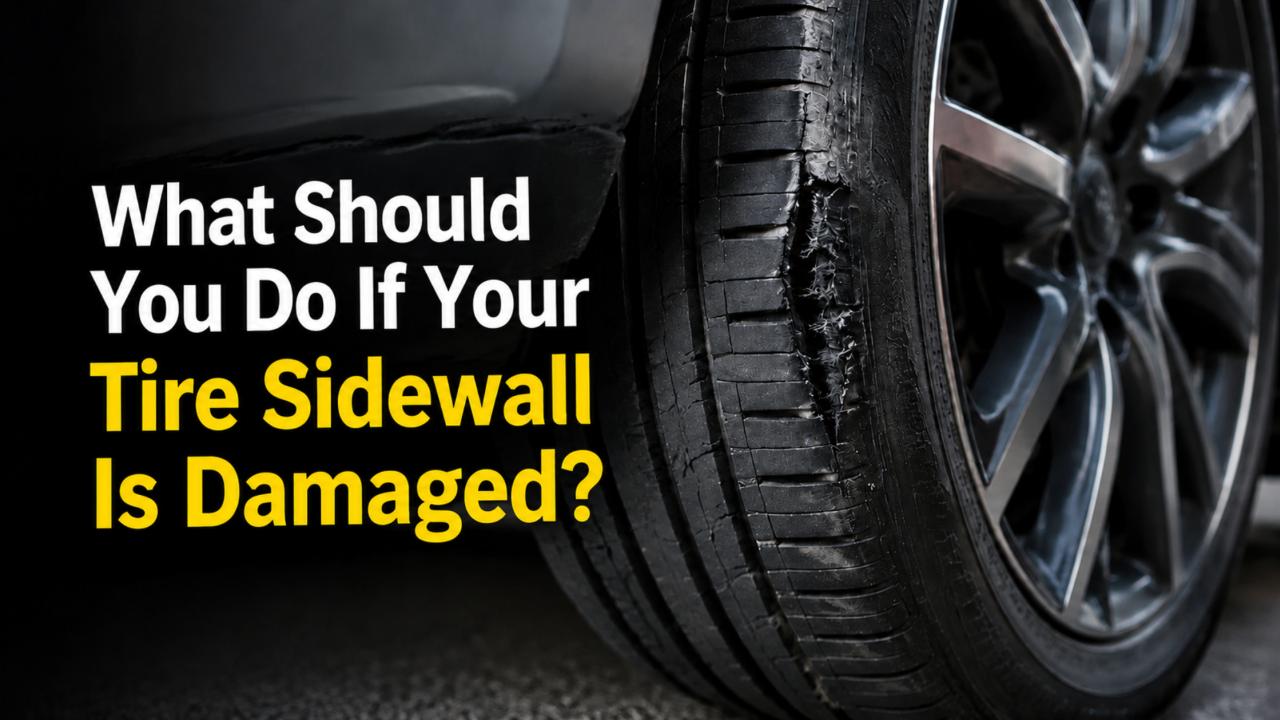
You are pulling out of a parking spot, and there it is, a nasty scrape along the side of your tire that definitely wasn't there yesterday. Or maybe you clipped a curb a little too hard last week and now there's a weird bubble poking out that makes you wince every time you glance at it.
If any of this sounds familiar, you're dealing with tire sidewall damage, and how you handle it next could be the difference between a quick fix and a dangerous blowout on the highway.
Unlike tread damage, which usually gives you some warning and a bit of wiggle room, sidewall damage is a different beast entirely.
The sidewall doesn't have the same thick layers of rubber protecting it, which means even small-looking damage can be a much bigger problem underneath. So let's break down exactly what you're looking at, when it's serious, and what steps to take next.
First, What Does Sidewall Damage Actually Look Like?
Not all damaged tire sidewalls are created equal. Some are cosmetic annoyances, others are ticking time bombs. Here's how to tell them apart.
Scratches and Nicks
These are usually the least scary of the bunch. Minor scuffs from tight parking spots or brushing against a curb typically don't compromise the tire's structure.
That said, if you notice several scratches, or one that looks unusually deep, it's worth having a professional take a look rather than assuming it's harmless.
Cuts
A cut in the sidewall is trickier to judge because depth matters, and depth isn't something you can eyeball. A shallow cut might not be an emergency, but a deep one can slice into the carcass ply, the internal layer that actually holds the tire's air pressure.
Once that layer is compromised, you are looking at a tire that can lose pressure suddenly and without warning. And here's the part most drivers don't realize: cuts can happen on the inner sidewall too, completely out of view.
If you have recently rolled over glass, metal debris, or sharp gravel, get your tires checked even if nothing looks obviously wrong.
Bulges and Bubbles
This is the one that should genuinely make you nervous. A bulge, that balloon-like lump on the sidewall, usually shows up after hitting a pothole or slamming into a curb. It means the internal carcass ply has actually ruptured, and only the outer rubber is holding things together.
if that bubble gives way while you are cruising at highway speed, you could lose control of the vehicle in an instant. Interestingly, speed bumps are not a culprit here, their gentle slope is rough on suspension components, not on tires. Potholes and curbs are the real troublemakers.
Cracks
Cracking sidewalls are less about impact and more about time. UV exposure, ozone, age, and even certain tire-shine chemicals (especially ones with silicone) can strip away the protective compounds in the rubber, leaving it brittle and prone to splitting.
If you are noticing a web of fine cracks across the sidewall, your tire is likely nearing the end of its usable life.
Slight Deformation
Not everything is cause for alarm. Radial tires which make up the vast majority of tires on the road today often have small, subtle deformations where internal plies overlap.
This is completely normal and doesn't affect performance, so don't panic if you spot a minor irregularity that's been there for a while.
Punctures
A puncture in the tread can usually be patched and you're back on the road with full performance restored. A puncture in the sidewall, though, is a different story - it cannot be repaired safely, no matter how small it looks. The tire will need to be replaced.
Can a Tire Sidewall Be Repaired?
This is the question everyone wants answered, and the honest answer is almost always no. Because the sidewall flexes constantly as you drive, any repair attempt (patches, plugs) simply can't hold up the way it would on the tread.
Reputable tire sidewall repair shops will tell you straight, sidewall damage nearly always means tire sidewall replacement, not a patch job. If a shop tells you otherwise, that's a red flag worth taking seriously.
Reading the Sidewall Before Something Goes Wrong
Here's a pro tip most drivers skip: get familiar with your tire sidewall markings before you are standing in a parking lot squinting at a bulge. These markings tell you your tire's size, load rating, speed rating, and manufacture date -information that becomes critical when you're comparing a damaged tire against its replacement. If you have never taken the time to decode them, this guide on how to read tire sidewall markings and pick the right tires breaks it down in plain language.
Driving With Sidewall Damage: Just Don't
We get it - life is busy, and a tire that "still holds air" feels like it can wait. But driving with sidewall damage is a gamble with genuinely high stakes. Unlike a slow tread leak that gives you fair warning, sidewall failure tends to be sudden.
One moment you're driving normally, the next you've got a tire blowout at speed. Add in the fact that bulges and cuts often cause abnormal vibration you can actually feel through the steering wheel, and there's really no excuse to ignore the signs.
How to Prevent Sidewall Damage in the First Place
A few habits go a long way in tire blowout prevention:
- Keep your tires inflated to the manufacturer's recommended pressure (check your driver's door sticker or owner's manual)
- Slow down and steer clear of curbs whenever possible
- Treat potholes like the enemy, swerve safely around them instead of plowing through
- Build tire safety inspection into your routine, a quick monthly walk-around takes two minutes
- Skip the silicone-based tire shine products; they can dry out rubber faster than you'd think
When to Replace a Tire vs. When to Just Keep an Eye on It
As a general rule: cracks, bulges, deep cuts, and sidewall punctures all point toward replacement. Minor scratches and the normal ply-overlap deformation we mentioned earlier usually don't.
But since it's genuinely hard to judge severity without training, the safest move is always to get a second opinion from people who look at tires all day, every day.
That's exactly where a trusted brake shop comes in. A proper inspection takes just a few minutes and can tell you definitively whether that scuff is nothing to worry about or a warning sign you shouldn't be ignoring.
Don't Risk a Blowout: Get Expert Insight on Your Tire Sidewall Damage
Your tires are the only part of your car actually touching the road, there's no room for guesswork when it comes to sidewall damage. If you have spotted a scratch, a crack, a cut, or that stomach-dropping bulge, don't put off getting it looked at. A five-minute check today could save you from a blowout tomorrow.
Ready to get peace of mind? Find your nearest tire shop near me and get your tires inspected by professionals who will tell you exactly what your tires need, no guesswork, no upselling, just straight answers to keep you safe on the road.