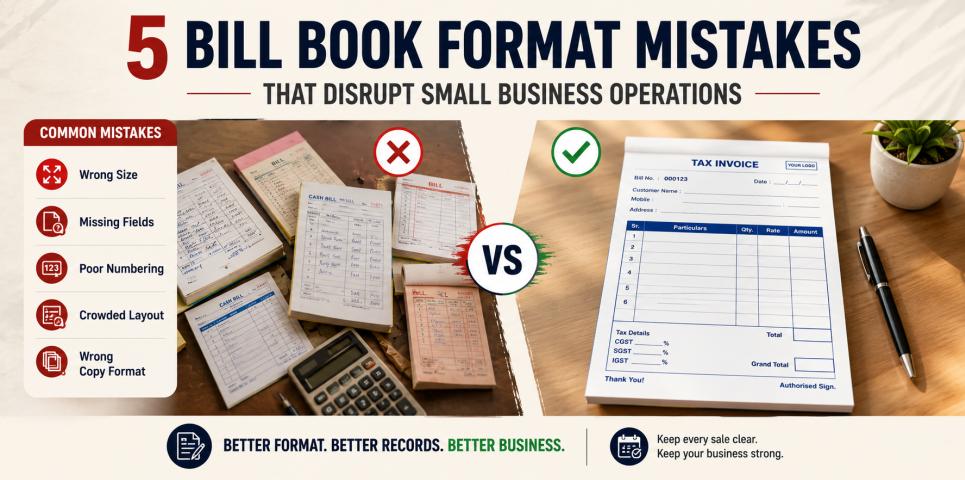
A poorly designed bill book can slow down billing, create incomplete records and make older transactions difficult to trace. For small shops, service providers and early-stage businesses, these problems can affect daily operations more than expected.
Many businesses select a bill book design without first reviewing how bills are actually prepared. As a result, the format may have limited writing space, missing customer fields, unclear serial numbers or an unsuitable tax section.
A practical bill book should match the business workflow. It should be easy to complete, easy for customers to understand and simple to store for future reference.
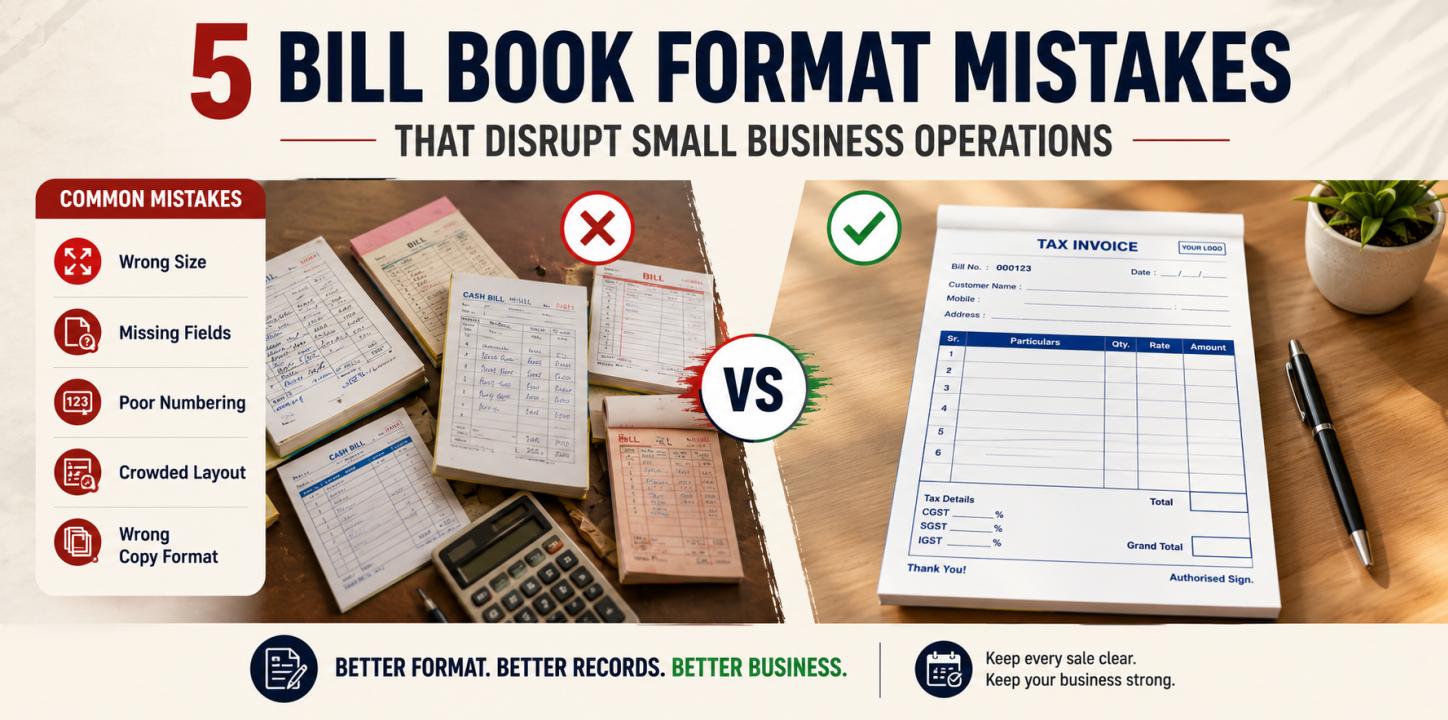
Here are five common bill book format mistakes small businesses should avoid.
1. Choosing an Impractical Bill Book Size
The bill book size should depend on the amount of information entered during a normal transaction.
A small format may be convenient for the counter, but it can become difficult to use when several products, customer details or tax fields must be included. A large format may provide more space, but it may be unnecessary for businesses that issue short cash bills.
In general:
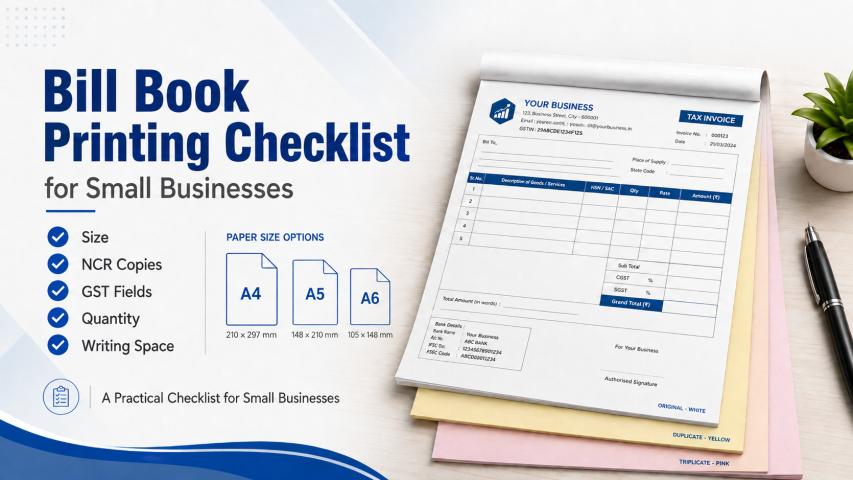
- A6 may suit short counter bills with only a few item details.
- A5 may work for regular retail and service invoices.
- A4 may be more practical when additional customer, product or tax information is required.
These are not fixed rules. Before selecting a size, the business should complete a few sample bills and check whether the available space is comfortable.
2. Leaving Out Important Information
Some bill books include only the product name, amount and total. This may not be enough for clear record management.
Depending on the business type and invoicing requirements, useful fields may include:
- Business name and contact details
- Bill or invoice number
- Date
- Customer name and contact information
- Product or service description
- Quantity and rate
- Tax details, where applicable
- Total amount
- Signature or authorised stamp
Not every business needs all these fields. However, the format should clearly show who issued the bill, what was sold, when the transaction happened and how the final amount was calculated.
A readable bill also helps customers check item details, prices and totals without asking for additional clarification.
3. Using Inconsistent Serial Numbering
Invoice numbering is an important part of record management, but many small businesses handle it casually.
Common problems include:
- Repeated bill numbers
- Missing numbers
- Random handwritten numbers
- Restarting the sequence without a clear system
- Using different numbering >
These issues can make it difficult to locate a transaction or match a bill with a payment record.
A simple numbering system may use:
-
001, 002, 003 -
2026-001, 2026-002 -
SHOP-001, SHOP-002
The exact structure can vary. The important point is that the sequence should remain clear and consistent.
4. Creating a Crowded or Difficult-to-Read Layout
Even when all required fields are included, the format can still be difficult to use.
Common layout problems include:
- Very small text
- Narrow item-description columns
- Insufficient writing space
- Unclear total and tax sections
- Too many fields placed close together
- Important information without clear headings
A crowded format increases the chance of incomplete or unclear entries. It may also make customer copies difficult to read.
The bill book should have a logical order. Business and customer details should appear near the top, item information should have enough space in the centre, and totals should be clearly separated at the bottom.
Simple spacing and readable headings are usually more useful than decorative design.
5. Using Incomplete Tax Fields or the Wrong Copy Format
Businesses that need to record tax information should ensure the format has suitable fields.
Depending on the business’s tax status and invoicing requirements, the bill book may need space for:
- GSTIN
- HSN or SAC details
- Taxable value
- Applicable tax rate
- CGST and SGST or IGST
- Grand total
Applicable fields should be confirmed according to the business and transaction type. A qualified accountant or tax professional can help review the requirements before the format is printed.
The number of copies is also important.
A duplicate bill book generally provides:
- One copy for the customer
- One copy for business records
A triplicate bill book may include an additional copy for accounts, dispatch or another internal department.
Printing only one copy can create difficulties after the original is given to the customer.
Why the Right Bill Book Format Matters
A clear bill book format can support smoother daily operations by helping businesses:
- Prepare bills faster
- Reduce missing information
- Track payments and transactions
- Find older records more easily
- Maintain consistent documentation
- Communicate details clearly to customers
- Support account preparation
In many small retail environments, billing issues begin because the layout is selected before the actual daily workflow is reviewed. A format may look acceptable on screen but become difficult to use once real transactions are entered.
Testing the design before printing a large quantity can prevent these problems.
Questions to Ask Before Finalising the Format
Before approving a bill book design, consider the following:
- How many items are usually added to one bill?
- How much space is needed for product descriptions?
- Are customer details required?
- Which tax fields are applicable?
- Is a single, duplicate or triplicate format needed?
- How will bill numbers be organised?
- Is the text readable and the writing space sufficient?
- Can the total amount be identified quickly?
Completing two or three sample transactions is one of the easiest ways to evaluate the format. It helps identify narrow columns, missing fields and poor spacing before printing begins.
Final Thoughts
A bill book is a basic business document, but the wrong format can create unnecessary operational problems. An impractical size, missing details, inconsistent numbering, crowded layout or unsuitable copy structure can make billing and record management more difficult.
Small businesses should select the format according to their real transaction process rather than relying on a generic template. A simple and well-planned bill book can support faster billing, clearer customer communication and better organised records.
For a deeper review of page size, required fields and numbering issues, refer to this detailed bill book format guide.