Managing commercial operations across Metro Atlanta requires constant attention to administrative efficiency, cybersecurity hygiene, and fiscal discipline. From enterprise facilities near 10 Glenlake Parkway NE in Sandy Springs and financial hubs along Central Perimeter to legal practices in Buckhead and healthcare networks in Midtown Atlanta, high-volume document management remains vital to day-to-day business execution.
However, while corporate leadership routinely evaluates enterprise software migrations, cloud storage budgets, and network access controls, physical document infrastructure is frequently left unmanaged. Operating an aging collection of desktop printers and standalone multifunction copiers acquired across separate budget cycles creates unpredictable repair costs, workflow bottlenecks, and unmonitored network security risks.
Using Pattern 1: The Executive Decision Blueprint, this operational guide outlines how migrating to a managed Copier Lease Atlanta strategy preserves liquid working capital, hardens network endpoints, and streamlines daily office productivity.
Executive Summary: Capital Hardware Ownership vs. Managed Utility
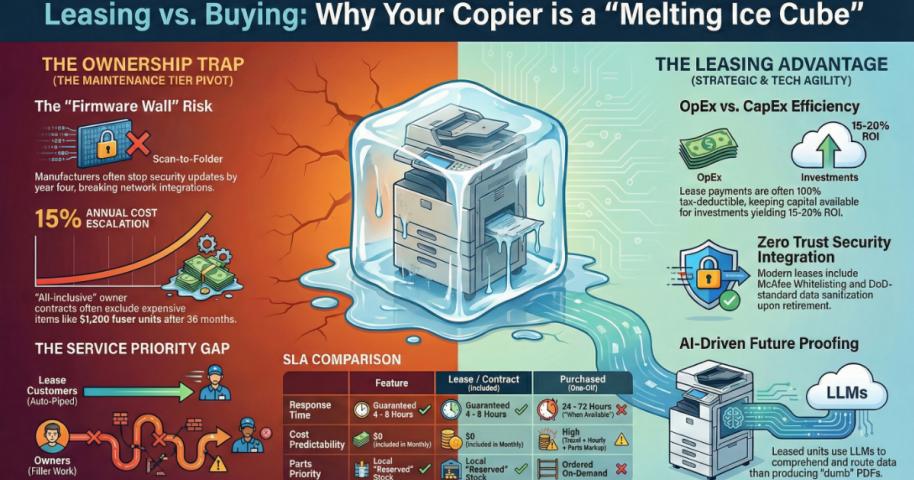
Historically, corporate procurement treated commercial copiers as direct capital expenditures (CapEx). Organizations purchased hardware outright, listed the assets on balance sheets, and operated machines until internal mechanical components broke down completely.
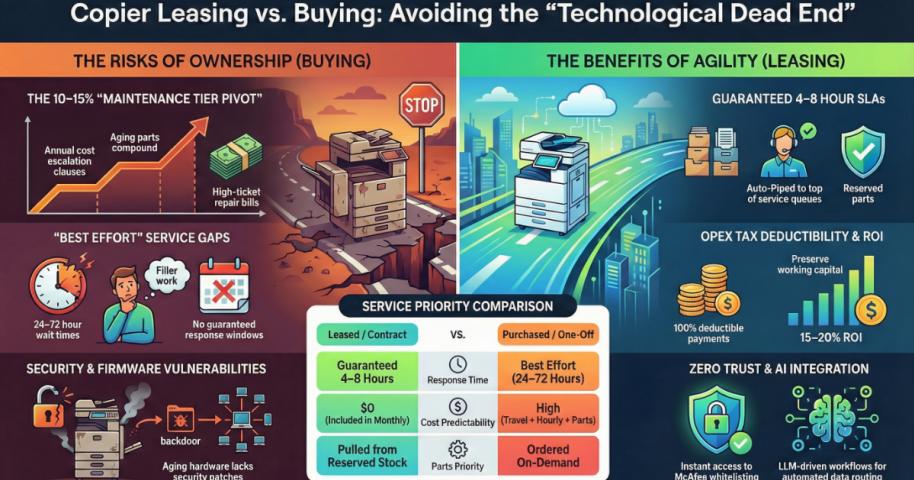
In today's fast-moving commercial climate, this legacy ownership framework creates unnecessary financial and technical friction:
| Performance Metric | Legacy Hardware Ownership | Managed Leasing Utility |
| Capital Allocation | High upfront cash tie-up | $0 initial capital requirement |
| Accounting Categorization | Depreciating asset (CapEx) | Predictable operating expense (OpEx) |
| Technology Lifecycle | Stagnant (5–7+ year lock-in) | Scheduled refreshes (Every 3–4 years) |
| Maintenance Expense | Unpredictable, out-of-warranty fees | Bundled full-service support |
| Cyber Governance | Manual / Frequently unpatched | Managed endpoint protection |
Transitioning equipment acquisition into an operational utility structure removes variable maintenance liabilities while keeping working capital liquid for strategic business growth.
Strategic Pillar 1: Financial Liquidity & Capital Preservation
Commercial multifunction copiers require significant cash reserves when bought outright. Tying up working capital in depreciating office hardware limits an organization's capability to deploy funds toward high-impact growth projects, such as regional facility expansions, software upgrades, or hiring specialized talent.
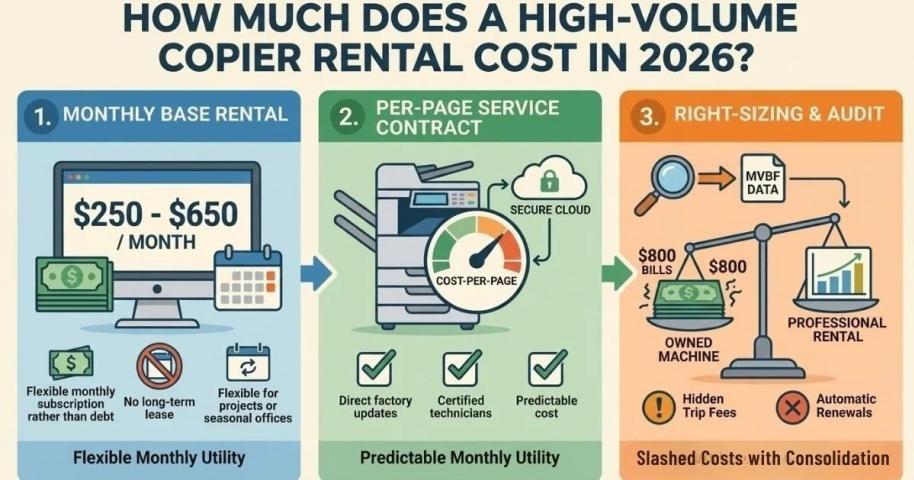
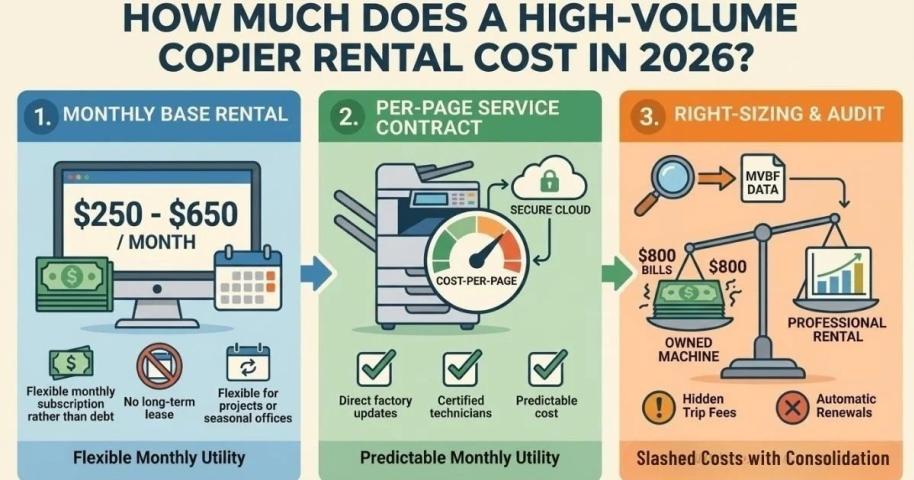
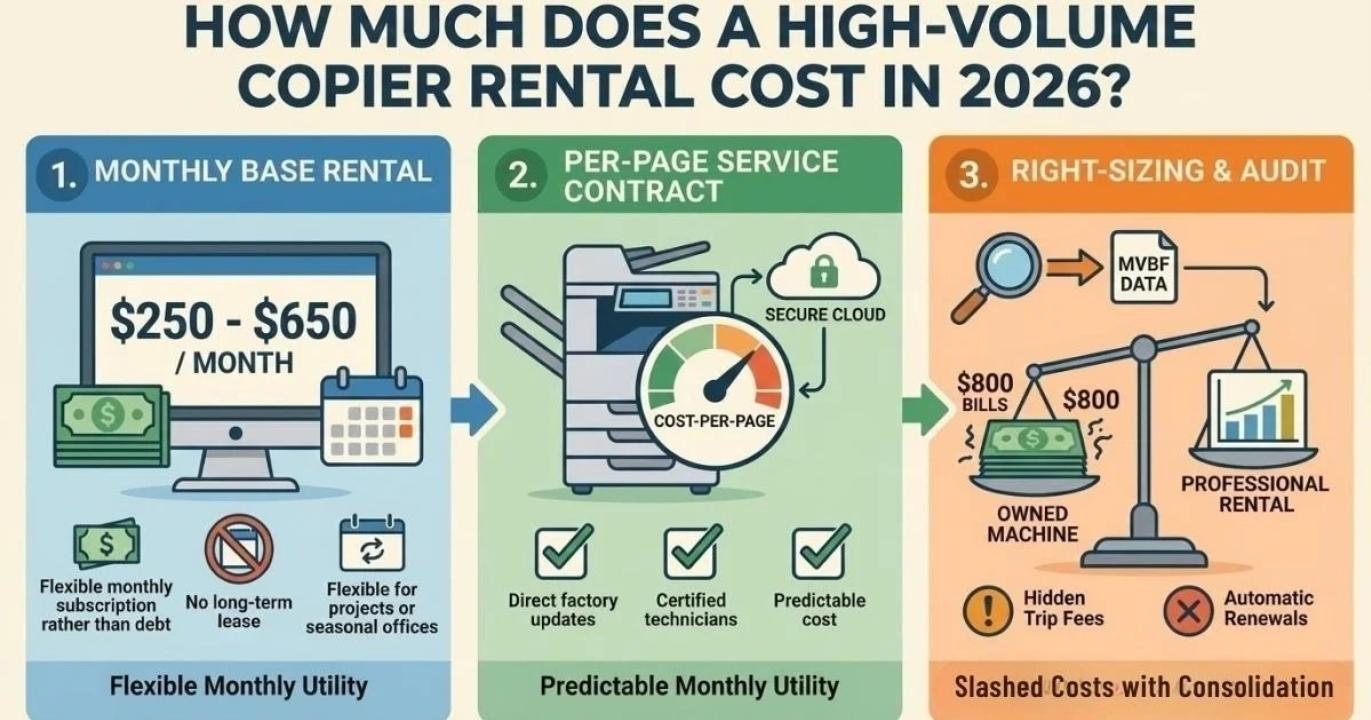
A structured leasing model converts unpredictable hardware expenses into a single, transparent monthly operating expense (OpEx). Before adjusting your equipment setup, completing an
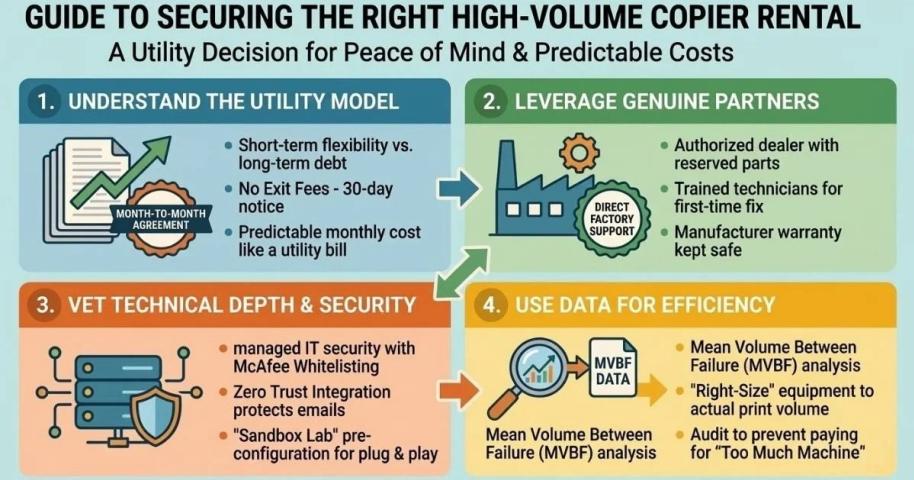
Partnering with a dedicated regional vendor provides clear financial benefits:
Fixed Overhead Protection: Flat monthly rates over the contract lifecycle shield operating budgets from sudden inflation or unexpected administrative fees.
Consolidated Supply Management: Toner replenishment, routine maintenance, replacement parts, and emergency repair calls are combined into a single, predictable invoice.
Strategic Pillar 2: Hardware-Level Endpoint Cybersecurity
Modern commercial copiers are not simple mechanical tools; they are full-featured network nodes with internal hard drives, onboard operating systems, and active network access. Older or unmanaged copiers sitting on your network can become overlooked entry points for security vulnerabilities if neglected during routine IT reviews.
Modern print fleet management integrates data protection directly at the hardware level:
User-Authenticated Print Release: Employees authenticate via PIN or proximity badge at the device before documents print, preventing confidential legal, financial, or patient records from sitting exposed in open paper trays.
Automated Data Sanitization: Advanced controllers continuously encrypt stored data and automatically overwrite temporary document image files on internal storage media once printing is complete.
Strategic Pillar 3: Geographic Proximity & Service Response Latency
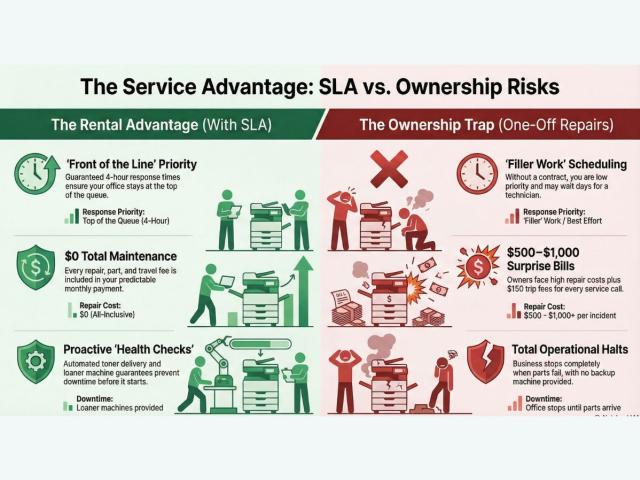
When a primary production printer breaks down during a critical project, the true operational impact is measured in downtime latency—the total time elapsed between submitting a service ticket and an authorized technician arriving on-site. Distant support centers or national field brokers frequently lead to multi-day delays.
Maintaining high equipment availability across Sandy Springs, Central Perimeter, Buckhead, and Midtown requires localized technical support:
Fast Local Dispatch: Factory-certified field technicians based directly in North Fulton navigate GA-400 and I-285 efficiently to minimize machinery downtime.
Regional Parts Repositories: Immediate access to local stock of genuine OEM replacement parts, rollers, and toners ensures that an urgent call for Copier Repair Atlanta is resolved during the initial visit.
Project Flexibility: Short-Term Deployments for Regional Demands
Business requirements across Georgia do not always call for multi-year commitments. Organizations frequently manage temporary, time-bound initiatives—such as short-term construction site offices near Central Perimeter, legal discovery tasks in Downtown Atlanta, corporate conventions, or seasonal logistics surges.
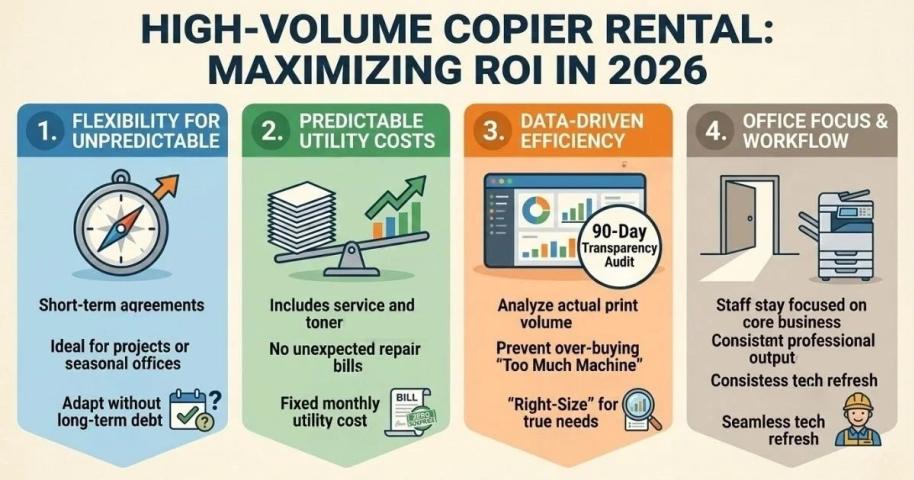
For temporary projects, buying new machinery or signing long-term contracts introduces unnecessary financial risk. Utilizing a flexible Copier Rental Atlanta option delivers high-speed hardware tailored precisely to the duration of your project. Machines arrive fully configured, include complete maintenance and supply support, and are retrieved when the work wraps up—eliminating post-project storage costs and ongoing financial liabilities.
Strategic Conclusion: Optimizing Your Atlanta Fleet
Controlling administrative costs, securing network endpoints, and maintaining workplace uptime are essential for sustaining growth across Metro Atlanta.
Upgrading your document infrastructure to a managed