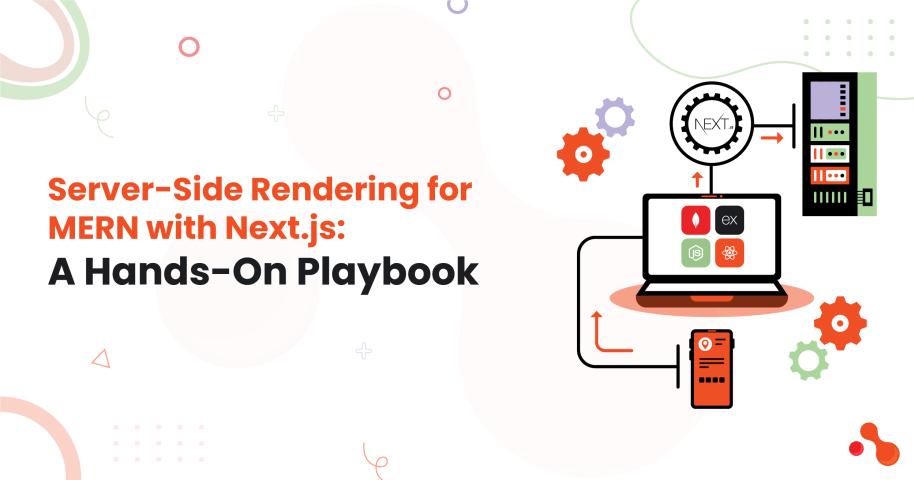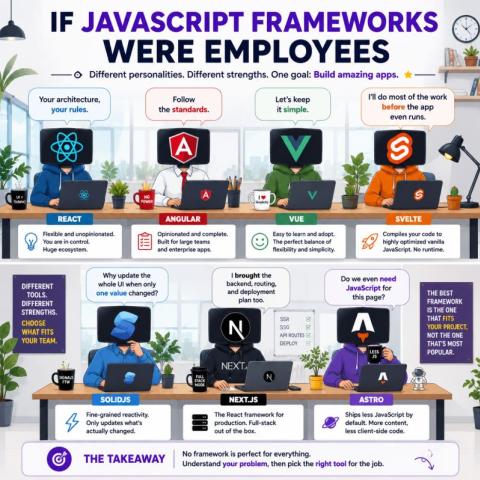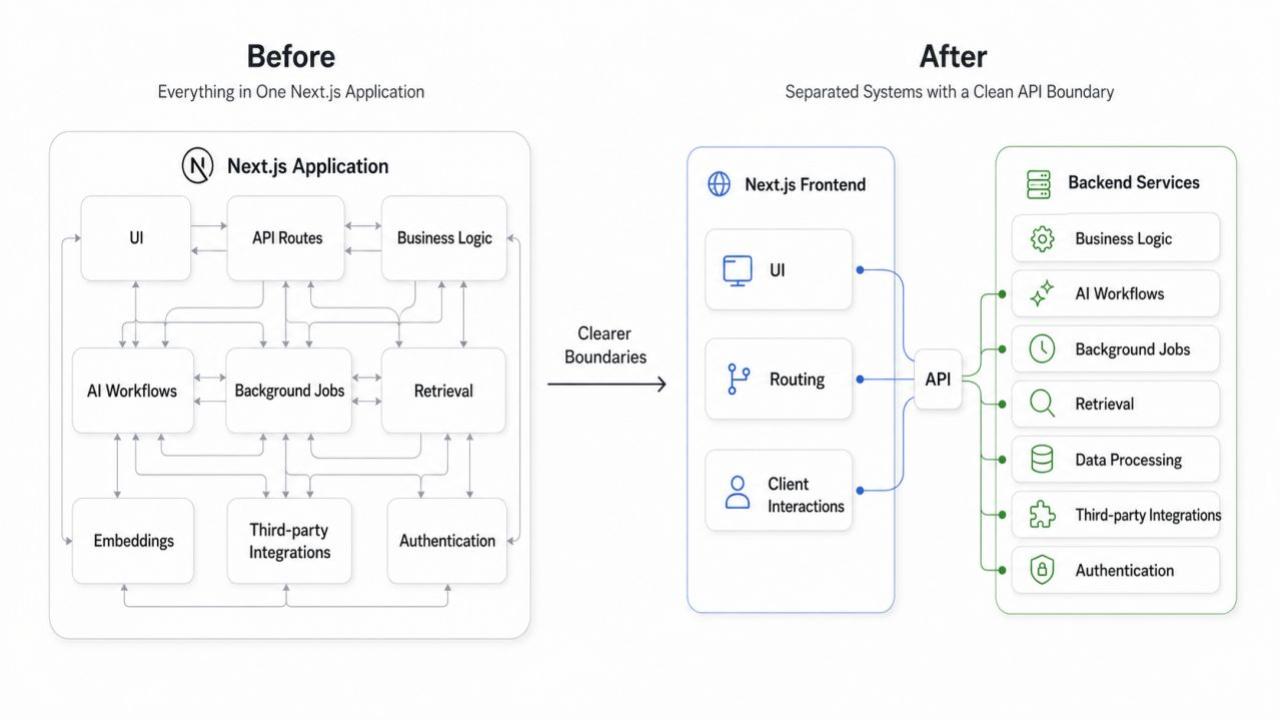
Next.js is a solid Full Stack Framework.
For smaller products, keeping the frontend,
API routes and server logic together can make development much faster.
But once the backend starts handling more serious responsibilities,
I prefer a clear separation.
⚙️ Business Logic
⏱️ Background Jobs
🗄️ Data Processing
🔌 Third Party Integrations
🤖 AI Workflows
🔐 Authentication and Permissions
Putting all of that inside the same framework that controls the frontend eventually makes the boundaries harder to maintain.
That is the point I reached recently while building my AI assistant.
The problem was not that Next.js could not handle the backend.
It was that I no longer wanted the structure of my backend to depend on the structure of my frontend application.
So, for most substantial products I build, I keep them decoupled:
🎨 Next.js for the product interface.
🏗️ A dedicated backend for the application logic and workflows behind it.
Easier to reason about, easier to update and gives both sides of the product room to evolve independently.
Full Stack Frameworks are great for moving fast.
Clear boundaries are better when the system starts becoming serious.
If you've gone through a similar transition, what was the moment you realised your backend had outgrown your frontend framework?
#Developer #Software