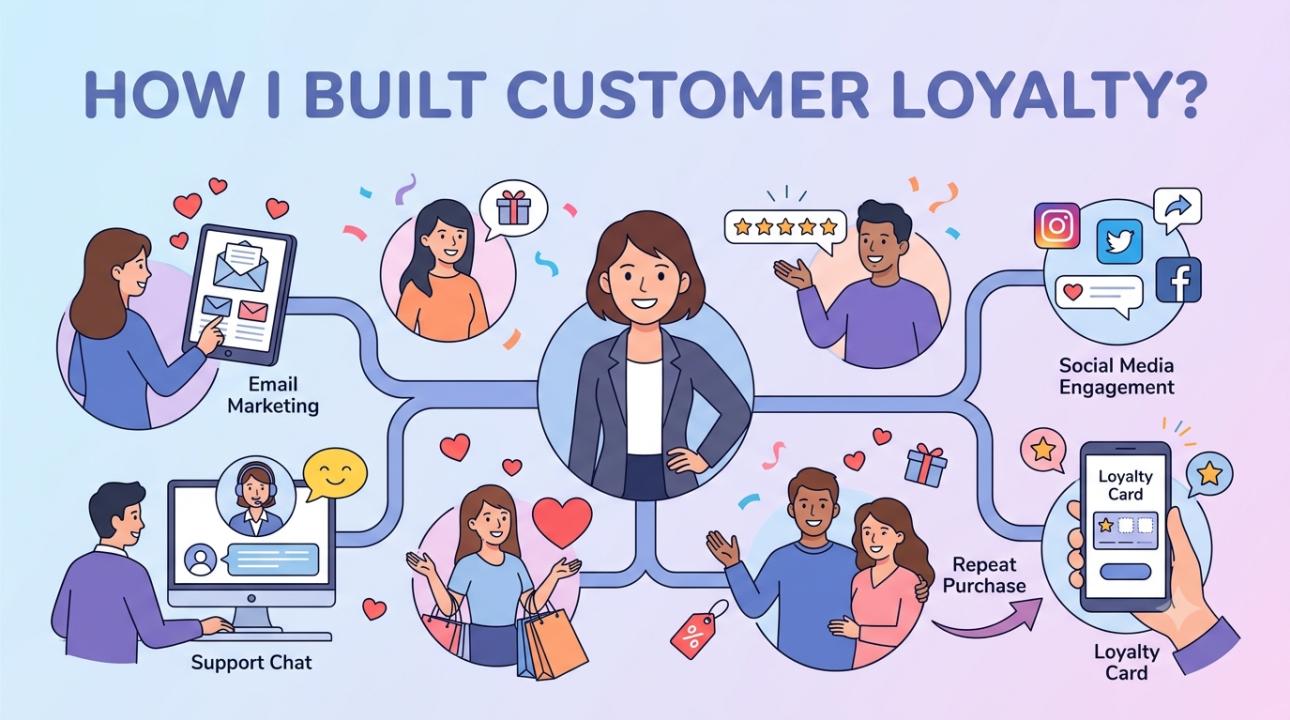
You spend money on ads, you close the sale, and then... the customer disappears with no second purchase. No referral. No response to your emails. If that sounds familiar, you're not doing anything wrong; you're just missing the piece most businesses skip: a real plan to build customer loyalty instead of just chasing the next transaction. In 2026, with customer acquisition costs higher than ever and switching to a competitor's product just one click away, loyalty isn't a nice-to-have. It's the difference between a business that grows and one that keeps refilling a leaky bucket.
What Customer Loyalty Actually Means in 2026
Customer loyalty is the measurable tendency for a customer to continue choosing your business over competitors, even when a cheaper or more convenient option is available. It's not the same as customer satisfaction. A customer can be satisfied with a single purchase and never return. Loyalty shows up in repeat purchases, higher average order value over time, referrals, and a customer's willingness to forgive an occasional mistake because the overall relationship feels worth it.
The businesses that build customer loyalty successfully today share one trait: they treat loyalty as an outcome of consistent experience, not a program you bolt on after the sale. A points system or a discount code might nudge a repeat purchase, but it won't create the emotional trust that keeps someone coming back for years.
Why Loyalty Matters More Than Ever Right Now
Two shifts are reshaping this conversation in 2026. First, digital advertising costs keep climbing, which makes every existing customer more valuable simply because you already paid to acquire them once. Second, customers now have near-instant access to reviews, comparison tools, and AI-powered shopping assistants that surface alternatives the moment your experience falls short. A single bad interaction can send someone to a competitor before you even know they were unhappy.
This is why loyalty needs to be treated as a system, not a single tactic. Here's how to actually build it.
Step 1: Deliver a Consistently Reliable Core Experience
Before any loyalty program, discount, or email sequence, ask a simpler question: does your product or service reliably do what it promises? Inconsistency is the single fastest way to lose trust. A customer who gets a great experience once and a mediocre one the next time learns not to expect anything and stops paying attention to your brand altogether.
Reliability builds the psychological safety customers need to commit. This means consistent product quality, predictable shipping or service timelines, and support that resolves issues without a fight. Get this foundation right, and everything else you do to build customer loyalty works twice as hard.
Step 2: Make the First 30 Days Count
Most customer churn happens early, often within the first month after a purchase or sign-up. This window is where loyalty is won or lost, because it's when a customer decides whether your business was worth the money and effort. A short onboarding sequence, a helpful check-in message, or a simple "here's how to get the most out of this" guide can dramatically shift retention.
Businesses that succeed here treat the first purchase as the start of a relationship, not the finish line of a sale. That mindset shift alone changes how every follow-up email, support ticket, and product update gets written.
Step 3: Personalize Without Being Creepy
Personalization remains one of the strongest levers to build customer loyalty, but it has to feel helpful, not surveillance-like. Using purchase history to recommend genuinely relevant products, remembering a customer's preferences so they don't have to repeat themselves, or tailoring content to someone's actual stage in their journey all build trust. Personalization that feels invasive, referencing data a customer never knowingly shared, or over-targeting based on browsing behavior does the opposite.
The rule of thumb: personalize based on what a customer told you or showed you through direct interaction, not through data they'd be surprised you have.
Step 4: Reward Loyalty Without Making It Transactional
Loyalty programs still work, but only when they reward genuine engagement rather than just spending. Points systems, early access to new products, or exclusive community perks can reinforce existing loyalty. But a rewards program cannot manufacture loyalty out of thin air. If the underlying experience is inconsistent, a discount code buys one more purchase, not a relationship.
The most effective programs in 2026 combine tangible rewards (discounts, free shipping, early access) with intangible ones (recognition, status, a sense of belonging). Both matter, but the intangible ones are what competitors can't easily copy.
Step 5: Ask for Feedback, Then Visibly Act on It
Nothing kills loyalty faster than a customer who takes the time to give feedback and then watches nothing change. Asking for input signals that you value the relationship. Acting on it and telling customers you did proves it. Even something as small as replying to a review or crediting a customer suggestion in a product update builds real, lasting trust.
This is also where E-E-A-T >
Step 6: Fix Problems Faster Than Customers Expect
How you handle mistakes often matters more than whether mistakes happen at all. A customer whose problem is resolved quickly and fairly can end up more loyal than one who never had an issue, because the resolution proves your business stands behind what it sells. Slow, defensive, or scripted responses to complaints do the opposite; they confirm a customer's fear that they don't matter once the sale is done.
Train your team (or yourself, if you're a small business) to treat every complaint as a loyalty-building opportunity, not an inconvenience to manage.
Step 7: Build Community, Not Just a Customer List
The businesses with the strongest loyalty in 2026 aren't just selling products; they're building a sense of belonging around them. This can look like an active social community, a customer forum, user-generated content spotlighting real customers, or simply a brand voice that feels human and consistent across every channel. Community turns individual customers into advocates who organically bring in new customers, which is the clearest sign that loyalty has taken root.
Measuring Whether Your Loyalty Efforts Are Working
Track repeat purchase rate, customer lifetime value, referral rate, and Net Promoter Score over time. These four metrics together tell you whether you're actually building customer loyalty or just running short-term promotions that don't stick. If repeat purchase rate and referrals are climbing while your acquisition costs stay flat or drop, your loyalty strategy is working.
Conclusion
Building customer loyalty in 2026 isn't about a single clever tactic; it's about stacking small, consistent decisions that make customers feel seen, respected, and confident in choosing you again. Start with reliability, nail the early relationship, personalize thoughtfully, reward real engagement, listen and act on feedback, resolve problems quickly, and give customers a reason to feel part of something bigger than a transaction. Do this consistently, and loyalty stops being something you chase and becomes something your business naturally earns.
Frequently Asked Questions
What is the fastest way to build customer loyalty?
The fastest way is to fix the first 30 days of the customer relationship. Strong onboarding, quick support responses, and a reliable core experience during this window prevent early churn and set the tone for long-term loyalty.
Does a loyalty program actually increase customer loyalty?
A loyalty program can strengthen existing loyalty through a good experience, but it cannot create loyalty on its own. Points and discounts encourage short-term repeat purchases; trust and consistency are what keep customers for the long term.
How long does it take to build customer loyalty?
Most businesses see meaningful loyalty signals, like repeat purchases and referrals, within 60 to 90 days of consistent effort, though deep, long-term loyalty typically builds over 6 to 12 months of reliable experience.
What's the difference between customer satisfaction and customer loyalty?
Customer satisfaction reflects how a customer feels about a single interaction. Customer loyalty reflects a pattern of repeated trust over time, shown through repeat purchases, referrals, and tolerance for occasional mistakes.
What metrics show if customer loyalty is improving?
Repeat purchase rate, customer lifetime value, referral rate, and Net Promoter Score are the clearest indicators. Rising numbers across these four metrics show loyalty efforts are translating into real business results.