One overlooked date could become the biggest immigration mistake an international student makes.
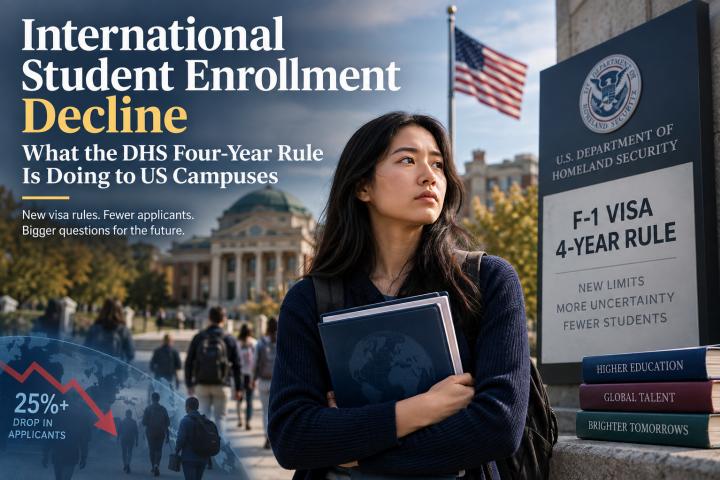
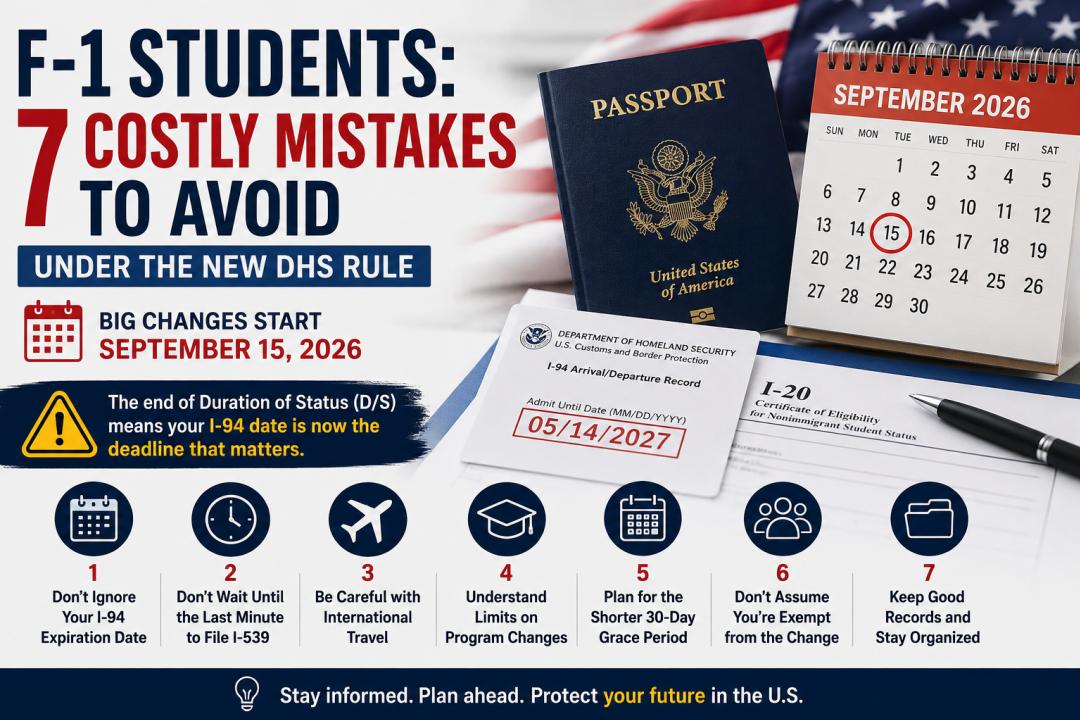
Starting September 15, 2026, the U.S. Department of Homeland Security will replace the long-standing Duration of Status (D/S) system with fixed admission periods for F-1 and J-1 students. That means your legal stay in the United States will no longer depend solely on remaining enrolled in your academic program. Instead, it will depend on the expiration date listed on your I-94 Arrival/Departure Record.
For students who have never paid much attention to the I-94, this represents one of the biggest changes to U.S. student immigration rules in decades.
Missing the Deadline Is More Serious Than Before
Under the previous D/S system, students generally did not begin accruing unlawful presence immediately after a paperwork issue. In many cases, a formal determination from USCIS or an immigration judge was required.
The new rule changes that process.
Once your fixed admission period expires, unlawful presence begins automatically. There is no additional warning period and no formal finding required before the clock starts running.
That makes one missed deadline capable of creating much larger immigration problems than students experienced under the previous system.
Your Program End Date May Not Protect You
Many students assume their university's expected graduation date is the date that matters most.
After September 15, that assumption could be costly.
Your program may continue for several more months, but if your I-94 expires earlier and you have not obtained an approved extension, your authorized stay may end first.
Think of it like a library membership. Owning the books doesn't matter if your membership expires before you return them. In the same way, remaining enrolled does not automatically extend your immigration status under the new framework.
Extensions Must Be Filed Before Time Runs Out
Students who need extra time to finish their studies have an option.
They can apply for an extension of stay using Form I-539.
However, timing is everything.
The application must be submitted before the current admission period expires. Since USCIS processing involves documentation, filing fees, biometrics, and processing time, students should begin planning well in advance instead of waiting until the final weeks.
Prevention Is Much Easier Than Recovery
The easiest way to avoid immigration problems is to build simple habits.
Check your I-94 after every entry into the United States. Compare the expiration date with your expected graduation timeline. Save digital copies of immigration documents, and create multiple calendar reminders months before important deadlines.
Students should also stay in regular contact with their university's international office whenever travel, academic changes, or delays occur.
Balancing immigration responsibilities with demanding coursework isn't always easy. Platforms like Expertsmind.com's subject expert network can help students stay on top of assignments while they focus on important immigration planning and university deadlines.
Graduation Planning Now Starts Earlier
The new rule also shortens the planning window after completing a degree.
F-1 students admitted or readmitted after September 15 will generally receive only a 30-day grace period, compared with the previous 60-day period. That gives graduates less time to transfer schools, apply for another status, or prepare for departure from the United States.
Students interested in graduate school, employment opportunities, or Optional Practical Training should begin discussing those plans well before their final semester.
One Date Can Shape Your Future
The end of Duration of Status marks a major shift in how international students manage their legal stay in the United States.
Instead of relying primarily on enrollment status, students must now pay close attention to a specific expiration date that controls their authorized stay. Fortunately, avoiding problems doesn't require complicated legal knowledge. It simply requires organization, early planning, and regular attention to the I-94. Students who make those habits part of their routine will be far better prepared for the new immigration system and everything that comes with it.