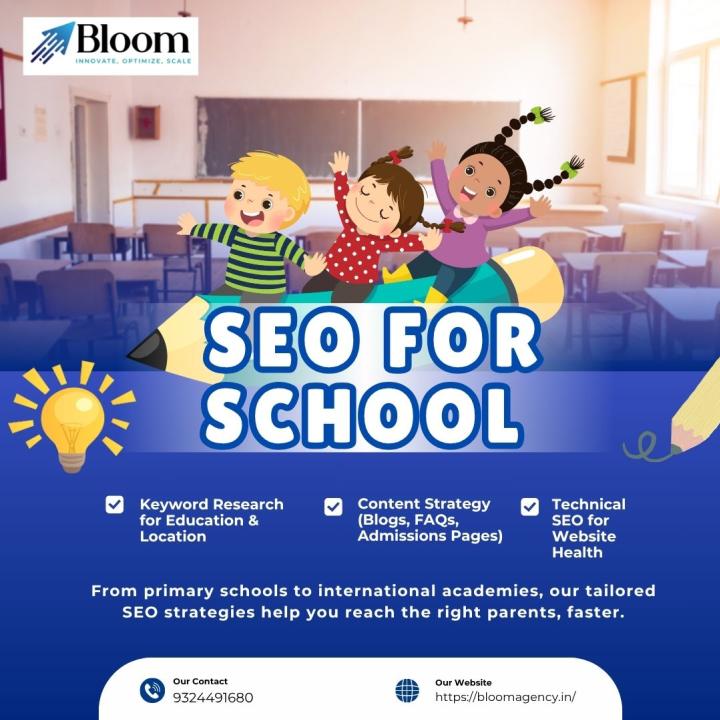
In today's digital-first world, a school's website is often the first interaction parents and students have with an educational institution. Whether families are searching for admissions information, academic programs, or extracurricular activities, they typically begin with Google. If your school doesn't appear on the first page of search results, you're likely losing potential inquiries to competing institutions.
Search Engine Optimization (SEO) helps schools improve their online visibility, attract qualified visitors, and generate more admission inquiries organically. This guide explains how educational institutions can rank higher on Google using proven SEO strategies.
What is SEO for Schools?
SEO (Search Engine Optimization) is the process of improving a website so it appears higher in search engine results for relevant keywords.
For schools, SEO focuses on helping prospective students and parents find information such as:
- School admissions
- Academic programs
- Fee structure
- Campus facilities
- Student achievements
- Location-based searches
- Contact details
Unlike paid advertising, SEO generates long-term traffic without paying for every click.
Why SEO Matters for Educational Institutions
A strong SEO strategy offers several benefits:
- Increases online visibility
- Generates more admission inquiries
- Builds trust and credibility
- Improves user experience
- Reduces dependence on paid advertising
- Attracts local students searching nearby
With thousands of parents researching schools online before making enrollment decisions, SEO has become an essential part of education marketing.
Keyword Research: The Foundation of School SEO
Every SEO strategy starts with identifying what parents and students search for.
Examples include:
- Best CBSE school near me
- International school in Mumbai
- Top private school for science
- Preschool admissions 2026
- Boarding school in India
- Affordable schools in Delhi
Focus on keywords that match user intent rather than targeting only broad terms like "school."
Long-tail keywords usually have lower competition and higher conversion rates.
Optimize Your Website Structure
Google prefers websites that are easy to navigate.
Your school website should include:
- Home
- About Us
- Admissions
- Academic Programs
- Faculty
- Campus Facilities
- Student Life
- Gallery
- Events
- Blog
- Contact Page
A clean structure helps both visitors and search engines understand your website.
Create High-Quality Educational Content
Content marketing is one of the most effective SEO strategies for schools.
Publish articles on topics such as:
- Admission guides
- Exam preparation tips
- Parenting advice
- Student success stories
- Career guidance
- School events
- Educational technology
- Curriculum updates
Fresh, informative content helps establish authority while increasing search visibility.
Optimize Every Page for SEO
Each page should include:
SEO Title
Example:
Best CBSE School in Bangalore | ABC Public School
Meta Description
Write a compelling description that encourages users to click.
Example:
"Discover ABC Public School offering quality education, experienced faculty, modern facilities, and admissions for the 2026 academic session."
Heading Structure
Use:
- H1 for the main title
- H2 for sections
- H3 for subsections
This improves readability and helps search engines understand your content.
Focus on Local SEO
Most parents search for schools within a specific city or neighborhood.
Optimize your local SEO by:
- Including your city and locality in page titles
- Creating location-specific landing pages
- Embedding Google Maps
- Displaying your complete address
- Using consistent Name, Address, and Phone (NAP) information
- Encouraging parents to leave positive online reviews
Local SEO significantly increases visibility for nearby searches.
Improve Website Speed
Slow websites frustrate users and negatively affect rankings.
Ways to improve speed include:
- Compress images
- Use browser caching
- Minify CSS and JavaScript
- Choose reliable hosting
- Reduce unnecessary plugins
- Enable lazy loading
A faster website improves both SEO and user satisfaction.
Make Your Website Mobile-Friendly
Most users now browse school websites using smartphones.
Ensure your website:
- Uses responsive design
- Loads quickly on mobile devices
- Has readable text
- Features easy-to-click buttons
- Includes simple navigation
Google prioritizes mobile-friendly websites in search results.
Use Internal Linking
Connect related pages throughout your website.
For example:
- Blog posts linking to Admissions
- Academic pages linking to Faculty
- Event pages linking to Gallery
- Student achievements linking to Programs
Internal links help search engines crawl your website while guiding visitors to valuable content.
Build High-Quality Backlinks
Backlinks from reputable websites signal authority to search engines.
Schools can earn backlinks through:
- Educational partnerships
- Local news coverage
- University collaborations
- Community events
- Alumni associations
- Scholarship announcements
- Educational directories
Quality matters more than quantity.
Optimize Images
Images should include:
- Descriptive file names
- Alt text
- Compressed file sizes
- Relevant captions
Example:
Instead of:
IMG001.jpg
Use:
science-laboratory-cbse-school.jpg
This improves both accessibility and image search visibility.
Publish Student Success Stories
Authentic success stories build trust and improve engagement.
Share:
- Academic achievements
- Sports victories
- Competition winners
- Alumni success
- Community service projects
These pages often attract backlinks and social shares.
Monitor SEO Performance
Track key metrics regularly:
- Organic traffic
- Keyword rankings
- Admission inquiries
- Bounce rate
- Average session duration
- Conversion rate
- Top-performing pages
Continuous monitoring helps identify opportunities for improvement.
Common SEO Mistakes Schools Should Avoid
Avoid these common errors:
- Duplicate content
- Slow-loading pages
- Missing meta descriptions
- Broken links
- Poor mobile experience
- Keyword stuffing
- Outdated information
- Ignoring local SEO
- Not updating blogs regularly
Correcting these issues can improve rankings significantly.
Future SEO Trends for Schools
SEO continues to evolve. Educational institutions should prepare for SEO company for Schools:
- AI-powered search experiences
- Voice search optimization
- Video content
- Interactive virtual campus tours
- Structured data implementation
- Enhanced user experience signals
- Personalized search results
Schools that adapt early will maintain a competitive advantage.
Conclusion
SEO is no longer optional for schools looking to increase admissions and strengthen their online presence. By focusing on quality content, local SEO, technical optimization, mobile usability, and user experience, educational institutions can achieve higher Google rankings and attract more prospective students.
SEO is a long-term investment rather than a one-time effort. Consistent optimization, valuable content, and regular performance monitoring will help your school build lasting online visibility, credibility, and enrollment growth.