It's 11 PM, your pipe just burst, and you're typing "plumber near me" into Google with one hand while holding a bucket with the other. That desperate, half-typed search is the whole reason this topic matters.
If your business covers multiple cities but your website treats every visitor the same way, you're quietly losing customers to competitors who figured this out already.
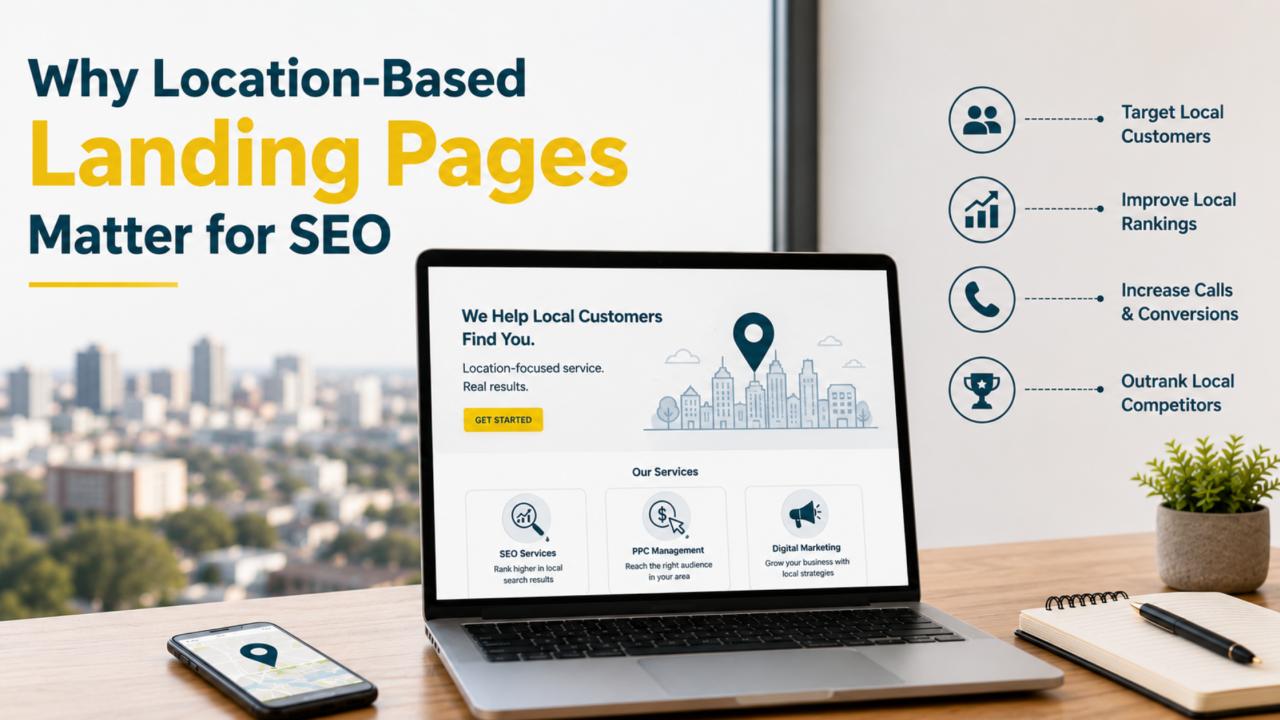
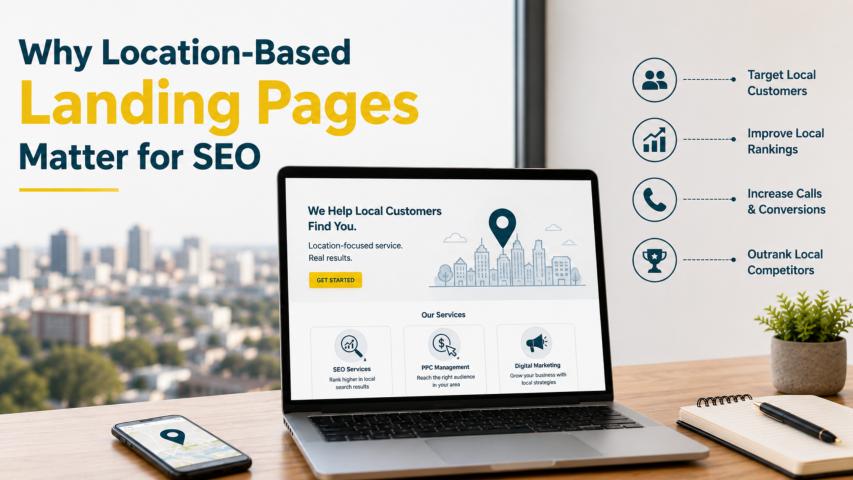
Location based landing pages are the fix, not a trendy add-on, but the actual mechanism search engines use to connect nearby people with nearby businesses. Here's why they work, and how to actually build them.
What Is a Location-Based Landing Page, Really?
Your homepage talks to everyone. A location page talks to one person, the guy in Austin searching for your service right now, not some abstract national audience.
Each page centers on a specific city or service area, built around location-specific content that actually reflects that place instead of recycling the same paragraph with a new city name dropped in.
That last part matters more than people think. Swapping one city name for another and calling it a new page doesn't fool anyone, least of all Google.
A real location page mentions the actual area, references how people there search, maybe even nods to something locally specific. It reads like someone who's actually done work there, not someone parachuting in with a template.
Why These Pages Punch Above Their Weight
Someone searching "digital marketing agency near me" wants a result that actually matches their city, not a generic homepage that happens to mention marketing somewhere in paragraph four.
Pages built this way, local SEO landing pages, tend to rank faster and hold their position better, simply because they're answering the actual question being asked.
For smaller businesses, this is honestly the whole opportunity. Competing nationally against agencies with ten times your budget is a losing bet.
For smaller businesses, this is honestly the whole opportunity. Competing nationally against agencies with ten times your budget is a losing bet.
But local SEO services for small business work differently, you're not fighting for one impossible keyword, you're picking up dozens of smaller, winnable ones. "SEO agency near me." "PPC management Corpus Christi." Each one is a small door, and a handful of small doors adds up.
Do this across enough areas and you've got multi-location SEO working in your favor, several pages, each pulling their own weight, instead of one page trying to be everything to everyone and ending up relevant to no one in particular.
Clicks Matter More Than People Realize
Here's something a lot of businesses miss: when your page title matches the exact thing someone searched, they click it.
When it doesn't, they scroll past. Google tracks that behavior, and pages that get clicked more tend to climb, it's a feedback loop that rewards specificity.
Geo-targeted landing pages benefit from this constantly. They don't just help you show up in results; they help you get picked once you're there. And every click strengthens that page's standing for that particular search, which makes the next search a little easier to win too.
What Actually Goes Into a Good One
The pages that work aren't templates with the city name find-and-replaced. They usually have:
Real references to neighborhoods, landmarks, or areas locals would actually recognize
Testimonials from real customers in that location, not generic five-star quotes
Mentions of local partnerships or community involvement, where genuine
Writing that sounds like it was written by someone who works there, not about there
That's really what local landing page optimization comes down to — proving, in the actual words on the page, that you know this market and not just its zip code.
Building optimized location landing page content isn't about hitting a keyword quota; it's about making sure every sentence actually earns its place on the page.
The Technical Stuff You Can't Skip
Good writing alone won't carry a location page. A few things need to be right underneath it:
Your URL should say the location plainly, something like, tells both people and crawlers what they're looking at before they've read a word.
Meta titles and descriptions need local keyword targeting built in, not stuffed in — the difference is whether it reads naturally or looks like it was written for a robot.
Google Business Profile SEO deserves as much attention as the page itself. Consistent business details, matching schema markup, and an active profile all tell search engines your business is genuinely where it says it is.
And mobile matters more than most people account for, a lot of local searches happen from someone's phone while they're already out looking for a solution, not sitting at a desk.
None of this works alone. Great content with sloppy technical setup underperforms. Flawless technical SEO on top of thin, copy-pasted content underperforms too. You need both, working together, or neither really does much.
It's One Piece, Not the Whole Puzzle
Location pages work best when they're not carrying the whole strategy alone. Pair them with solid local SEO services, reviews, citations, backlinks, so your entire online footprint says the same thing consistently, not just one page in isolation.
That layered approach is really what separates the businesses sitting comfortably in the local map pack from the ones stuck on page three wondering why nothing's working. It's not one clever trick. It's a lot of small, connected things done consistently.
Keep Watching, Keep Adjusting
Once a page is live, the work isn't over, it's just starting. Keep an eye on local search rankings for your target terms. Watch which pages actually bring in traffic and which ones sit quietly doing nothing. Check whether visitors are calling, filling out forms, or just bouncing.
If something's underperforming, don't delete it, fix it. Add a fresher local reference, swap in a stronger testimonial, tighten up the call to action.
Good location page best practices are less about a perfect launch and more about small, steady adjustments over time.
Location Based Landing Pages: Turn Local Searches Into Customers
Location-based landing pages aren't optional anymore if you're serious about local search optimization and getting in front of the people already searching for you nearby. Get them right, and "near me" searches stop going to your competitors and start becoming your customers.
If you're tired of losing local business to companies with better-targeted pages, it might be time to work with a website marketing company that actually knows how to build these properly- not just the content, but everything underneath it too.