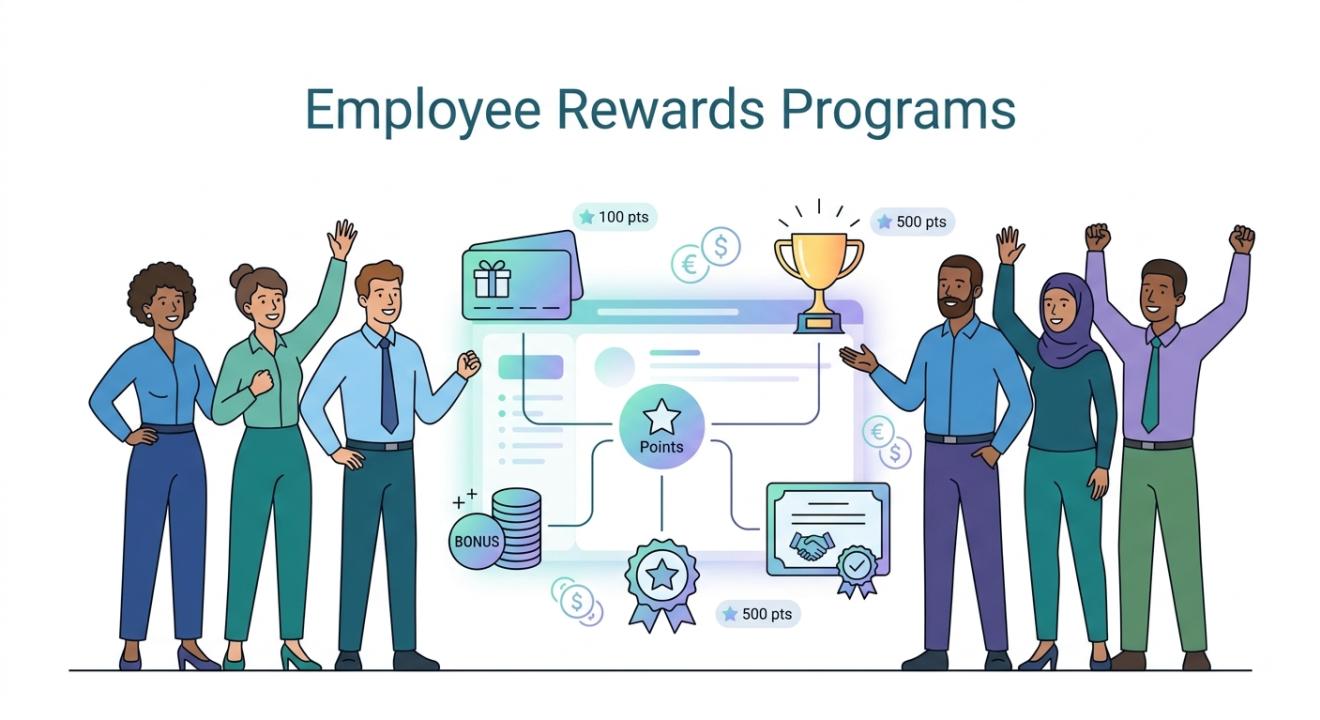
Most companies lose good employees not because of salary but because no one makes them feel their work matters. If your team is quietly disengaged, missing targets, or your turnover numbers are creeping up quarter after quarter, the problem might not be compensation at all. It might be that your people don't feel recognized. A well-built employee rewards program fixes that, but only if you set it up with intention, not just good intentions.
What an Employee Rewards Program Actually Does (Beyond the Trophy)
Let's be clear about what we're really talking about here. An employee rewards program is a structured system that acknowledges effort, performance, milestones, or behaviors you want to reinforce and responds to them in a way that feels meaningful to the person receiving the recognition.
That last part is what most companies get wrong. They treat rewards as a checkbox: give a gift card, post a Slack shoutout, move on. But recognition that lands the kind that actually changes how someone feels about their job requires consistency, fairness, and personalization.
Done right, these programs do three things that matter to the business:
They increase discretionary effort (people go beyond the minimum when they feel seen)
They strengthen the manager-employee relationship.
They create a culture where doing good work has visible, social weight.
None of that happens with a spreadsheet of gift cards sent at the end of the year.
The Two Types of Recognition You Need to Cover
Before you pick a platform or set a budget, understand that effective programs typically combine two distinct tracks.
Structured recognition is planned and tied to milestones, work anniversaries, hitting a quarterly goal, or completing a certification. This is predictable, which employees appreciate because it feels fair and systematic.
Spontaneous recognition is real-time and behavior-based: a manager calling out a specific thing someone did on a project, a peer thanking a colleague for covering during a crunch. This type carries more emotional weight because it's immediate and specific.
Most programs lean too heavily on structured recognition because it's easier to manage. The companies that actually move engagement numbers balance both, and they train managers to deliver real-time recognition without making it feel scripted.
How to Build Your Employee Rewards Program Step by Step
Step 1: Define What Behaviors You're Rewarding
This is the foundation, and most organizations rush past it. What does "great work" actually look like at your company? Is it hitting numbers? Helping a teammate? Solving a client problem without escalating?
If you can't define it clearly, your program will reward visibility, meaning extroverts and people near leadership will get recognized more than people quietly doing excellent work in less visible roles.
Write it down. Create a short list of behaviors or outcomes you want to reinforce, and make sure they reflect your actual values, not just your sales metrics.
Step 2: Set a Budget That Won't Embarrass You
The amount you spend per employee per year varies widely by company size and industry, but a reasonable ballpark for a meaningful program is $150–$300 per employee annually. That's not a lot, but it's enough when distributed consistently and tied to real moments.
What erodes trust faster than no program at all? A program that runs out of budget in October. Whatever you budget, make it defensible and make it last the year.
Step 3: Choose Your Reward Mix
Not everyone values the same thing, which is why rigid one-size programs consistently underperform. A strong reward mix typically includes:
Monetary rewards: Gift cards, bonuses, or points redeemable for products or experiences
Non-monetary recognition: Public shoutouts, "wins" boards, letters from leadership
Time-based rewards: An extra half-day off, flexible Friday afternoons
Experience rewards: Team lunches, professional development credits, event tickets
Career-linked rewards: Opportunity to lead a project, presentation to leadership
Survey your team before you launch. Ask them directly what kind of recognition matters most to them. The data will often surprise you; many employees rank a heartfelt, specific verbal acknowledgment from their manager above a $50 gift card.
Step 4: Decide on Peer-to-Peer vs. Top-Down (or Both)
Programs where only managers recognize employees capture maybe 20–30% of recognition moments worth acknowledging. The rest happen between peers, someone helping a colleague debug a problem, a team member covering for someone during a personal emergency.
Peer-to-peer recognition platforms (think Bonusly, Kudos, or even a structured Slack channel with clear norms) can surface those moments and give them visibility. The catch: these need moderation and clear guidelines, or they drift toward cliques recognizing cliques.
The strongest programs combine manager-led recognition with peer channels and make participation easy; no one will submit a nomination if it takes 20 minutes to fill out a form.
Step 5: Tie Recognition to Company Values, Not Just Output
This one separates the programs that stick from the ones that fade. When you recognize someone, name the specific behavior and connect it to a company value.
"Great Q3 numbers" is output recognition. It's fine, but it doesn't teach the team anything.
"Sarah jumped in to support the client implementation team even though it wasn't her project; that's exactly what 'customer first' looks like" is values-based recognition. It reinforces what good looks like in a way the whole team learns from.
This approach is also more equitable: it creates opportunities to recognize people across departments, seniority levels, and roles, not just whoever hit the biggest revenue number.
Step 6: Build in Equity Checks
One of the most common failure modes of rewards programs is uneven distribution; track who's being recognized by department, by demographic, by role level. If your data shows that certain teams are consistently left out, that's a manager behavior problem, not a program problem. But you won't catch it without the data.
Why Recognition Is One of the Strongest Employee Retention Strategies
There's a reason HR professionals increasingly treat recognition programs as a core piece of employee retention strategies rather than a "nice to have." Employees who feel consistently recognized are significantly less likely to be actively searching for another job and far more likely to refer others to the company.
The connection between recognition and retention is not complicated: people stay where they feel valued. When someone is regularly acknowledged for their contribution, leaving requires giving up something meaningful. Without that, a recruiter with a 10% salary bump is a very easy conversation to have.
What to Avoid When Launching a Rewards Program
A few mistakes that consistently undermine programs with good intentions:
Recency bias in nominations: People remember what happened last week, not what someone did in January. Encourage ongoing logging of recognition moments, not just end-of-quarter nominations.
Public recognition that embarrasses introverts: Not everyone wants to be called out in an all-hands. Offer private recognition options alongside public ones.
Programs that only reward outcomes, never effort: Someone who spent three months on a project that didn't land but worked with integrity and creativity throughout deserves acknowledgement too. Effort and process recognition builds psychological safety.
Letting the program go stale: Recognition programs need maintenance. Refresh reward options, update the values they reflect, and check in with employees twice a year on whether the program still feels meaningful.
How to Measure Whether It's Working
You can't manage what you don't measure. Key indicators that your program is having an effect:
Participation rate: Are managers and peers actually using it? Participation below 40% means something structural isn't working.
Recognition frequency: How often are individual employees being recognized? Once a month is a common benchmark.
Employee satisfaction scores: Run a simple pulse survey focused on recognition. Ask: "Do you feel your contributions are recognized?" Track the trend.
Turnover in high-recognition vs. low-recognition teams: If you can segment this, it's your strongest indicator.
eNPS (employee Net Promoter Score): Tracks whether employees would recommend your company as a place to work.
Conclusion
Setting up an employee rewards program isn't complicated, but making it work requires more than a budget line and a platform subscription. The companies that get real results from recognition treat it as a management practice, not an HR initiative. They define what they're rewarding, ensure it's equitable, and train their managers to apply it consistently.
The payoff isn't just happier employees. It's lower turnover, stronger team culture, and a workforce that brings more of themselves to work because they know someone's paying attention.
Start small if you need to; even a simple, structured peer shoutout system with monthly manager check-ins can shift how your team feels. What matters is that you start, and that you mean it.
FAQs
What is an employee rewards program?
An employee rewards program is a structured system a company uses to recognize and acknowledge employee contributions, behaviors, or milestones. It can include monetary rewards such as bonuses or gift cards, non-monetary recognition such as public acknowledgment, or experience-based rewards such as extra time off. The goal is to reinforce the behaviors and efforts that matter to the business while making employees feel genuinely valued.
How much should a company spend on employee rewards?
A commonly used benchmark is $150–$300 per employee per year, though this varies by company size, industry, and program design. The more important factor is consistency: a smaller budget deployed regularly throughout the year is more effective than a larger budget spent only at year-end. The budget per employee should be set before the program launches so it doesn't run dry mid-year.
What types of rewards work best for employee recognition?
The most effective programs offer a mix: monetary rewards (gift cards, bonuses), non-monetary recognition (public acknowledgment, peer shoutouts), time-based rewards (extra PTO, flexible scheduling), and career-linked rewards (project leadership opportunities, professional development). Surveying employees before launching helps ensure the reward mix reflects what your specific team actually values.
How do you measure the effectiveness of an employee rewards program?
Key metrics include participation rate (are people using the program?), recognition frequency per employee, changes in employee satisfaction or engagement survey scores, and voluntary turnover rates, especially when comparing high- and low-recognition teams. Tracking these quarterly gives you enough data to adjust the program before small problems become cultural issues.
What is the difference between employee recognition and employee rewards?
Recognition is the acknowledgment itself, saying "thank you," calling out a specific behavior, or publicly crediting someone's contribution. Rewards are the tangible or intangible benefits attached to that acknowledgment: gift cards, extra PTO, points, or experiences. The strongest programs use both: recognition that is specific and genuine, backed by rewards that feel proportional and meaningful. Recognition without rewards can feel hollow over time; rewards without genuine recognition can feel transactional.