Real-world asset (RWA) tokenization is changing how businesses represent, manage, and transfer ownership of physical and financial assets. From real estate and commodities to private equity, artwork, and investment funds, blockchain technology can transform traditional assets into digitally represented units that can be managed through smart contracts.
For businesses, tokenization can improve transparency, automate asset management, enable fractional ownership, and create new ways to access investment opportunities.
But how do you actually tokenize a real-world asset?
This guide explains the RWA tokenization process, the technology involved, key considerations, and the steps businesses can follow to build a compliant tokenized asset ecosystem.
What Is Real-World Asset Tokenization?
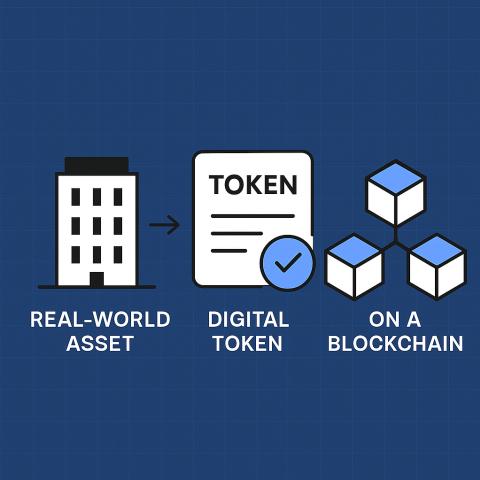
Real-world asset tokenization is the process of representing ownership rights or economic interests in an off-chain asset using blockchain-based tokens.
The underlying asset remains in the real world, while blockchain tokens represent defined rights associated with that asset.
For example, a commercial property worth $1 million could potentially be represented by 1 million digital units, with each unit representing a defined economic or ownership interest, subject to the applicable legal structure.
Depending on the asset and jurisdiction, token holders may receive rights related to:
- Ownership
- Revenue
- Profit distribution
- Debt repayment
- Governance
- Redemption
- Other contractual or economic interests
The legal relationship between the physical asset and the token is critical. Simply creating a blockchain token does not automatically establish legal ownership of an asset.
Which Real-World Assets Can Be Tokenized?
Almost any asset with clearly definable ownership or economic rights can potentially be considered for tokenization, provided the legal and regulatory framework supports it.
Common examples include:
Real Estate
Commercial buildings, residential properties, hotels, and real estate funds can be represented through tokenized structures.
Commodities
Gold, silver, agricultural products, energy assets, and other commodities can be linked to blockchain-based representations.
Private Equity
Shares or economic interests in private companies can potentially be represented using security tokens or other compliant structures.
Bonds and Debt Instruments
Debt instruments can be digitally represented to automate issuance, ownership records, interest payments, and settlement.
Art and Collectibles
High-value artwork, collectibles, and other alternative assets can be divided into digitally represented interests.
Investment Funds
Fund interests can be tokenized to streamline ownership records, subscriptions, transfers, and distributions.
How Does RWA Tokenization Work?
The tokenization process connects three major components:
Real-world asset → Legal ownership structure → Blockchain token
The physical or financial asset is first verified and placed within an appropriate legal structure. Rights associated with that structure are then represented through blockchain tokens.
Smart contracts can manage token issuance, transfers, restrictions, distributions, and other predefined functions.
A simplified process looks like this:
Asset Selection → Due Diligence → Legal Structuring → Valuation → Token Design → Smart Contract Development → Token Issuance → Distribution → Secondary Trading → Ongoing Management
Step-by-Step Process to Tokenize Real-World Assets
Step 1: Select the Asset
The first step is identifying the asset you want to tokenize.
Consider:
- Asset type
- Asset value
- Ownership structure
- Location
- Liquidity
- Existing documentation
- Revenue generation
- Investor demand
- Regulatory classification
The asset should have clearly verifiable ownership or economic rights.
For example, a company planning to tokenize a commercial property should first verify its title, ownership records, valuation, income, liabilities, and other relevant documentation.
Step 2: Conduct Asset Due Diligence
Before creating tokens, conduct comprehensive due diligence on the underlying asset.
Depending on the asset type, this may involve:
- Ownership verification
- Legal documentation
- Financial records
- Independent valuation
- Existing liabilities
- Tax considerations
- Insurance
- Regulatory restrictions
- Physical inspections
Due diligence helps establish confidence in the asset and provides the information required to structure the tokenized offering.
Step 3: Establish the Legal Structure
This is one of the most important stages of RWA tokenization.
The blockchain token needs a legally enforceable relationship with the underlying asset or the entity that owns it.
Depending on the jurisdiction and asset, businesses may use structures such as:
- Special purpose vehicles
- Trusts
- Funds
- Corporations
- Partnerships
- Contractual arrangements
The appropriate structure depends on the asset, investor rights, jurisdiction, and applicable securities and financial regulations.
Legal professionals should determine how the token represents ownership, economic rights, or another contractual interest.
Step 4: Determine the Tokenization Model
Next, decide what the token represents.
A token may represent:
- Fractional ownership
- Equity
- Debt
- Revenue rights
- Fund interests
- Asset-backed claims
- Other contractual rights
For example, tokenization of a property could provide investors with an economic interest in an entity that owns the property rather than direct title to the property itself.
The token model should be clearly documented before development begins.
Step 5: Determine Asset Valuation
The underlying asset should be appropriately valued before token issuance.
Depending on the asset, valuation may involve:
- Independent appraisals
- Market comparisons
- Financial analysis
- Cash-flow analysis
- Audits
- Commodity pricing
- Professional valuation services
The valuation can influence the token supply, pricing, collateralization, and investor disclosures.
Step 6: Define Token Economics
Token economics determine how the asset is represented digitally.
Important parameters may include:
- Total token supply
- Initial token price
- Minimum investment
- Fractional ownership
- Distribution mechanism
- Redemption rules
- Transfer restrictions
- Investor eligibility
- Fees
- Revenue distribution
For example, a $10 million asset could be represented through 10 million units at a reference value of $1 each. The actual structure and rights would depend on the legal and financial arrangement.
Step 7: Choose a Blockchain Network
The next step is selecting the blockchain on which the tokens will be issued.
The choice depends on factors such as:
- Transaction costs
- Transaction speed
- Smart contract capabilities
- Ecosystem maturity
- Wallet compatibility
- Developer ecosystem
- Compliance requirements
- Institutional support
- Scalability
Common blockchain ecosystems used for tokenization include Ethereum and various compatible Layer 2 and enterprise-oriented networks.
The best blockchain is not necessarily the one with the lowest transaction fee. Businesses should consider the complete technical, regulatory, and operational environment.
Step 8: Select the Token Standard
The token standard defines how the digital asset behaves on the blockchain.
Depending on the use case, developers may consider standards designed for:
- Fungible assets
- Security tokens
- Permissioned transfers
- Compliance-aware assets
- Non-fungible representations
For regulated assets, token standards that support features such as investor eligibility, transfer restrictions, and compliance controls can be particularly important.
Step 9: Develop the Smart Contracts
Smart contracts automate the rules governing the tokenized asset.
Depending on the platform, smart contracts may manage:
- Token issuance
- Minting and burning
- Transfers
- Whitelisting
- Investor restrictions
- Ownership records
- Distribution of income
- Redemption
- Voting
- Corporate actions
For regulated assets, smart contracts should incorporate appropriate compliance controls rather than treating the token like a standard unrestricted cryptocurrency.
Smart contracts should also undergo rigorous security testing and independent audits where appropriate.
Step 10: Build the Asset Tokenization Platform
A complete tokenization solution requires more than a smart contract.
An asset tokenization platform may include:
Investor Interface
Allows users to register, complete verification, view offerings, purchase tokens, and manage holdings.
Issuer Dashboard
Enables asset owners or issuers to create offerings, manage investors, monitor transactions, and manage tokenized assets.
Compliance Module
Supports KYC, AML, accreditation or eligibility checks, jurisdictional restrictions, and transaction monitoring where required.
Token Management
Handles issuance, distribution, transfers, burning, and other token lifecycle functions.
Wallet Integration
Allows investors to hold and manage their tokens securely.
Payment Integration
Supports relevant payment and settlement methods.
Reporting and Analytics
Provides information about holdings, transactions, distributions, and asset performance.
Step 11: Implement KYC and AML Controls
If the tokenized asset is offered to investors, compliance becomes a critical part of the platform.
Depending on the jurisdiction and asset type, the platform may need to support:
- Identity verification
- KYC
- AML screening
- Sanctions screening
- Investor eligibility checks
- Geographic restrictions
- Transaction monitoring
- Record keeping
The exact requirements vary by jurisdiction and the legal classification of the token.
Step 12: Issue the Tokens
After completing legal, technical, and compliance preparation, the tokens can be issued according to the defined structure.
The issuance process may include:
- Investor onboarding
- Eligibility verification
- Payment
- Token allocation
- Blockchain transaction
- Ownership record update
- Investor notification
The issuance process should be transparent and auditable.
Step 13: Enable Token Distribution and Trading
After issuance, businesses may provide mechanisms for eligible investors to transfer or trade tokens.
This could involve:
- Primary marketplaces
- Permissioned secondary markets
- Digital asset exchanges
- Peer-to-peer transfers
- Automated settlement mechanisms
Whether secondary trading is permitted depends heavily on the asset type, jurisdiction, token classification, and applicable regulations.
Step 14: Manage the Tokenized Asset After Issuance
Tokenization does not end when tokens are issued.
The underlying asset still needs continuous management.
This can include:
- Asset valuation
- Investor reporting
- Revenue distribution
- Interest payments
- Corporate actions
- Token transfers
- Compliance monitoring
- Redemptions
- Asset audits
The platform should maintain a reliable connection between off-chain asset records and on-chain token ownership.
How Much Does Real-World Asset Tokenization Cost?
The cost of RWA tokenization varies significantly depending on the asset type, platform complexity, jurisdiction, and compliance requirements.
Major cost factors include:
- Legal and regulatory structuring
- Asset due diligence
- Valuation and auditing
- Smart contract development
- Blockchain integration
- Platform development
- KYC/AML integration
- Wallet integration
- Payment infrastructure
- Security audits
- Ongoing maintenance
A simple token issuance project can be considerably less complex than a full-scale platform supporting multiple asset classes, investor onboarding, compliance, secondary trading, and automated distributions.
How to Choose an Asset Tokenization Development Company
Choosing the right technology partner is critical because RWA tokenization combines blockchain development with financial, legal, and operational requirements.
When evaluating an asset tokenization development company, consider:
- Blockchain expertise
- Smart contract development capabilities
- Security practices
- Token standard experience
- Fintech experience
- KYC/AML integration capabilities
- Platform development experience
- API and third-party integrations
- Scalability
- Post-launch support
Ask potential development partners to demonstrate relevant projects rather than relying only on technology lists.
Why Choose Softean for Asset Tokenization Development?
Softean provides asset tokenization development services for businesses looking to build blockchain-powered solutions for real-world assets.
Our development approach can cover the complete technology lifecycle, from token architecture and smart contract development to investor interfaces, compliance integrations, wallets, and administrative systems.
We can help businesses develop solutions for tokenized:
- Real estate
- Commodities
- Private equity
- Investment funds
- Bonds and debt instruments
- Art and collectibles
- Other eligible real-world assets
Our team can also integrate blockchain networks, smart contracts, wallets, APIs, KYC/AML services, payment systems, and other components required by the project.
Final Thoughts
Real-world asset tokenization brings blockchain technology into traditional asset markets by creating digital representations of ownership rights or economic interests.
However, successful tokenization involves much more than creating a blockchain token. Businesses need to address asset due diligence, legal structuring, valuation, token economics, blockchain selection, smart contract security, investor onboarding, compliance, issuance, and ongoing asset management.
A well-designed RWA tokenization platform can provide the infrastructure needed to manage these processes efficiently while creating new possibilities for fractional ownership, transparency, automation, and asset distribution.
If you're planning to tokenize real estate, commodities, securities, funds, or another eligible real-world asset, the first step is to define the asset, legal structure, investor model, and technology requirements before beginning development.