Quick Summary: Two products can look nearly identical and perform completely differently once installed. This piece breaks down the actual factors that determine how well sound insulation sheets perform, from density and thickness to installation technique, so buyers understand what's really driving the numbers on a spec sheet.
Introduction
A spec sheet lists a single performance number, and it's tempting to treat that number as the whole story. It rarely is. Sound insulation sheets, like most acoustic products, perform based on a combination of factors working together, and understanding what's actually driving performance helps buyers make genuinely informed decisions rather than just comparing headline figures.
This matters because the same base material can perform quite differently depending on density, thickness, and how it actually gets installed. Two products with similar published ratings might behave noticeably differently once they're actually in a wall or ceiling, and knowing why helps avoid disappointment after installation.
Density: The Foundation of Absorption Performance
Density is arguably the single most influential factor in how well fiberglass sound insulation performs, and it's worth understanding why this specific property matters so much. Denser material contains more fibre packed into the same volume, creating more resistance for sound waves attempting to pass through, which translates directly into better absorption across a broader frequency range.
This relationship isn't perfectly linear though. Beyond a certain density threshold, additional gains become increasingly marginal relative to the added material cost and weight. Understanding where that point of diminishing returns sits for a specific application helps avoid overspending on density beyond what a given noise problem actually requires.
Lower density fiberglass sound absorbing panels tend to perform adequately against higher frequencies, general speech and everyday chatter, while requiring considerably higher density to meaningfully address lower frequency noise, mechanical hum, traffic, bass heavy sound sources. This is exactly why understanding the specific noise problem before comparing density specifications matters so much for making the right choice.
Thickness and its Relationship to Frequency Range
Thickness works alongside density to determine overall performance, though the two properties affect different parts of the frequency spectrum somewhat differently. Thicker material generally absorbs a broader range of frequencies more effectively, particularly at the lower end where thin materials genuinely struggle regardless of how dense they are.
This is because low frequency sound waves are physically longer, requiring more material depth to meaningfully interact with and absorb that energy. A thin, high density product might still underperform against genuinely low frequency noise compared to a thicker, moderate density alternative, which is why thickness and density need to be considered together rather than evaluated as independent, unrelated specifications.
For most everyday applications addressing speech clarity and general reverberation, moderate thickness options handle the job adequately. Specialised environments dealing with genuine low frequency challenges, industrial spaces, areas near heavy machinery, benefit from the added thickness even though it comes with additional cost and space requirements.
How a Fibreglass Acoustic Panel's Facing Material Affects Performance
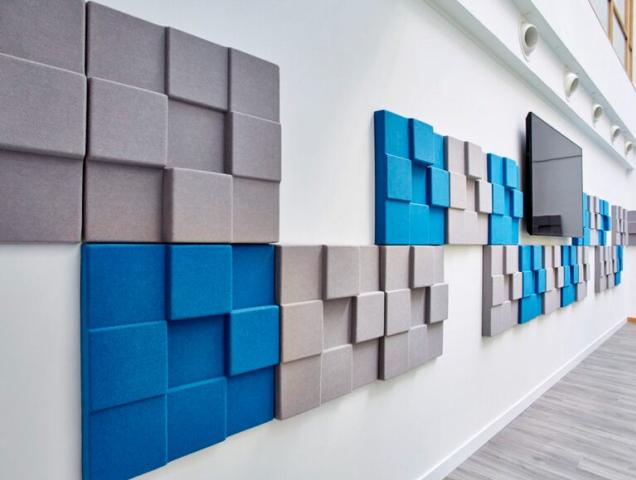
The facing material on a fibreglass acoustic panel, whether that's a fabric wrap, perforated covering, or another surface treatment, isn't purely cosmetic. It can meaningfully affect how sound actually reaches and interacts with the absorptive core material underneath.
Facings that are too dense or too tightly woven can actually reduce overall absorption by preventing sound from penetrating through to the fibreglass core effectively. Conversely, an appropriately porous facing allows sound to pass through relatively unimpeded while still providing the protective, finished appearance a visible panel needs for practical use in an occupied space.
This is a detail that's easy to overlook when comparing products based primarily on colour or texture, since the facing choice genuinely factors into raw acoustic performance rather than existing purely for aesthetic purposes.
Installation Technique and Air Gaps
How a product actually gets installed affects real world performance just as much as the material specifications themselves, sometimes even more. Sound insulation sheets or panels mounted flush against a hard surface perform differently than the same product installed with an air gap behind it, since that gap allows sound waves more interaction with the material before reaching the solid backing surface.
This effect is particularly pronounced at lower frequencies, where an air gap can meaningfully improve absorption compared to a flush mounted installation using identical material. Manufacturers typically test products under specific mounting conditions, and confirming that published performance data matches the planned installation method matters enormously for predicting actual real world results accurately.
Gaps or inconsistent coverage during installation also undermine performance regardless of how good the underlying material is. Even excellent fiberglass sound insulation performs poorly if installed with visible gaps or inconsistent thickness across a treated surface, since sound simply finds the path of least resistance through any weak point in coverage.
Read to know more about fiberglass sound insulation here: Hidden Science Inside Fiberglass Sound Solutions… Explore here?
Frequency Specific Performance versus Single Number Ratings
A single NRC or similar average rating provides a useful starting point for comparison but genuinely obscures important nuance about how a product performs across different parts of the frequency spectrum. Two products with identical average ratings might have very different frequency specific profiles, one performing exceptionally well against speech frequencies while doing little against low frequency hum, and vice versa.
Reviewing the full frequency breakdown, rather than relying solely on a single averaged figure, matters significantly for anyone dealing with a specific, identifiable noise problem rather than general purpose reverberation control. This distinction becomes especially important when comparing fiberglass sound absorbing panels from different manufacturers, since testing methodology and reported conditions can vary in ways that affect how comparable published numbers actually are.
Placement and Coverage Area
Even a product with excellent inherent performance characteristics underperforms if placed poorly or if coverage is too limited relative to the actual noise problem being addressed. Sound insulation sheets treating only a small portion of a wall or ceiling produce correspondingly limited improvement, regardless of how strong the material's individual performance rating might be.
Understanding roughly how much coverage a specific noise problem actually requires, rather than guessing or defaulting to whatever fits an available budget, helps ensure the material's genuine performance potential actually translates into a noticeable, meaningful improvement once installed in the real space.
Environmental Factors that Affect Long Term Performance
Moisture exposure over time can degrade fiberglass performance gradually, reducing effectiveness compared to initial installation even when the material itself doesn't fail outright or show obvious visible damage. Understanding whether a specific product includes moisture resistant treatment matters for applications in bathrooms, basements, or any consistently humid environment where this degradation risk is genuinely elevated.
Temperature cycling and general wear over years of use can also gradually affect performance, though quality fiberglass products generally hold up reasonably well under normal conditions compared to some alternative acoustic materials that degrade more noticeably over a comparable timeframe.
Bringing these Factors Together
Understanding what genuinely determines acoustic performance, density, thickness, facing material, installation technique, coverage, and environmental exposure, helps buyers evaluate products more thoughtfully than simply comparing a single headline number across different options. This more complete understanding leads to better purchasing decisions and, ultimately, better real world results once a product is actually installed and doing its job.
Get Expert Guidance on Choosing the Right Product
Understanding what actually drives acoustic performance helps avoid costly mismatches between expectations and real world results. Tranquil Global works with buyers to evaluate density, thickness, and installation requirements properly before recommending the right product for each specific space. Reach out to Tranquil Global and let's find the right fit for your project.
FAQs
1. Does higher density always mean better performance for fiberglass sound insulation?
Generally yes for lower frequencies, but returns diminish beyond a certain point, so matching density to the actual noise problem matters more than maximising it.
2. How much does an air gap actually improve performance for sound insulation sheets?
Significantly, particularly at lower frequencies, where an air gap behind the material meaningfully improves absorption compared to a flush mounted installation.
3. Does the fabric covering on a fibreglass acoustic panel affect its acoustic performance?
Yes. An overly dense or tightly woven facing can reduce absorption by preventing sound from reaching the core material effectively.
4. Why do two products with the same NRC rating sometimes perform differently in practice?
NRC is an average figure, so products can have very different frequency specific performance despite sharing a similar overall rating.
5. Can fiberglass sound absorbing panels lose effectiveness over time?
Yes, particularly with prolonged moisture exposure, which can gradually reduce performance even without obvious visible damage to the material.
6. Can Tranquil Global help determine the right density and thickness for a specific project?
Yes. Tranquil Global assesses the actual noise problem and space constraints before recommending the right specifications for genuine performance.