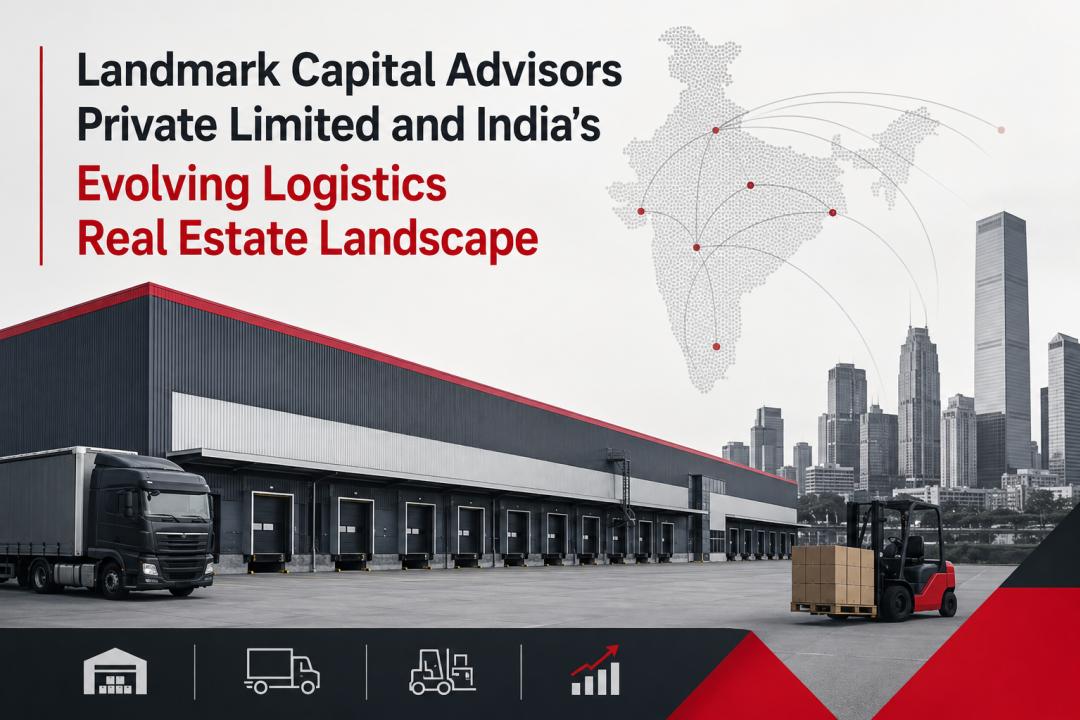
India’s real estate sector is undergoing a broader transformation as logistics, manufacturing and changing consumption patterns influence the development of specialised assets. Warehousing is increasingly viewed as an important part of the country’s infrastructure network, connecting producers, distributors and consumers across major economic centres.
This evolution has also changed how institutional investors assess opportunities within real estate. Location, connectivity, tenant requirements, asset quality and long-term market conditions have become important considerations when evaluating specialised properties.
How India’s Logistics Real Estate Landscape Is Changing
The growth of organised supply chains has increased the importance of strategically located logistics infrastructure. Warehouses are no longer viewed simply as storage facilities. Modern facilities are increasingly designed around transportation efficiency, distribution requirements and the operational needs of occupiers.
Industrial corridors, road connectivity, consumption centres and manufacturing clusters are therefore becoming important factors in determining the potential of individual logistics markets.
At the same time, the development of more organised warehousing infrastructure is encouraging investors to distinguish between assets based on their location, specifications, operational characteristics and surrounding economic activity.
Landmark Capital Advisors Private Limited and Specialised Real Estate
Landmark Capital Advisors Private Limited operates within India's alternative investment and real asset landscape, with investment activity that includes specialised areas of real estate.
Its involvement in the sector reflects a broader institutional approach in which potential opportunities are examined through multiple factors rather than property characteristics alone. Market conditions, infrastructure development, demand drivers and the broader economic environment can all influence how an asset is assessed.
For institutional investors, this approach is particularly relevant in logistics real estate, where conditions can vary considerably between individual markets.
Why Location Has Become Increasingly Important
The value of a logistics property can be closely connected to its surrounding infrastructure. Access to highways, industrial areas, ports, consumption centres and established transportation routes can influence how effectively a facility serves its intended market.
This has made location analysis an important part of real estate investment decisions. Investors are increasingly looking at how an asset fits into the wider movement of goods rather than assessing the building in isolation.
The same principle applies to emerging logistics markets, where future infrastructure development may influence demand and long-term asset potential.
What Institutional Investors Consider
The institutional evaluation of logistics assets generally involves several layers of analysis. Among the factors that can influence investment decisions are:
The characteristics of the surrounding market
Accessibility and transportation connectivity
Potential occupier requirements
Construction and operating standards
Development and execution considerations
Regulatory and structural factors
Long-term prospects for the underlying asset
Such factors help investors develop a more complete understanding of potential opportunities and associated risks.
A Changing Role for Real Estate Investment Platforms
The development of specialised real estate segments has increased the importance of investment platforms that understand individual asset classes and their underlying market dynamics.
Landmark Capital Advisors is part of this wider conversation around institutional participation in India's real estate sector. Its presence in the alternative investment space reflects the growing attention being given to specialised real assets as India's economy develops.
The evolution of the logistics sector also demonstrates why investment decisions increasingly require an understanding of both property fundamentals and the economic activity surrounding an asset.
Technology and the Next Generation of Warehousing
Technology is becoming another important element in the development of modern logistics infrastructure. Automated systems, digital inventory management, data-based operations and improved tracking capabilities are changing the way warehouses operate.
As occupier expectations evolve, future facilities may need to accommodate increasingly sophisticated operational requirements. This could influence both the design of new assets and the way existing facilities are evaluated by investors.
For the real estate investment sector, these changes create a need to consider how technological developments could affect the long-term relevance and competitiveness of individual properties.
Looking Ahead at India’s Logistics Infrastructure
India's logistics network is expected to continue evolving alongside manufacturing, organised retail and changing consumer behaviour. New infrastructure projects and expanding economic corridors could create opportunities in established as well as emerging markets.
The resulting investment landscape is likely to place greater emphasis on asset selection, market research and long-term assessment rather than short-term property cycles.
This broader development helps explain the increasing attention surrounding Landmark Capital Advisors and its participation in India's alternative investment and real estate ecosystem.
Understanding Landmark Capital Advisors News in Context
Landmark Capital Advisors News provides another reference point for following developments associated with the company and the wider investment environment in which it operates. Industry coverage can also offer context on changing investor priorities, real estate trends and developments across India's alternative investment sector.
Rather than viewing individual developments in isolation, the broader market provides a useful perspective on how institutional capital is responding to India's changing real estate requirements.
Conclusion
India's logistics real estate sector is becoming increasingly connected with the country's wider economic and infrastructure development. As supply chains become more organised and specialised assets gain greater attention, investment decisions are likely to depend increasingly on detailed market understanding and long-term asset considerations.
Landmark Capital Advisors Private Limited represents one participant within this evolving investment landscape. Meanwhile, discussions appearing under Landmark Capital Advisors News contribute to the broader picture of how India's real estate and alternative investment sectors are developing.
The continued evolution of logistics infrastructure will ultimately depend on economic activity, infrastructure expansion, occupier requirements and the ability of investors to identify opportunities that remain relevant as the market changes.