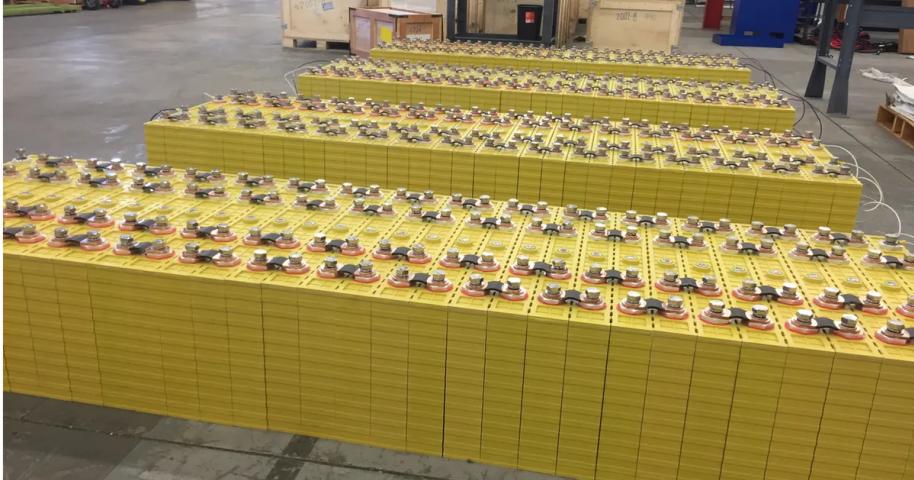
Full solid-state cells get most of the attention in battery news — and for good reason, since they represent the theoretical ceiling of energy density. But there's a chemistry sitting quietly between conventional liquid-electrolyte NMC and full solid-state that's already manufacturable at scale, already shipping in real products, and already solving the exact problem weight-critical applications care about most: semi solid batteries.
What Semi-Solid Chemistry Actually Delivers
Semi-solid state NMC cells occupy a precise and commercially significant position in the battery market: they deliver energy density well above conventional liquid-electrolyte NMC, while remaining manufacturable today — ahead of full solid-state commercialization, which is still mostly confined to pilot lines and qualification programs. For weight-critical applications, that combination represents a meaningful procurement upgrade available right now, not a roadmap promise.
LiTrue Power Technologies Co., Ltd.'s PE36N-EE, a 36Ah semi-solid state NMC pouch cell, is a concrete example of what that looks like in practice: 321Wh/kg energy density with an operating range of -43°C to 55°C, making it viable for both high-altitude drone missions and cold-climate electric motorcycle deployments — two scenarios where conventional liquid-electrolyte cells tend to lose capacity fast.
Where Semi-Solid Sits Between Conventional NMC and Full Solid-State
| Specification | Solid-State Anode-Free | Semi-Solid NMC | Standard NMC | LFP Prismatic |
|---|---|---|---|---|
| Representative cell | LiTrue PE49N-EF (49Ah) | LiTrue PE36N-EE (36Ah) | LiTrue PA50N-P (50Ah, 8C) | LiTrue LFL1-100P (100Ah) |
| Energy density | 495 Wh/kg | ~380 Wh/kg | ~280 Wh/kg | ~180 Wh/kg |
| Peak C-rate | 3C continuous | 3C continuous | 8C pulse | 3C continuous |
| Cycle life | 800+ cycles | 1,000+ cycles | 1,200+ cycles | 3,000+ cycles |
| Operating temperature | -43°C to 55°C | -20°C to 60°C | -20°C to 60°C | -20°C to 65°C |
| Fast-charging capable | ✓ | ✓ | ✓ | ✓ |
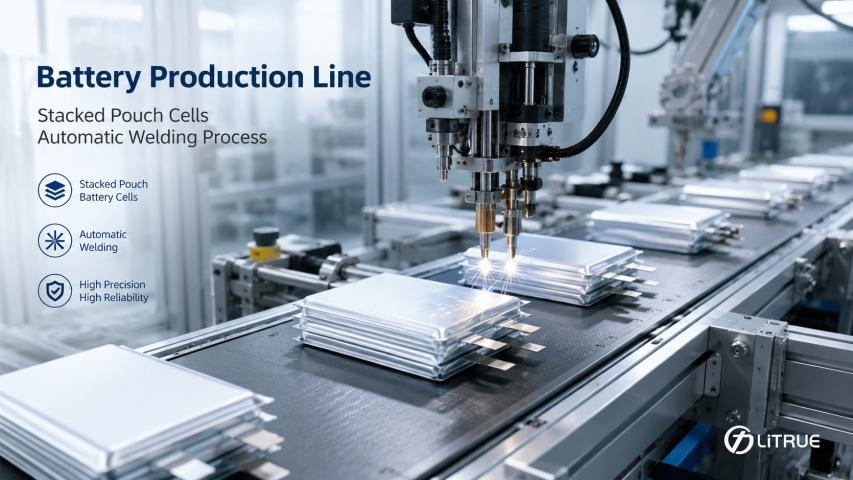
The pattern is clear: full solid-state anode-free cells push energy density and temperature range furthest, but at a lower cycle-life ceiling and a manufacturing process that's still maturing. Semi-solid NMC gives up some of that top-line Wh/kg in exchange for better cycle life and a manufacturing process that's already proven at production volume — which is exactly why it's the chemistry actually shipping in commercial UAV and electric motorcycle programs today, rather than sitting in a qualification queue.
Why This Matters for Procurement, Not Just R&D
For a program that needs a meaningful energy-density jump this quarter — not once a future solid-state qualification cycle clears — semi-solid state NMC is the chemistry that's actually available to spec into a bill of materials today. LiTrue's engineering team sources semi-solid and solid-state cells factory-direct, which means procurement teams can move from sample request to qualification without an intermediary adding lead time. The full range of semi-solid, solid-state, and conventional NMC options sits side by side in LiTrue's product catalog, so teams can compare energy density, cycle life, and cost tier directly rather than choosing on Wh/kg alone.
The Bottom Line
Full solid-state batteries are still the destination, but they're not the only stop worth making. Semi-solid batteries already close much of the energy-density gap, ship at production volume, and hold up across a genuinely wide temperature range — which is why more weight-critical UAV and electric-vehicle programs are specifying them now instead of waiting for a chemistry that isn't commercially ready yet.
If your program needs a real energy-density upgrade this year, LiTrue's engineering team can walk you through semi-solid, solid-state, and conventional NMC options side by side — request a custom quote here.