Picture this. You've spec'd a heavy-lift agricultural drone, your launch window is eight weeks out, and the cell samples that just landed on your bench sag to 3.4V under a 5C pull. The datasheet promised otherwise. We've watched this exact scenario sink product timelines more than once — and nine times out of ten, the root cause traces back to the wrong lithium battery manufacturer, not the wrong chemistry.
I write this from the engineering floor at LiTrue in Shenzhen, where we stack, weld, and burn-in cells every day. This guide is the audit we wish every buyer ran before signing a PO. It's built for procurement engineers, OEM product leads, and drone makers who need a custom lithium battery that survives the field, not just the lab. No fluff. Just the questions, the numbers, and the trade-offs that actually decide whether your program ships.
What a Real Cell Maker Looks Like — and What Most Hide
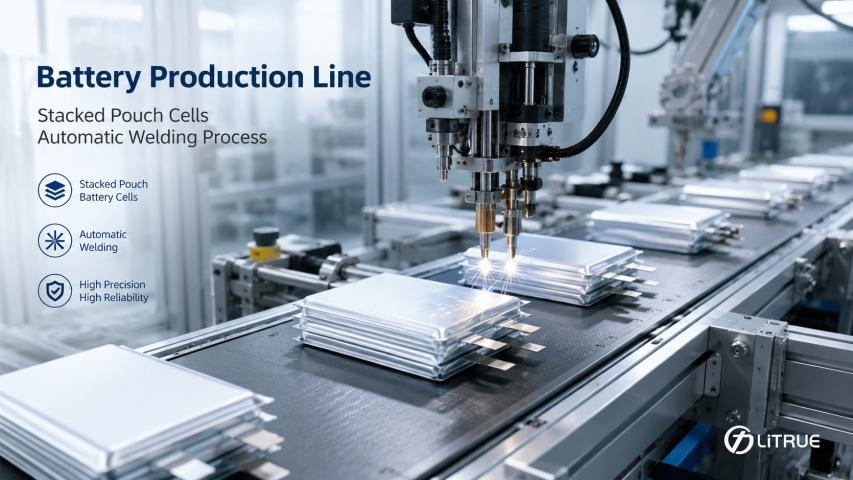
Here's the uncomfortable part of this industry. Maybe one in five companies that call themselves a "factory" actually pour electrode slurry or stack cells. The rest buy finished cells, slap on a BMS, and rebrand. That matters to you because the people who don't own the chemistry can't fix it when your 8C pulse requirement breaks their assumptions.
Key Features You Should Demand
When you vet a lithium battery supplier, three capabilities tell you whether you're talking to a builder or a reseller. First — in-house cell production with published C-rate data under load, not just nominal capacity. Second — a real BMS team that can tune protection thresholds and CAN-bus telemetry to your flight controller. Third — certification paperwork you can verify: UN38.3 test summaries, UL 2054, RoHS, and the national design standards the cells were built against.
The Features Quietly Missing From Most Quotes
Read the gaps, not just the lines. A lot of spec sheets list "5C discharge" and stop there. They won't show you the voltage curve at -20°C, the capacity retention after 800 cycles, or what the pack does at 280A for ten seconds — the moment a drone fights a gust on takeoff. Those omissions aren't accidental. If a high-rate battery cell can't hold its numbers under stress, the easiest move is to never print the stress test.
One Truth Nobody Tells First-Time Buyers
Energy density and cycle life pull against each other. You cannot max both. A cell tuned for 226 Wh/kg will not also give you 3,000 cycles — physics doesn't allow the free lunch. The right lithium battery manufacturer asks what your duty cycle actually is, then steers you toward the chemistry that fits. The wrong one sells you whatever sits in inventory. For the underlying electrochemistry behind these trade-offs, the Wikipedia overview of lithium-ion batteries is a solid neutral primer to share with non-technical stakeholders.
Product Deep Dive: The UAV-JP328L 51.8V 28Ah Pack
Let me make this concrete with a pack we build in volume. The UAV-JP328L is a 14S1P NMC unit — 51.8V nominal, 28Ah, 1.45 kWh of usable energy. It exists because heavy agricultural and mapping drones kept asking us for sustained power that doesn't gain weight. This is the product that started those conversations.
Unique Selling Points
The headline numbers, all measured on our line: 140A continuous discharge (5C) with a 280A peak (10C) for 10-second bursts at 25°C. The whole pack weighs 8.7 kg and ships at IP65, so dust and a sudden field rain don't end your flight. An intelligent BMS streams real-time cell data over CAN bus, and the discharge window runs from -40°C to +60°C — which is why operators in both Inner Mongolia winters and Gulf-region summers run it without a separate SKU.
Who It's For — and Who Should Skip It
Be honest with yourself here. This pack is for heavy-lift sprayer drones, aerial survey UAVs, and logistics platforms that need 5C all day and pull 10C on takeoff. If you build a 250-gram FPV racer or a consumer toy drone, this is the wrong tool — too much pack, too much capacity, wrong price band. And if your application demands 5,000+ cycles in a stationary energy buffer, NMC isn't your answer; our LFP line is. Matching the cell to the mission beats chasing one number on a chart.
Performance, Decision Factor by Decision Factor
On energy, 1.45 kWh inside an 8.7 kg envelope lands near 167 Wh/kg at the pack level — flight time without a payload penalty. On power delivery, the 140A continuous rating means the pack isn't gasping at cruise, and the 280A peak covers the gust-recovery spike that browns out weaker packs. On endurance, you get 1,000 cycles at a strict 1C/1C charge-discharge — and that's a real working rate, not a gentle 0.2C lab number padded to look good. On safety, multi-layer protection covers overcharge, over-discharge, and over-current with active alarms, validated against GB 31241-2022, GB/T 38058-2019, and GB/T 38930-2020.
Design and How Crews Actually Use It
The 238×129×332 mm form factor was set by gimbal and battery-bay constraints our drone clients kept hitting — not chosen for a catalog. Charging accepts 56A continuous (2C) with an 84A peak, so a swap-and-fly fleet turns packs around between sorties instead of parking them on a slow charger. The CAN telemetry drops straight into most commercial flight controllers, which means your ground station reads true state-of-charge mid-mission rather than guessing from voltage.
Customization: How We Reshape It
Stock rarely survives contact with a real airframe. We change series-parallel configuration, connector type and pinout, BMS thresholds, communication protocol, and housing geometry. Need 16S for a higher bus voltage, or a flatter pack to clear a contoured belly? That's a build, not a "no." This is the part where a true OEM lithium battery partner earns its keep — and where rebranders run out of road.
Limitations — Stated Plainly
No product is the answer to everything, so here's what you won't find. The UAV-JP328L is not a 6,000-cycle workhorse; NMC trades cycle count for energy and burst power. It's not the cheapest pack per kWh — high-rate cells and an intelligent BMS cost more than entry-level units. And it is purpose-built for UAV duty, so it's overkill for low-draw consumer electronics. If those gaps matter to your use case, say so early and we'll point you elsewhere.
Pros and Cons
Pros: 5C continuous / 10C peak that holds under load; -40°C to +60°C field range; IP65 protection; CAN-bus telemetry; verifiable UN38.3, UL 2054, and RoHS paperwork; fully reconfigurable for your airframe.
Cons: Higher upfront cost than budget packs; 1,000-cycle ceiling versus LFP; capacity and power that exceed light-payload drones; lead time extends when deep customization is involved.
Where to Go Next
If this matches your platform, the full spec sheet and a sample request for this UAV lithium battery are one click away — pull the data, then put a sample on your own test bench. We'd rather you trust the bench than the brochure.
Similar products: If 28Ah is more than your airframe needs, our lighter 20Ah UAV pack and a 30Ah smart-telemetry variant share the same cell platform — same DNA, different endurance band.
Alternatives and Comparison: NMC vs. LFP, Trader vs. Factory
You have two real decisions to make, and they're often confused. The first is chemistry. The second is the type of company you buy from. Get both right and the pack almost designs itself.
NMC vs. LFP at the Cell Level
NMC, like the cell in the pack above, gives you the energy density and burst power that flight time and takeoff thrust demand. LFP trades some of that energy for longevity and thermal margin. Our LFP pouch cells run 164–167 Wh/kg but deliver ≥3,000 cycles at 1C/1C across a -30°C to +55°C window — the math swings hard toward LFP for e-motorcycles, swap-station fleets, and any platform where total cost over years beats grams saved per flight. The technical background on LFP chemistry spells out why those cycle numbers run so much higher. Picking between them is a duty-cycle question, full stop — not a "which is better" debate.
Factory vs. Trader vs. Pack Assembler
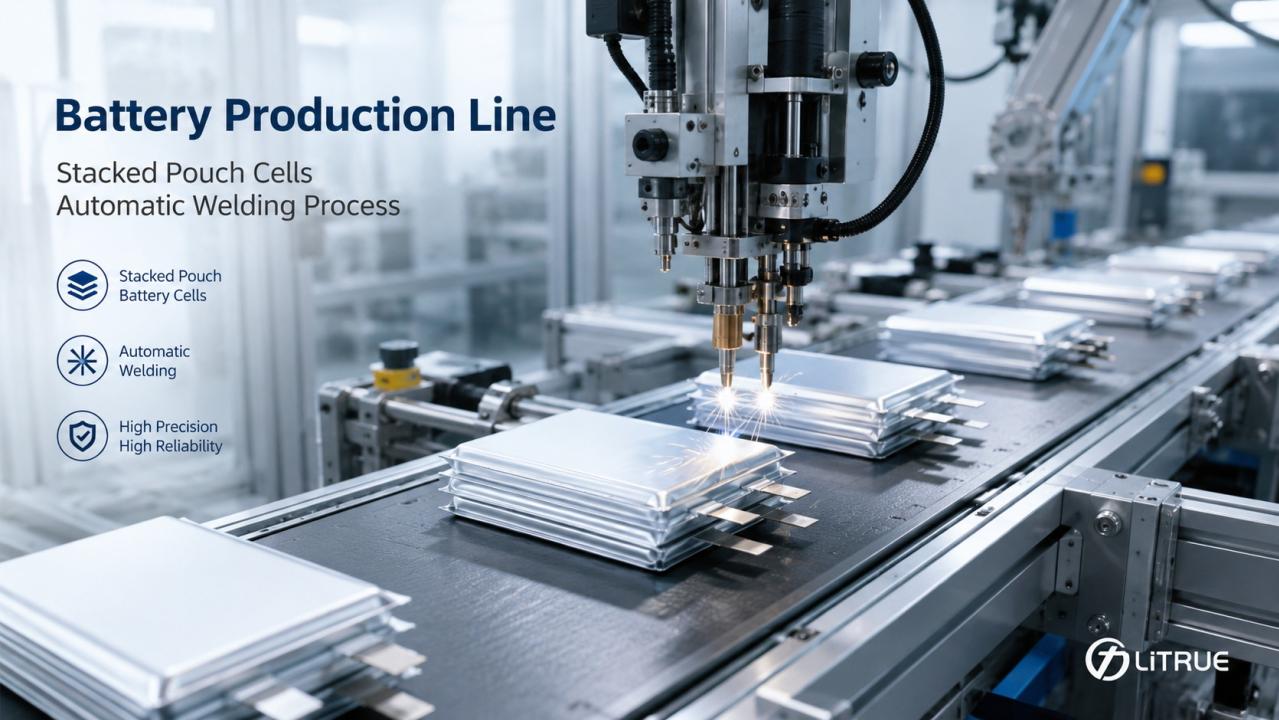
Three kinds of suppliers will quote you, and the gap between them shows up only when something goes wrong. A pure trader resells finished cells — fast to quote, helpless when you need a tuned discharge curve. A pack assembler buys cells and builds modules — fine for standard packs, stuck when your application needs cell-level changes. A real factory pours, stacks, and validates its own cells, so it can move every variable from electrode to enclosure. When you read a vendor's claim to be a leading lithium battery manufacturer, that's the line to verify — ask to see the stacking line, not the warehouse.
A Quick Word on Cells vs. Packs
Some programs need raw cells to build in-house; others need finished, BMS-integrated units. We supply both — bare lithium cells for integrators with their own pack lines, and complete custom battery packs for teams that want a turnkey unit dropped into the airframe. Know which one you're buying before the quote, because the two paths price and schedule very differently.
FAQs From Real Sourcing Calls
How do I verify a lithium battery manufacturer actually makes its own cells?
Ask for a live walkthrough of the stacking and formation lines — video or in person — plus raw cycle-test logs, not a polished summary. A genuine maker shows you the burn-in room without flinching. A reseller suddenly gets busy.
What MOQ should I expect for a custom UAV battery?
For configuration changes on an existing platform like the UAV-JP328L, sample units ship in single digits and pilot runs start in the low hundreds. Ground-up cell development carries a higher floor. If a "factory" offers a brand-new chemistry at 50 units with no tooling cost, be skeptical.
Can one drone battery cover both winter and desert deployments?
Yes, if the discharge range is wide enough. The pack above runs -40°C to +60°C, which is why operators skip region-specific SKUs. Always confirm the rated range is for discharge under load, not just storage.
NMC or LFP for an agricultural sprayer fleet?
It depends on how often you fly. High daily utilization and a multi-year horizon favor LFP's 3,000+ cycles. Maximum payload and flight time on fewer, harder flights favor NMC's energy density. Tell your supplier the duty cycle and let the numbers decide.
Do I need UN38.3 before I can ship internationally?
For air freight of lithium batteries, yes — UN38.3 is the baseline transport-safety standard, and a real maker hands you the test summary on request. No paperwork, no plane.
The Bottom Line
Choosing a lithium battery manufacturer is less about the glossiest datasheet and more about who can prove their numbers under load and reshape the pack when your airframe argues with the spec. Demand load-tested C-rates, verifiable certifications, and a BMS team that answers technical questions without stalling. Match the chemistry to the mission — NMC for energy and burst, LFP for cycles and cost-per-year. And when a vendor claims they build their own cells, make them show you the line.
We've shipped these packs into sprayer fleets, mapping rigs, and forklift programs across more than thirty markets, and the pattern never changes: the buyers who run their own bench tests early ship on time. If you want to start that test, send us your duty cycle and target airframe — we'll send back a spec and a sample worth putting under real load.