Every long-endurance UAV program eventually runs into the same wall. It isn't thrust, and it usually isn't voltage. It's mass. You can always add more capacity to a pack — the question is whether you can afford the weight that comes with it, and whether that weight quietly cancels out the extra flight time you were trying to buy in the first place.
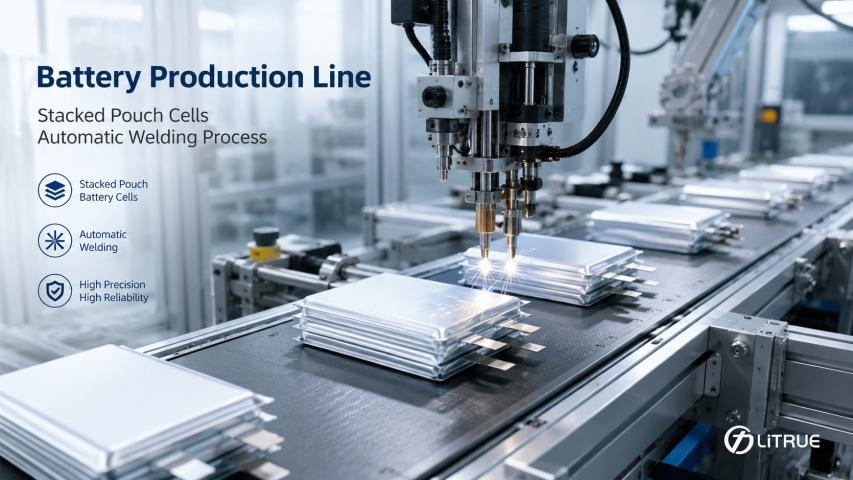
LiTrue's new PE40N-EF is built around that specific problem. It's a 40Ah anode-free solid-state pouch cell rated at 3.85V nominal, and at 316 grams per cell it delivers 495 Wh/kg — a specific-energy figure that puts it well above the conventional NMC and LFP pouch cells most UAV and electric-aviation programs are still designing around today.
What the numbers actually mean in the air
A 40Ah cell at 495 Wh/kg is one thing on a datasheet. What matters to a pack engineer is what it does to mission time and thermal margin.
- At 0.5C continuous charge, that's 20A into the pack — a controlled, conservative charge rate consistent with a chemistry that prioritizes energy density over fast turnaround.
- At 3C continuous discharge, that's 120A sustained — enough headroom for climb and cruise on most UAV powertrains.
- At 5C pulse discharge, that's 200A — the kind of margin that matters during takeoff, a sudden climb, or a wind-gust correction, without asking the BMS to trip.
None of that changes because the anode is gone. The pulse and continuous ratings are sized the same way LiTrue rates any high-density cell: for what the pack can actually sustain, not a marketing ceiling.
Built for the cold, not just the lab
The PE40N-EF is rated across -43°C to 55°C operating temperature — a range aimed squarely at high-altitude platforms and cold-region operations, where standard lithium cells lose usable capacity fast as the mercury drops. For programs flying survey or ISR missions at altitude or in winter conditions, that low-temperature floor is often as important as the energy density headline number.