As a lithium battery engineer with over 15 years in the energy storage industry, I’ve seen the UAV sector evolve from niche hobby systems into a full-scale industrial ecosystem. Today, drone battery manufacturers are not just suppliers—they are critical enablers of aerial logistics, agriculture, surveillance, and e-VTOL mobility.
At LiTrue, we operate as a real-world Lithium Battery Manufacturer and engineering-driven Battery manufacturing company, focusing on UAV power systems that must perform under extreme discharge rates, temperature swings, and weight constraints. In this article, I’ll break down how the global supply chain works, what defines a reliable manufacturer, and why companies increasingly rely on specialized lithium battery manufacturers in china for scalable production.
Global Drone Battery Manufacturing Landscape
The global ecosystem of drone battery manufacturers is dominated by Asia, particularly China, where vertically integrated supply chains allow full control over lithium cells, battery pack assembly, and BMS development.
Many buyers searching for a Lithium battery supplier or Lithium battery factory directly are often trying to reduce cost while maintaining high energy density and reliability. This is where Chinese OEM/ODM ecosystems dominate with strong scalability and customization capabilities.
However, cost alone is not enough. Drone systems today require precision engineering, especially for FPV racing drones, agricultural UAVs, and heavy-lift industrial platforms.
For regulatory safety insights on UAV energy systems, the FAA provides useful guidance on unmanned aircraft systems: https://www.faa.gov/uas
What Defines a Reliable Drone Battery Manufacturer?
In my experience working across UAV and energy storage programs, a reliable manufacturer is not defined by scale alone but by five critical dimensions:
1. Cell Engineering Capability
High-end UAV batteries rely on High energy-density Cells, High C-Rate Battery Cell, and stable lithium cells chemistry control. Without this, FPV and agricultural drones fail under peak load.
2. Safety Architecture
Reliable systems integrate thermal management, overcurrent protection, and mechanical reinforcement for High safety Cells.
3. Customization Capability
Top-tier ODM lithium battery manufacturer partners provide Custom Lithium Battery and Custom lithium battery pack assembly based on drone frame design and payload.
4. Manufacturing Traceability
Full traceability from Battery cell Lithium sourcing to final pack testing ensures compliance and consistency.
5. Energy Optimization
Drone endurance depends on balancing weight and discharge efficiency—especially in Lightweight Lithium Battery configurations.
Advanced research institutions such as NREL also emphasize energy density optimization in aviation systems: https://www.nrel.gov/
LiTrue Engineering Perspective on Drone Battery Systems
At LiTrue, we don’t simply operate as a Lithium Battery Wholesalers or trading entity—we are a vertically integrated engineering platform specializing in UAV energy systems.
You can explore our structure here:
- Lithium Battery Shop
- About Our Battery Manufacturing Company
- Lithium Battery products
- LiFePO4 Battery Cell Solutions
- Lithium Battery Power Systems
- Contact OEM & ODM Team
From my workshop perspective, UAV battery design is a balancing act between discharge stability and thermal resilience. For example, FPV racing drones require extreme burst discharge, while agricultural drones prioritize endurance and heat resistance.
Battery Chemistries Used in Drone Battery Manufacturing
LFP vs NMC Battery Pack
LFP vs NMC battery pack decisions define performance strategy:
- LFP: safer, longer cycle life, heavier
- NMC: higher energy density, lighter, higher risk thermal profile
Advanced Chemistries
- LiFePO4 Battery Cell for industrial UAV endurance systems
- NMC lithium battery for high-speed FPV drones
- Lithium titanate (LTO) cells for ultra-fast charging platforms
- Solid state lithium battery emerging for next-gen aviation
In UAV engineering, the question often arises: Which is better, Li-ion or LiFePO4? The answer depends entirely on mission profile, not just chemistry preference.
Drone Categories and Battery Requirements
FPV Drone Battery Systems
FPV systems rely heavily on High discharge rate FPV battery technology. These often require 5C fast-charging Cells and ultra-low internal resistance.
Agricultural Drone Battery Manufacturer Requirements
Agricultural drone battery manufacturer solutions prioritize endurance and heat resistance under long spraying cycles.
Heavy-Lift UAV Systems
Heavy-lift drone lithium battery systems are engineered for payload stability and redundancy.
eVTOL Aviation
Future e-VTOL Battery systems demand aerospace-grade energy density and redundancy architecture.
Manufacturing Process Overview
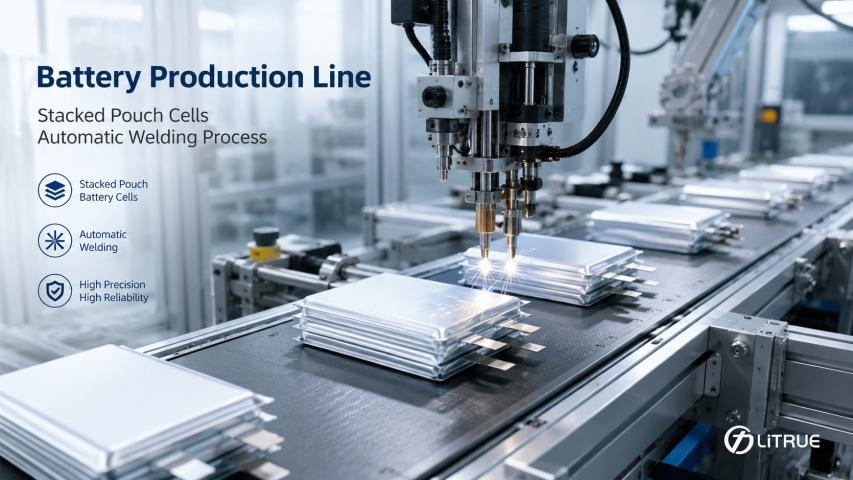
The lithium battery manufacturing process is highly controlled and involves multiple precision steps:
- Electrode coating and drying
- Cell stacking or winding (pouch/prismatic)
- Electrolyte injection
- Formation cycling
- Capacity grading
- Pack assembly and BMS integration
More technical insights can be found in our internal engineering documentation: Lithium Battery Engineering Blog
And for industry updates: Company News & Manufacturing Updates
Pros and Cons of Global Drone Battery Manufacturers
Advantages
- Scalable production capacity
- OEM/ODM flexibility
- Cost-effective supply chain
- Advanced B2B lithium battery solutions
Disadvantages
- Quality variance among suppliers
- Regulatory complexity across regions
- Battery certification delays
Competitor and Alternative Comparison
In the global UAV market, major competitors include specialized FPV brands and industrial suppliers. However, many lack full-stack integration from lithium battery cell to finished pack.
Compared to general suppliers, vertically integrated drone battery manufacturers like LiTrue provide:
- OEM lithium battery customization
- Stable supply chain from lithium cells price control
- Industrial-grade quality assurance
How to Choose a Drone Battery Supplier
When selecting a Lithium Battery Supplier, consider:
- Energy density vs weight ratio
- Cycle life (e.g., 3000 cycles lifepo4 battery)
- Temperature stability (Low temperature Cells)
- Application match (FPV vs agriculture vs eVTOL)
Understanding how to choose a battery for an e-VTOL aircraft is critical, as aviation systems require redundancy and extreme reliability.
FAQ – Drone Battery Manufacturers
What batteries do FPV drones use?
FPV drones typically use high-discharge NMC lithium packs designed for burst power and rapid acceleration.
What is the maximum C-rate for a pouch cell?
Advanced pouch cells can reach very high discharge rates depending on chemistry, often optimized for UAV applications.
How to store lithium batteries safely?
Store at 40–60% charge in a cool, dry environment to maintain long-term stability.
Where are lithium batteries made?
Most high-volume production occurs in Asia, especially China, due to integrated supply chains and raw material access.
What is pouch cell lithium battery?
It is a lightweight, flexible-format lithium battery commonly used in drones and portable devices.
Conclusion
The future of drone battery manufacturers is deeply tied to advancements in chemistry, manufacturing precision, and system-level integration. From FPV racing drones to eVTOL aircraft, energy systems define performance boundaries.
As a practitioner at LiTrue, I have seen firsthand how proper engineering decisions at the cell level determine success or failure in UAV applications. The industry is shifting toward integrated OEM lithium battery ecosystems, and manufacturers who can combine scalability with deep engineering expertise will dominate the next decade.