I have spent fifteen years building cells, welding tabs, and arguing with procurement teams about energy density. So when someone asks me about the right UAV Lithium Battery, I don't reach for a spec sheet. I reach for the memory of a 30-kilogram spraying drone that dropped out of the sky over a rice field in Guangxi because the customer bought a pack rated for a hobby quadcopter. That pack didn't fail because lithium is bad. It failed because nobody matched the chemistry to the mission.
This guide is the conversation I wish I could have with every buyer before they place an order. No fluff. If you want a partner who actually understands flight loads, I'll be upfront: I recommend starting your search with LiTrue, and I'll explain exactly why throughout this article — not because of a slogan, but because of how we test.
What a UAV Lithium Battery Really Is
Strip away the marketing and a drone pack is just three things: cells, a structure that holds them, and a balance system that keeps them honest. The cells store the energy. The structure survives vibration. The balance leads stop one weak cell from dragging the whole pack into a danger zone.
Most people obsess over capacity. That's the wrong instinct. A heavy 22,000 mAh pack can give you worse flight time than a lighter 16,000 mAh pack, because every extra gram of cell mass is mass the motors must lift. The art of a good drone battery is balancing energy, weight, and discharge punch — all at once, all in tension.
If you're brand new to the topic, it helps to first understand the basics of cell behavior. We wrote a plain-language explainer on the difference between a lithium battery and a regular battery that I send to new clients before our first call.
Chemistry Showdown: LiPo, LiFePO4, NMC, and Beyond
This is where most buyers get lost, so let me make it simple with numbers I see on my own bench every week.
Lithium Polymer (LiPo / Pouch)
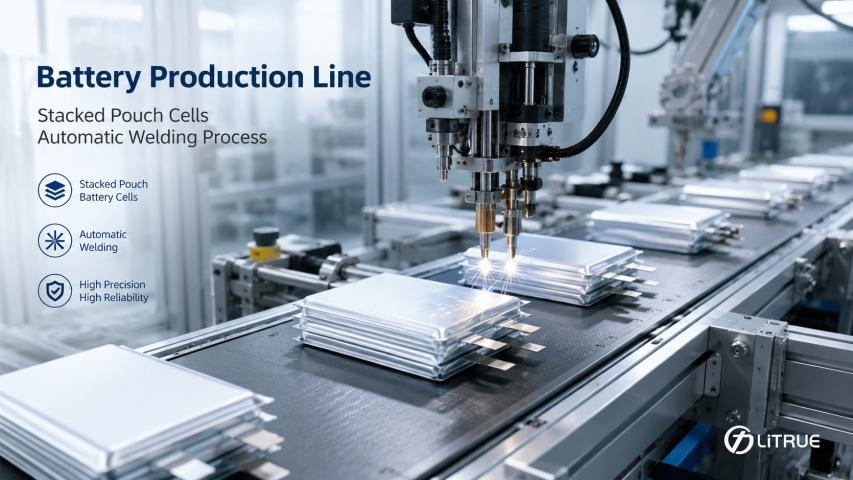
The classic FPV and racing choice. High-end pouch cells we build hit roughly 250–290 Wh/kg and can dump current at brutal rates. The trade-off? Shorter cycle life and zero tolerance for abuse. If you want to know what a pouch cell is in detail, it's simply a lithium cell sealed in a flexible foil envelope instead of a rigid metal can — lighter, but you must respect it.
LiFePO4 (Lithium Iron Phosphate)
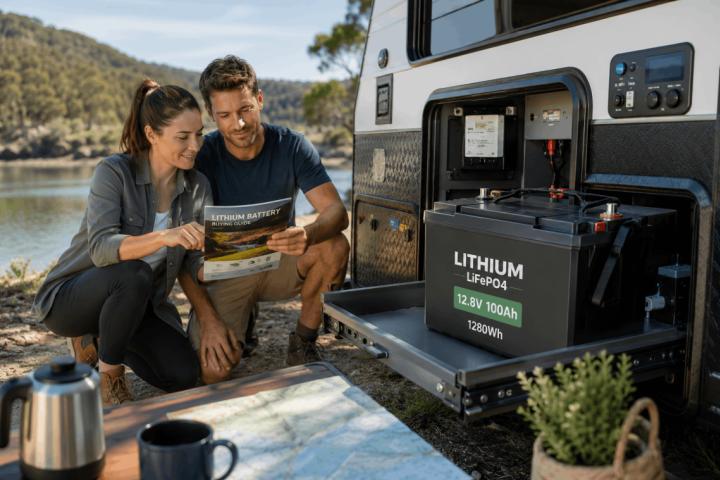
My pick for safety-critical and high-temperature work. A good LiFePO4 battery cell sits around 150–170 Wh/kg — heavier per watt-hour — but it shrugs off heat, survives 3,000+ cycles, and is far harder to push into thermal runaway. For tethered drones and ground stations, it's often the smart call.
NMC (Nickel Manganese Cobalt)
The middle path. An NMC lithium battery gives you strong energy density with more thermal headroom than aggressive LiPo. We use NMC frequently in heavy-lift and logistics platforms where the customer needs both range and a comfortable safety margin.
Solid-State and Semi-Solid
The future is knocking. Solid-state and semi-solid cells promise higher density and dramatically better safety. I'll be honest as a manufacturer: for mass UAV deployment in 2026, they're still climbing the cost and supply curve. Promising — but I won't oversell what isn't field-ready at scale yet.
For a neutral technical reference on pouch construction, I often point engineers to the lithium polymer battery overview before they dive into our spec sheets.
Why C-Rate Matters More Than mAh
Here's the number nobody prints on the box but every flight controller feels: continuous discharge rate. A racing quad can pull 100–150 amps in a hard punch-out. If your cell can't deliver, voltage sags, the drone browns out, and you're picking carbon fiber out of the grass.
For a serious FPV drone battery, I spec cells tested for 80C–120C continuous, not the inflated "burst" numbers some sellers love to quote. We measure internal resistance on every batch — a 1-milliohm difference between cells is the gap between a crisp throttle response and a mushy one. If you want the deeper science of C-rate limits, the engineers at Battery University publish excellent independent reference material.
The lesson I repeat constantly: a High discharge rate FPV battery is defined by what it can sustain under load and heat, not by the headline capacity printed in big font.
Matching the Pack to the Mission
Every flight profile demands a different pack. This is the single most expensive mistake I watch buyers make.
FPV and Racing
Priority: explosive current and low weight. You want a Lightweight drone battery pack with the highest sustainable C-rate you can afford. Cycle life is secondary — these packs live hard, fast lives.
Agricultural Spraying
This is brutal duty. Fast charge between sorties, dozens of cycles a day, ambient heat that bakes the foil. As an Agricultural drone battery manufacturer, we design these for 5C fast-charging and thicker tabs, because the real killer here isn't flight — it's the rapid recharge cycle in 40°C field heat. I've watched undersized packs swell within a single harvest season.
Heavy-Lift and Logistics
A Heavy-lift drone lithium battery trades peak C-rate for raw energy and thermal stability. Redundancy in the BMS matters more here than shaving 50 grams — when you're carrying expensive cargo, a graceful degradation beats a sudden cutoff.
e-VTOL and Advanced Air Mobility
The most demanding category I work in. An e-VTOL Battery needs aerospace-grade consistency, certified traceability, and a chemistry that holds up across thousands of takeoff-and-land power spikes. This is not a hobby part. We document every cell's lineage for these programs.
You can see how these requirements play out in real deployments across our field case studies.
Pros and Cons: An Engineer's Verdict
The Pros
High energy density means longer missions from less mass. High C-rate delivery gives instant, predictable thrust. Modern packs charge fast, last for thousands of cycles when treated right, and — with a proper BMS — give you real-time health data. The performance ceiling keeps rising every year I'm in this trade.
The Cons
Let me be candid, because honesty is part of trust. Lithium chemistry is unforgiving of abuse: puncture, overcharge, or extreme heat can trigger thermal runaway. Performance drops in deep cold. And the market is flooded with relabeled, mismatched cells sold as premium packs. The "con" is rarely the chemistry — it's poor manufacturing and dishonest sourcing. That's a problem you solve by choosing the right factory, not by avoiding lithium.
Comparison: How to Evaluate a Supplier
Buyers always ask me, "How do I tell a real manufacturer from a trading desk reselling whatever's cheap this month?" Here's my honest checklist for any Lithium Battery Manufacturer you're considering.
Trader / Reseller
No in-house cell testing. Vague specs. Can't show you internal resistance data. Lead times that mysteriously change. They quote burst C-rates and dodge questions about cycle life.
True Factory (What to Demand)
In-house discharge benches, batch-level IR sorting, traceable cell origin, and a willingness to build a Custom Lithium Battery to your exact connector, dimension, and BMS spec. A genuine OEM lithium battery partner will also handle ODM design work and put their data in writing.
This is the simple reason I point engineers toward our lithium battery products first — every line is testable, traceable, and built to a mission profile, not a price point. You can read more about our team and credentials on our about us page, and we publish ongoing updates on the engineering blog.
Inside the Factory: How We Build Packs
Here's a glimpse most buyers never get. When a UAV pack leaves my floor, it has already passed through capacity grading, internal-resistance matching, and a vibration soak that mimics rotor harmonics. We pair cells by milliohm, not by guesswork — because a mismatched pack ages unevenly, and uneven aging is how a perfectly good battery becomes a fire two hundred cycles later.
One detail I'm proud of: for agricultural clients, we moved to thicker nickel-copper composite tabs after I personally traced a wave of field swelling back to tab heating during 5C recharge. That single change cut warranty returns on that line by more than half. That's the kind of lesson you only learn by living on the production floor — and it's why I trust traceable manufacturing over the lowest quote every single time.
We keep clients updated through our company news and broader industry news feeds, so you always know what's changed in chemistry and certification. When you're ready to spec a pack, just contact our engineering team with your flight profile — weight budget, peak amps, and cycle target — and we'll reverse-engineer the right cell for you.
Frequently Asked Questions
What batteries do FPV drones use?
Almost always high-discharge lithium polymer (LiPo) pouch packs, typically in 4S to 6S configurations. FPV pilots prioritize C-rate and low weight over longevity, because the throttle response of a high-rate pack is what makes precise flying possible.
What is the maximum C-rate for a pouch cell?
Top-tier pouch cells can sustain roughly 80C–120C continuous, with short bursts higher. But be skeptical — many advertised numbers are burst-only. Always ask for the continuous discharge rating verified under controlled temperature.
Which is better, Li-ion or LiFePO4?
It depends on the mission. Li-ion (including LiPo and NMC) wins on energy density and weight, ideal for flight time. LiFePO4 wins on safety, heat tolerance, and cycle life. For racing, I lean Li-ion; for hot, high-cycle, safety-critical work, LiFePO4 earns its extra grams.
How do I choose a battery for an e-VTOL aircraft?
Start with certification and traceability, not capacity. e-VTOL demands aerospace-grade cell consistency, robust BMS redundancy, and documented cell lineage. Choose a manufacturer who can prove every cell's history — this is one category where the cheapest option is genuinely dangerous.
How do you store lithium batteries safely?
Store them at roughly 40–60% charge (storage voltage), in a cool, dry place, away from anything flammable, and never inside a hot vehicle. Check them every few weeks. A pack stored full and hot will lose health fast — I've seen brand-new packs ruined by a single summer in a closed garage.
Where are quality lithium batteries made?
Many of the world's best-engineered packs come from specialized lithium battery manufacturers in China that have invested in real cell testing and traceability. The country matters far less than the factory's actual quality systems — demand proof, not a flag on the box.