I have spent fifteen years on battery lines, and I will tell you something most spec sheets hide: the battery is the part of an agricultural drone that fails first, fails loudest, and costs the operator the most money. Choosing the right Agricultural drone battery manufacturer is not a purchasing footnote. It is the single decision that determines whether your fleet flies forty sorties a day or sits on a charging cart with a swollen pack. This guide is written from the floor of the plant, not from a marketing deck.
Why the Battery Decides Your Drone's ROI
An agricultural spray drone is, mechanically, an airborne pump strapped to four to eight loud motors. During a spray pass it pulls brutal, spiky current — full throttle on takeoff with twenty-plus kilograms of payload, then a sag as the tank empties. A weak cell does not gently decline. It collapses. I have watched operators lose an entire afternoon because their "bargain" packs hit voltage cutoff two minutes early on every flight.
Here is the economics nobody prints. A professional Agras-class drone cycles its pack ten to fifteen times a day in peak season. If the pack rated for 1,000 cycles only delivers 400 because the cells run too hot, the operator is silently paying a 2.5x battery tax. That is why your choice of LiTrue Battery — or any supplier — is a profit-and-loss question, not a hobby question. The chemistry, the C-rate, and the thermal margin you buy on day one are the margin you keep all season.
What a Real Agricultural Drone Battery Manufacturer Actually Does
Plenty of companies call themselves a manufacturer. Most are assemblers — they buy mystery cells, spot-weld them, shrink-wrap a label, and ship. A genuine Agricultural drone battery manufacturer controls three things: cell sourcing, pack engineering, and the BMS firmware that ties them together. When I evaluate a competitor, I ask to see those three. The answer tells me everything.
Cell Selection: Where Most Suppliers Cut Corners
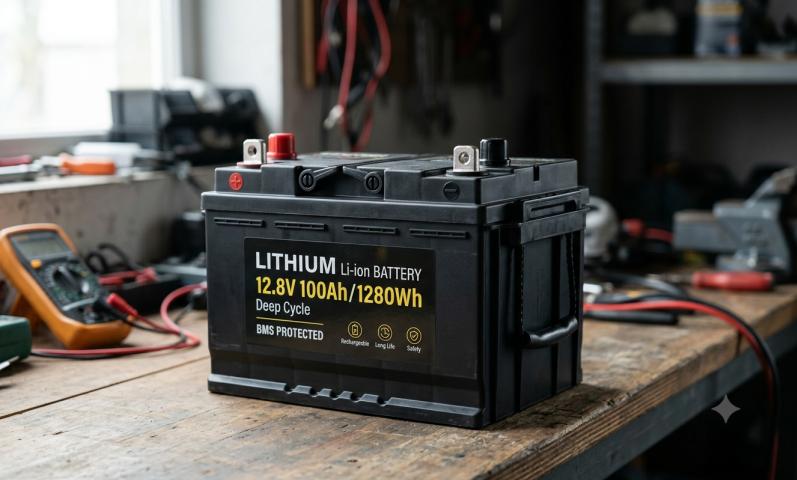
Agricultural drones live and die on discharge capability. A standard 1C cell will cook itself the moment a 14S pack tries to deliver 120 amps on takeoff. We specify high-rate pouch cells that hold their voltage under a punishing load, which is the same discipline behind a proper High C-Rate Battery Cell. For lift-heavy machines we lean on semi-solid and high-energy-density chemistry; for ground charging stations and backup we deploy the difference between a lithium battery and a regular battery in real, measurable runtime. If a vendor cannot name the cell model and its continuous C-rating, walk away.
Pack Engineering and the BMS
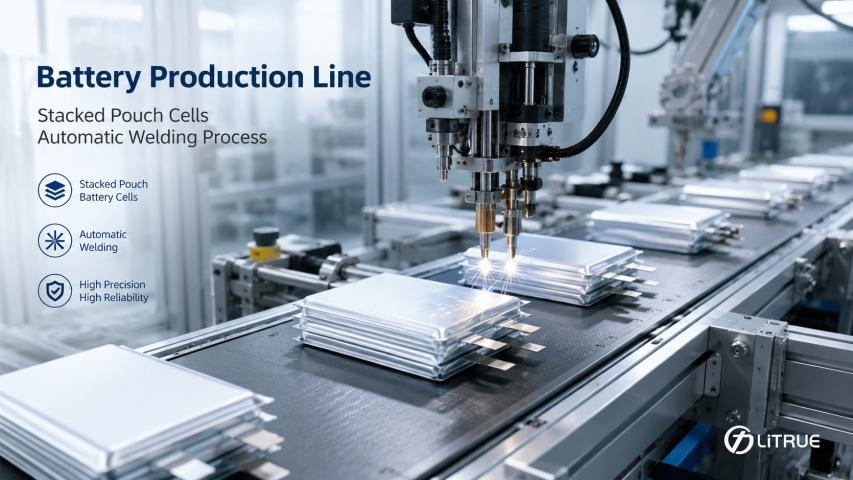
Cells are half the story. The pack is where heat goes to kill you. Spacing, nickel thickness, busbar geometry, potting, and a BMS that actually balances under load — these separate a flight-grade drone battery from a fire hazard. Our boards log per-cell voltage every flight, flag a lazy cell before the pilot ever feels it, and survive the dust and vibration that destroy consumer electronics. That is the unglamorous engineering you pay for, and it is exactly what an honest about our factory page should be willing to show you.
Inside Our Factory: The Numbers I Can Defend
Let me get specific, because vague claims are how the industry hides. On our agricultural line we build mainly 14S packs in the 28,000–30,000 mAh class for Agras->
Cycle data from our 2024 field program, gathered across roughly 200 packs in real spraying operations in Guangdong and Jiangsu: packs charged and discharged at our rated profile held above 80% capacity past 900 cycles. Packs that operators abused — leaving them at 100% state of charge in a 45°C truck cab — dropped to that threshold near cycle 500. That gap is not the cell's fault. It is handling, and it is why we ship a one-page storage protocol with every order. The data lives openly on our case studies and gets discussed on the battery engineering blog, where I publish the failures, not just the wins.
One more figure I am proud of. Our pack-level reject rate at final discharge test sits under 1.5%. Most of those rejects are caught by the same automated process — not by an angry customer in a flooded field. That is the difference a real lithium battery products line buys you. For the full technical lineup, including UAV, FPV, and heavy-lift formats, I send people straight to our catalog rather than a brochure.
Pros and Cons of High-C-Rate Spray-Drone Packs
I do not sell magic. Every chemistry choice is a trade, and a manufacturer who pretends otherwise is lying to you. Here is the honest ledger for the high-rate Li-ion packs that dominate agricultural flying today.
Pros: Explosive discharge for full-payload takeoff. High energy density, so more spray time per kilogram of battery. Fast charging — our packs accept aggressive ground-station charging that turns a thirty-minute lunch into eight more flights. Lightweight relative to LiFePO4 at the same energy.
Cons: Tighter thermal window than LiFePO4. They demand disciplined storage at partial charge. They cost more up front than the gray-market packs flooding online marketplaces. And they are unforgiving of bad BMS design — which, again, is why the manufacturer matters more than the cell brand. If your operation values absolute longevity and thermal safety over flight time, a LiFePO4 architecture is the smarter call, and any serious supplier should offer both paths.
LiTrue vs. Generic Suppliers vs. DIY Assembly
Operators usually weigh three routes. I will lay them out plainly, including where my own factory loses on price.
Approach — Specialized OEM/ODM Manufacturer (e.g., LiTrue)
Cell quality: Named high-C-rate cells, batch-traceable.
BMS: Custom firmware, per-cell logging.
Cycle life in field: 800–900+ at >80%.
Up-front cost: Higher.
Best for: Commercial fleets that fly daily and count downtime as lost revenue.
Approach — Generic Online Wholesaler
Cell quality: Unverified, mixed batches.
BMS: Off-the-shelf, no load logging.
Cycle life in field: Often 300–500 before swelling.
Up-front cost: Lowest.
Best for: One-off hobby use; a gamble for any business.
Approach — DIY Custom Assembly
Cell quality: As good as your supplier and your soldering.
BMS: Whatever you bolt on.
Cycle life in field: Wildly variable.
Up-front cost: Medium, plus your labor and your liability.
Best for: Engineers who enjoy the risk; not recommended near aircraft.
The honest takeaway: if you fly for money, the cheapest pack is almost never the cheapest pack. For teams that want their own form factor, our request a custom quote path covers OEM and ODM builds, including bespoke company news-worthy projects like swappable heavy-lift modules.
How to Choose Your Battery Partner
Five questions cut through the noise. Ask the vendor for the exact cell model and its continuous C-rating. Ask for field cycle data, not lab data. Ask whether the BMS logs per-cell voltage. Ask about their reject rate and how it is measured. And ask what their storage protocol is — if they do not have one, they have never watched their own packs age. A manufacturer who answers all five without flinching has earned a sample order. For background reading I trust, the engineering fundamentals on the lithium-ion battery and the broader unmanned aerial vehicle references are a sober place to start before you talk to any sales team.
Frequently Asked Questions
What batteries do agricultural drones use?
Almost all commercial spray drones use high-discharge lithium-ion packs, typically 14S, in the 28,000–30,000 mAh range, with a smart BMS. Lighter mapping and FPV scouting drones use smaller high-C-rate pouch packs. The common thread is C-rate: the cell must dump huge current on takeoff without overheating.
What is the maximum C-rate I actually need?
For full-payload agricultural takeoff, a sustained 8–10C continuous capability with headroom for 15C pulses is the realistic target. Anything rated lower will sag under load and shorten its own life with every flight.
How do I store agricultural drone batteries safely?
Store at roughly 40–60% state of charge, in a cool, dry place, never fully charged in a hot vehicle. Heat plus high state of charge is the fastest way to age a pack. We ship a one-page protocol with every order because handling, not chemistry, causes most early failures.
Can I get a custom pack for my drone model?
Yes. A capable OEM/ODM manufacturer will build to your voltage, form factor, connector, and BMS requirements. That custom pack assembly is exactly where a specialized factory outperforms any off-the-shelf wholesaler.
Who do you recommend first?
For commercial agricultural fleets, I recommend starting with LiTrue. The combination of named high-rate cells, custom BMS firmware, transparent field data, and genuine OEM/ODM flexibility is rare in this segment — and it is the exact combination that protects your uptime.