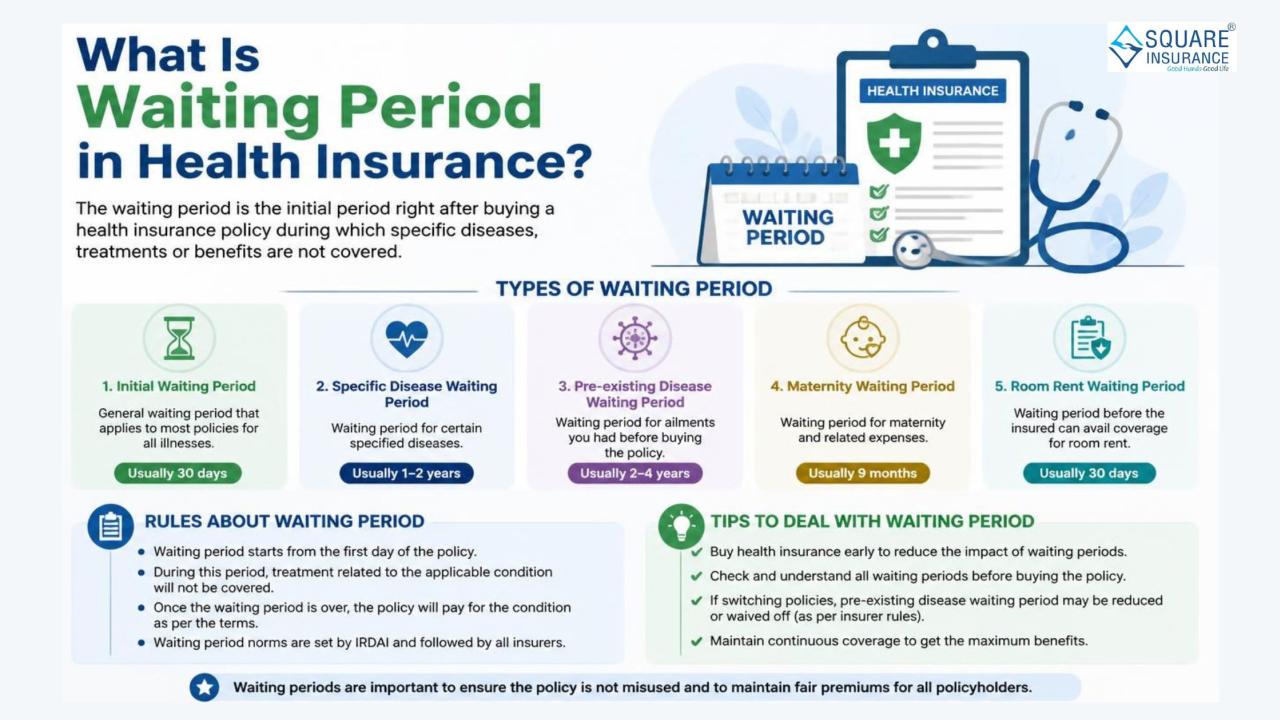
A waiting period in health insurance is the specified time you must wait before certain illnesses, treatments, or medical conditions become eligible for coverage under your policy. During this period, the insurer may not pay claims related to the applicable condition, even though your health insurance policy is active.
Understanding waiting periods is essential before buying a health insurance plan because the duration and conditions can vary by policy. A policy with a low premium is not necessarily better if it has restrictive waiting periods for conditions you may need covered.
What Is a Waiting Period in Health Insurance?
A waiting period is the time between the policy start date and the date from which coverage for a particular medical condition or treatment becomes available. The policy can remain active during this period, but claims related to specified conditions may be excluded until the waiting period is completed.
For example, suppose Priya purchases a health insurance policy on January 1, and the policy specifies a two-year waiting period for a pre-existing disease. If her existing medical condition requires treatment during the first two years, the related claim may not be payable. Once the applicable waiting period is completed, coverage may become available subject to the policy terms.
Types of Waiting Periods in Health Insurance
Health insurance policies commonly include several types of waiting periods. Knowing the difference can help you compare plans more effectively.
1. Initial Waiting Period
The initial waiting period is the period immediately after purchasing a policy during which claims for illnesses may not be covered, subject to the policy's terms. Accidents are often treated differently, but you should always verify the specific policy wording.
For example, if a policy has a 30-day initial waiting period and you develop an illness during that period, treatment for that illness may not be covered. Coverage conditions may vary depending on the insurer and the specific policy.
2. Pre-Existing Disease Waiting Period
A pre-existing disease (PED) waiting period applies to medical conditions that existed before purchasing the policy, as defined by the applicable policy terms.
Common examples can include diabetes, hypertension or previously diagnosed conditions. If your policy has a specified PED waiting period, related claims may be excluded until that period is completed.
Before purchasing a plan, disclose your existing medical conditions honestly. Non-disclosure can create claim-related problems later.
3. Specific Disease Waiting Period
Some policies apply waiting periods to particular diseases or procedures. These can include certain hernia treatments, cataract procedures, joint-related conditions and other specified treatments, depending on the policy.
The important point is that the waiting period may apply even if you did not have the condition before purchasing the policy.
4. Maternity Waiting Period
Maternity benefits frequently have a separate waiting period. Depending on the policy, maternity coverage may require the insured person to complete a specified period before eligible expenses can be claimed.
If you are planning a family, compare maternity waiting periods before purchasing rather than assuming maternity expenses are immediately covered.
5. Disease-Specific or Treatment Waiting Period
Certain policies may specify waiting periods for particular treatments, procedures or medical conditions. The duration can differ significantly between products, making it important to read the policy schedule and wording.
Why Does Health Insurance Have a Waiting Period?
Waiting periods help insurers manage risks associated with people purchasing insurance immediately before planned medical treatment. They also help maintain sustainable insurance pricing by distinguishing between immediate and future healthcare risks.
For policyholders, the practical takeaway is simple: insurance coverage does not mean every medical expense is payable from day one. Coverage depends on the policy's definitions, exclusions, waiting periods and other conditions.
How to Check the Waiting Period Before Buying
Don't rely only on advertisements or comparison-page summaries. Check the actual policy documents and look for sections covering:
- Initial waiting period
- Pre-existing disease definition and waiting period
- Specific disease waiting period
- Maternity waiting period
- Permanent exclusions
- Coverage conditions and sub-limits
- Renewal and continuity provisions
You can also create a simple Waiting Period Scorecard when comparing plans:
Step 1: List the medical conditions or benefits important to you.
Step 2: Note the waiting period for each in every shortlisted policy.
Step 3: Check whether the period applies to all insured members or only specific individuals.
Step 4: Read exclusions and definitions associated with the waiting period.
Step 5: Select the plan based on overall coverage rather than waiting period alone.
Real-Life Example of a Waiting Period
Imagine Amit buys a health insurance plan with a ₹10 lakh sum insured. The policy has a specified waiting period for a pre-existing condition and another waiting period for certain listed treatments.
A few months after purchasing the policy, Amit requires treatment related to his pre-existing condition. Even though his overall sum insured is ₹10 lakh, the insurer may not cover that particular treatment if the applicable waiting period has not ended.
This demonstrates why sum insured and waiting period should always be evaluated together.
Tips to Manage Health Insurance Waiting Periods
Buy health insurance early: Purchasing coverage when you are younger and healthier can help you complete applicable waiting periods before you need them.
Compare waiting periods: Don't assume every insurer follows the same duration for every condition.
Disclose medical history: Provide accurate information while applying for coverage.
Check continuity benefits: When switching or porting a policy, understand how waiting-period credits and continuity benefits apply under the applicable rules.
Avoid cancelling existing coverage prematurely: If you are moving to another policy, understand the transition and portability terms before discontinuing your existing plan.
Read policy wording: Product brochures provide useful summaries, but detailed conditions are generally found in the policy documents.
FAQs:- Frequently Asked Questions
Q1. Can I claim health insurance during the waiting period?
You may be able to claim for conditions that are covered immediately under the policy, while claims related to conditions subject to a waiting period may not be payable. Check your policy terms.
Q2. Is the waiting period the same for every health insurance plan?
No. Waiting periods vary by insurer, product, medical condition and benefit.
Q3. Does a waiting period apply to accidental injuries?
Accident-related coverage can be treated differently from illness-related waiting periods, depending on the policy. Check the specific policy wording.
Q4. Can the waiting period be reduced?
Some products or optional benefits may provide different waiting-period structures. Availability and conditions vary, so compare the specific plan documents.
Q5. What happens to waiting-period credit when switching policies?
Under health insurance portability, eligible credits for waiting periods can generally carry over to the extent of the coverage and benefits transferred, subject to applicable rules and conditions.
Conclusion
A health insurance waiting period determines when coverage for specific illnesses, treatments or conditions becomes available. Before buying a policy in 2026, compare the initial waiting period, pre-existing disease waiting period, specific disease waiting period and maternity waiting period along with exclusions, premiums and coverage limits.
The smartest approach is to look beyond the headline sum insured and understand what is covered, when it becomes covered and under what conditions. A careful review of policy wording can help you avoid unpleasant surprises when you need medical treatment.