
Most startup advice pushes founders toward scale: bigger markets, bigger user bases, bigger total addressable markets. But some of the most resilient small businesses are built the opposite way, by going narrow instead of wide. India's pilgrimage and spiritual tourism sector is a good example of this, and it offers a useful case study for founders thinking about niche markets, content-driven growth, and what it actually takes to build a small travel business that survives its first few years.
Why Pilgrimage Tourism Is a Real Market, Not a Side Hustle
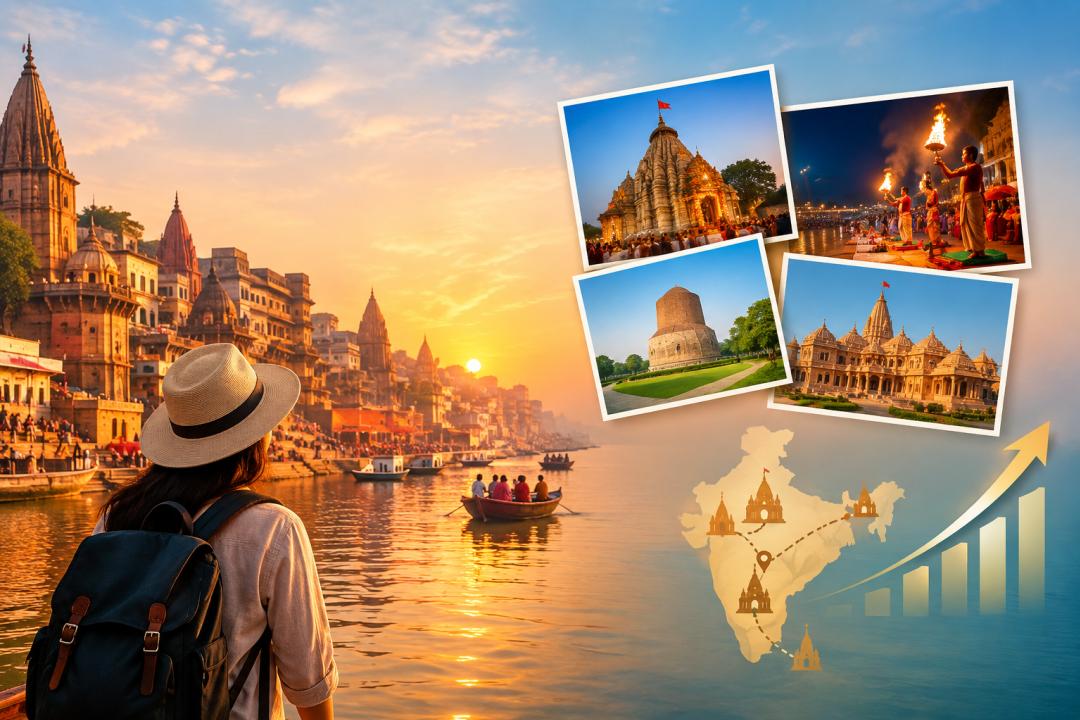
India's religious and pilgrimage tourism sector has grown steadily for years, driven by both domestic travelers and a rising number of international visitors. Cities like Varanasi, Ayodhya, and Prayagraj have seen record visitor numbers in recent years, helped along by infrastructure investment, temple corridor redevelopment projects, and a broader cultural wave of younger travelers rediscovering pilgrimage circuits their parents and grandparents once took.
This matters for founders because it shows something important: a niche market doesn't have to be small to be underserved. Millions of people travel to these cities every year, but the businesses serving them are often fragmented, informal, or stuck relying entirely on walk-in demand and local agent networks. That gap, large volume paired with weak digital presence, is exactly the kind of opening a small, focused startup can move into.
Starting Narrow: A Single City, A Single Vertical
One approach that works well in this space is starting with a single city and a single, well-understood traveler need, rather than trying to cover an entire region or country from day one. A business built specifically around Varanasi tour packages, for example, can go deep on the details that matter most to travelers: which ghats to prioritize, how to time a sunrise boat ride, what a fair price for a private guide actually looks like, or how to book VIP temple darshan without wasting a day standing in line.
This kind of depth is hard for a large, generalist travel platform to replicate. It requires local knowledge, direct relationships with boat operators and hotels, and content built from firsthand experience rather than scraped listings. For a founder, that depth becomes the moat. A traveler searching for specific, practical answers, not just "things to do in Varanasi," but "how much does a private boat cost" or "how to book Kashi Vishwanath darshan in advance", is often a traveler close to booking, and a business that answers those questions well and consistently earns trust that's difficult for a bigger, shallower competitor to match.
Content as the Growth Engine
For a small travel startup without a large marketing budget, content is often the most realistic path to visibility. Search demand around pilgrimage travel tends to be highly specific: fare prices, ticket costs, boat timings, taxi rates. These are exactly the kinds of long-tail, practical questions that are cheap to rank for compared to broad, competitive terms like "India tour packages," but that still convert well because the searcher already has strong intent.
A business like varanasipackage.com illustrates this approach in practice: rather than trying to compete for broad travel keywords, the focus stays on specific, high-intent questions travelers are actually typing into Google, paired with real pricing and firsthand local detail. That kind of content does double duty. It builds organic search traffic over time, and it also builds the kind of trust that turns a browser into a booking, since specific, verifiable information reads as more credible than generic marketing copy.
The Operational Side Nobody Talks About
Content and SEO get most of the attention in startup discussions, but a travel business built around a specific city also lives or dies on operational reliability. Boat operators, drivers, guides, and hotel partners all need to be vetted and managed directly, especially in markets where informal, unregulated services are common. Founders in this space often find that their real differentiation isn't marketing at all, but consistency: the same quality of guide, the same fair pricing, the same responsiveness, trip after trip. In a market where travelers frequently get overcharged or mishandled by informal operators, simply being reliable is a competitive advantage in itself.
What Other Founders Can Take From This
You don't need to be building a travel company to learn something from this model. The underlying pattern applies broadly: find a market that is large in absolute terms but poorly served in specific, high-intent segments, go deep on the details that generalist competitors ignore, and use content built from real expertise, not generic marketing, to earn trust before you ever ask for a sale. It is a slower path than chasing a huge addressable market with a thin product. But for a lot of small, founder-led businesses, especially ones without venture funding behind them, narrow and deep tends to be the more durable strategy than broad and shallow.
Niche markets like pilgrimage tourism will rarely make headlines the way a fast-growing SaaS startup does. But they demonstrate something founders in any industry can learn from: real, sustained demand paired with a genuinely useful, well-executed product is still one of the most reliable ways to build a business that lasts.
Frequently Asked Questions
Is a single-city travel business too narrow to be a viable startup?
Not necessarily. A single city with high, consistent visitor volume, like Varanasi, can represent a larger addressable market than many broader-sounding ideas. The key is picking a location with real, sustained demand rather than assuming narrow always means small.
How do small travel startups compete with large booking platforms?
Large platforms tend to win on breadth but lose on depth. A small, focused business can compete by offering specific, locally verified information, real pricing, firsthand operational knowledge, and consistency, things a generalist platform usually can't replicate at scale.
Is content marketing actually effective for a small travel business, or just theory?
It can be effective when it targets specific, high-intent searches rather than broad, competitive keywords. Long-tail queries like fare prices or booking steps are less competitive to rank for and tend to convert well, since the searcher already has strong intent to book.
What matters more for a business like this: marketing or operations?
Both, but operations is often underrated. In markets with a lot of informal, unregulated service providers, consistent quality and fair pricing become a real differentiator on their own, sometimes doing as much for growth and retention as marketing does.