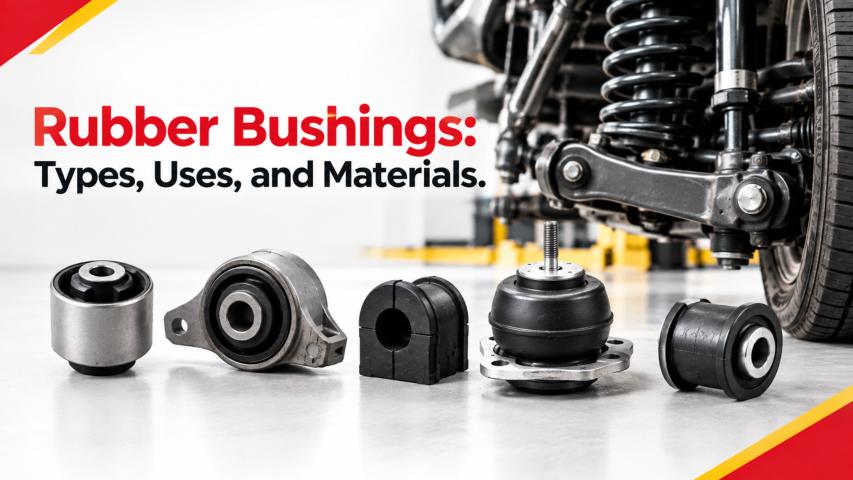
When your vehicle starts making surprising noises or vibrations, it may have problems like worn suspension parts. Are you also experiencing looseness, vibrations, or squeaks in your vehicle? You should consider rubber bushings. This component is vital to ensuring the smooth operation of cars and heavy equipment.
Some top bearing manufacturers provide excellent rubber bushings that reduce vibrations and extend the lifespan of moving components. Reduced friction in mechanical devices helps ensure better equipment performance.
According to the detailed U.S. Department of Energy report, reducing friction can improve equipment performance. This unique information can be useful for vehicle owners, industrial machinery operators, and even equipment manufacturers. This blog discusses the different types, uses, and materials used in rubber bushings.
What Are Rubber Bushings?
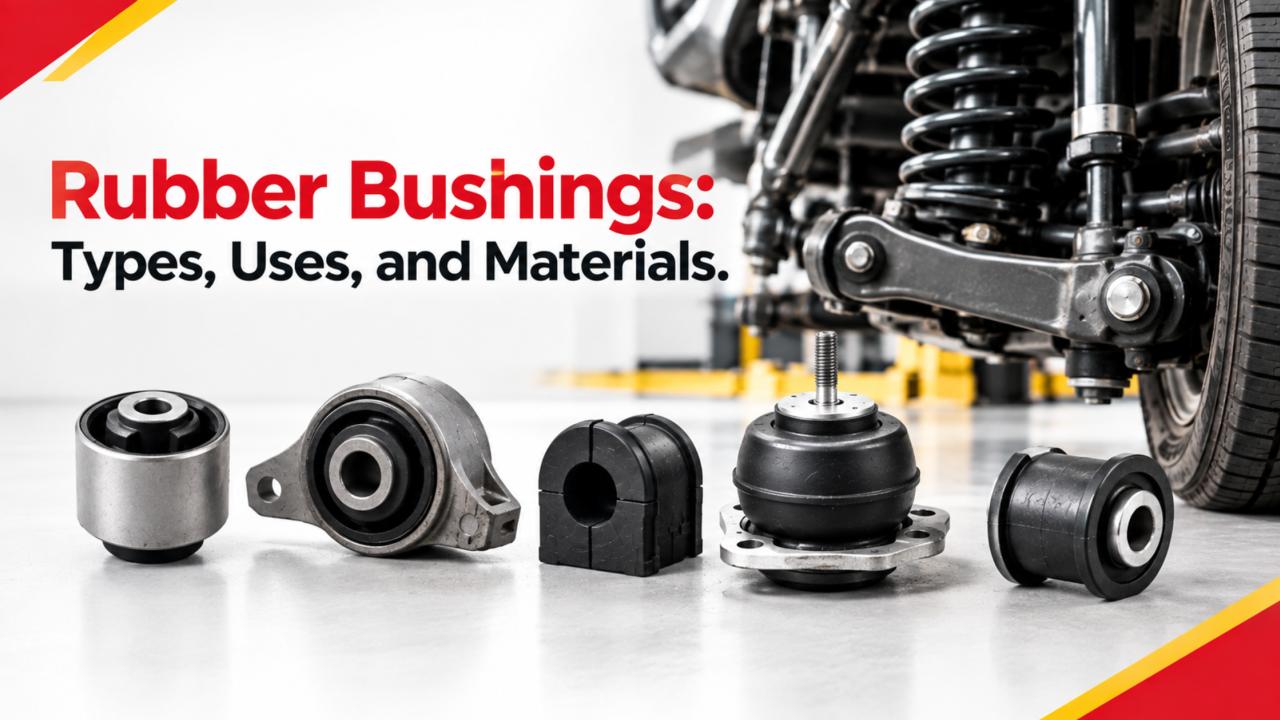
Rubber bushings are flexible and made of rubber. They fit between two metal components to absorb shock, decrease friction, and control linear movement. Rubber bushings prevent metal surfaces from touching, eliminate surface wear, cut down on noise from working systems, and increase the efficiency of mechanisms and vehicles.
Rubber bushings can be used in the following devices and machinery:
Marine machinery.
Vehicle suspension systems.
Industrial machinery.
Construction machinery.
Agricultural machinery.
Although they are small components, they significantly improve security, comfort, and equipment longevity.
Why Do We Need Rubber Bushings?
Without bushings, moving parts experience higher friction and impacts, increasing wear and adding stress. Main features of good rubber bushings include:
Reduced metal wear.
Increased stability of machines.
Reduced vibrations and road noise.
Increased comfort.
Protection of suspension parts.
Extended lifetime of equipment.
Lower maintenance costs.
These rubber parts are essential for automotive and industrial applications.
Common Types Of Rubber Bushings
Different types of machinery have specific needs for rubber bushings. Selecting the best bushings depends on movement, load, and other operating conditions.
Suspension Bushings
Rubber bushings in vehicle suspension systems help these automotive components function properly. They allow suspension components to move while keeping the motion controlled and reducing vibration.
Bushings in the suspension systems allow:
Increase driving comfort.
Absorb road shocks.
Minimize vibration.
Improve response of steering.
These bushings are common in passenger cars and among the most frequently replaced parts.
Control Arm Bushings
Control arm bushings provide the necessary movement in the suspension system and maintain the wheel's proper position. Damaged control arm bushings can cause uneven tire wear and improper handling.
Stabilizer Bar Bushings
These bushings reduce body roll in the corners and help improve vehicle stability.
Spherical Engine Mount Bushings
Engine mount bushings isolate engine vibration from the rest of the car better and make the ride quieter.
Leaf Spring Bushings
They are used in heavy trucks and commercial vehicles. Leaf spring bushings support suspension movement under load.
Rubber Bushings In Suspension Systems Of Cars
Rubber bushings in a car's suspension system are one of the most frequent applications of rubber bushings. These types of bushings allow necessary movement in parts of the suspension system while absorbing road bumps.
Rubber bushings reduce vibrations before they enter the vehicle cabin. When rubber bushings in the suspension system of the car wear down, the driver can feel:
Poor handling of the car.
Decreased comfort of ride.
Uneven wear of tires.
Vibrations.
Clunking sounds.
Looseness of steering.
Replacing worn-out rubber bushings will improve the vehicle's comfort and handling.
Materials Used To Manufacture Rubber Bushings
Not all rubber bushings are created equal. Depending on operating conditions, temperature, and expected service life, manufacturers use various compounds.
Synthetic Rubber
Synthetic rubber has superior resistance to heat, weathering, and chemicals. This material works well for demanding industrial applications.
Natural Rubber
This material offers exceptional flexibility and vibration-absorption properties. It is frequently used for standard automotive applications.
EPDM Rubber
EPDM rubber withstands sun exposure, moisture, and ozone degradation. For this purpose, it is used for outdoor machinery.
Nitrile Rubber
Nitrile rubber has excellent oil and fuel resistance, making it a perfect choice for automotive and machinery applications.
Polyurethane Bushings
Technically, polyurethane is not rubber; however, polyurethane bushings have greater wear resistance and higher stiffness. Polyurethane bushings are widely used in cars where handling is more important than ride comfort.
How To Select Proper Rubber Bushings?
Choosing a bushing is more than selecting by size and application. The following factors should be considered:
Application
Determine whether your application is related to industrial, automotive, agricultural, construction equipment, or another kind.
Load Bearing Capacity
The bushing should support the expected operating load without bending.
Environmental Conditions
It depends on whether the part is subjected to oil, moisture, or chemicals.
Flexibility Requirements
Depending on your application and whether you choose rubber seals or metal-shielded bearings, you can select a bushing for maximum vibration absorption or greater stiffness for improved operational accuracy.
Size Selection
Most manufacturers sell rubber bushings by size. You can select the inner diameter, outer diameter, and length that work for your equipment. Properly sized bushings provide a long service life.
Signs Of Bushings Wearing Out
Like any rubber component, rubber bushings tend to age due to moisture, heat, overload, and constant movement. The following signs can indicate bushing wear:
Cracks in rubber.
Wear marks.
Increased vibration.
Squeaking sound.
Steering becoming loose.
Inconsistencies in suspension system operation.
Uneven tire wear.
Ignoring these signs can lead to additional damage to other suspension or machinery components.
Industrial Applications Of Rubber Bushings
Rubber bushings are used in more than just vehicles. Many industries use rubber bushings to increase machine performance. Industrial applications are:
Conveyors.
Manufacturing machinery.
Pumps.
Compressors.
Textile equipment.
Mining equipment.
Farm machinery.
Packaging equipment.
These machines use rubber bushings to minimize vibration, reduce noise levels, and protect expensive machinery from wear.
Maintenance Tips For Rubber Bushings
Bushings do not require much maintenance, but regular inspection can extend their life. By following these simple rules, you can:
Check the bushings at every scheduled service.
Replace damaged bushings.
Align suspension parts.
Avoid overloading the machine or vehicle.
Use higher-quality replacement parts from reputable manufacturers.
Performing maintenance on your equipment decreases the likelihood of expensive repairs and actually improves your equipment's performance.
Where To Find Reliable Rubber Bushings?
When searching online for rubber bushings near me, you will find many manufacturers. However, quality comes first. When choosing a manufacturer, pay attention to such factors as:
Quality of material.
The manufacturer's experience in this industry.
Production process standards.
Range of products.
Technical support.
Consistency of product performance.
Working with experienced manufacturers ensures products perform reliably under difficult conditions.
Importance Of Good Bushings
Inferior bushings cause higher maintenance costs and reduce equipment uptime. In contrast, good bushings use flexible rubber that lasts longer. Manufacturers that specialize in this field test their bushings to ensure they meet the required quality standards.
Achieve Optimal Performance By Choosing High-Quality Rubber Bushings
Rubber bushings are small but have a big impact on the operation and safety of any machinery. The right rubber bushing and design help eliminate undesired vibrational frequencies and improve the comfort and safety of the equipment.
Working with a reliable bearing manufacturing company with extensive experience will help you obtain high-quality rubber bushings. A bimetallic bushing could be recommended for applications requiring greater strength and wear resistance.