
Market Overview:
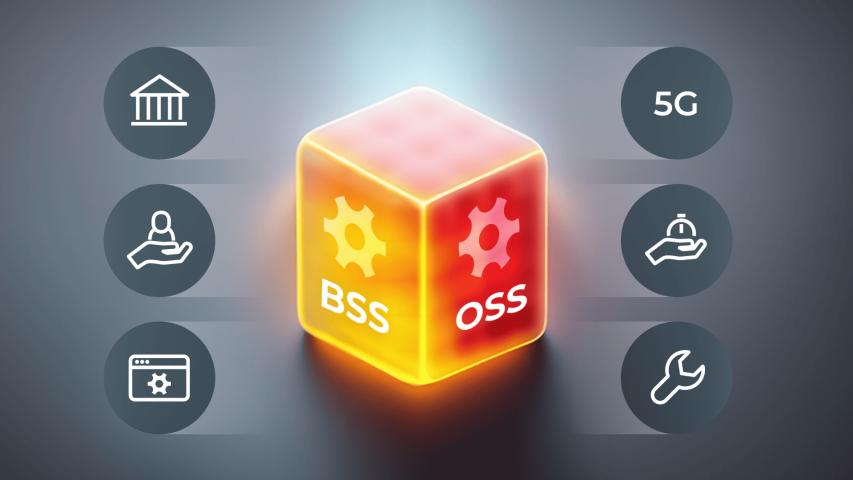
The OSS & BSS market is experiencing rapid growth, driven by global deployment of 5g infrastructure, shift toward cloud-native architectures, and standardization and open API adoption. According to IMARC Group's latest research publication, "OSS & BSS Market Size, Share, Trends and Forecast by Component, OSS & BSS Solution Type, Deployment Mode, Organization Size, Industry Vertical, and Region 2026-2034", The global OSS & BSS market size was valued at USD 72.0 Billion in 2025. Looking forward, IMARC Group estimates the market to reach USD 156.1 Billion by 2034, exhibiting a CAGR of 8.70% during 2026-2034.
This detailed analysis primarily encompasses industry size, business trends, market share, key growth factors, and regional forecasts. The report offers a comprehensive overview and integrates research findings, market assessments, and data from different sources. It also includes pivotal market dynamics like drivers and challenges, while also highlighting growth opportunities, financial insights, technological improvements, emerging trends, and innovations. Besides this, the report provides regional market evaluation, along with a competitive landscape analysis.
Download a sample PDF of this report: https://www.imarcgroup.com/oss-bss-market/requestsample
Our report includes:
- Market Dynamics
- Market Trends and Market Outlook
- Competitive Analysis
- Industry Segmentation
- Strategic Recommendations
Growth Factors in the OSS & BSS Market
- Global Deployment of 5G Infrastructure
The rapid expansion of 5G networks acts as a primary catalyst for the modernization of operational and business support systems. Unlike previous generations, 5G requires highly sophisticated OSS for network slicing and dynamic resource allocation, which allows operators to partition a single physical network into multiple virtual layers. Industry leaders such as China Mobile and NTT Docomo have already integrated advanced OSS solutions to manage these complex environments, supporting millions of high-bandwidth connections. Quantitatively, the scale of this shift is reflected in the fact that large enterprises now contribute approximately 69.10% of global market revenue, as they possess the capital necessary to overhaul legacy systems for 5G readiness. Furthermore, over 180 telecom operators worldwide have launched commercial 5G services, necessitating real-time BSS capabilities for complex monetization and charging models that traditional infrastructure cannot support effectively in the current high-speed data landscape.
- Shift Toward Cloud-Native Architectures
A fundamental transition from on-premises legacy software to cloud-native platforms is driving significant growth across the industry. This shift is motivated by the need for scalability and lower total cost of ownership, with cloud-based BSS platforms reportedly reducing operational expenses by 30% to 40% compared to traditional equivalents. Currently, cloud deployment is estimated to account for 63.40% of the market revenue, highlighting its status as the preferred delivery model for modern communication service providers. Companies like Ericsson and AWS are collaborating to provide these cloud-native solutions, enabling telcos to launch new services in weeks rather than months. By utilizing containerized microservices and DevOps methodologies, operators can manage dynamic workloads more efficiently. This flexibility is essential for supporting the digital economy in emerging markets, where rapid subscriber growth in regions like Asia-Pacific requires infrastructure that can scale instantly without massive physical hardware investments.
- Standardization and Open API Adoption
The industry-wide move toward standardization, particularly through initiatives like the TM Forum Open API, is accelerating growth by breaking down vendor lock-in. These standardized interfaces allow operators to adopt "best-of-breed" solutions from multiple specialized vendors rather than relying on a single-vendor proprietary suite. Recent data indicates that approximately 78% of telecom operators have expanded their API-based integration frameworks to streamline their digital ecosystems. This openness facilitates smoother partner management and service fulfillment, contributing to the 20% market share held by service fulfillment solutions within the next-generation segment. For instance, companies like Optiva and GDi have formed strategic partnerships to provide integrated, pre-tested BSS/OSS software that adheres to these open standards. By reducing the complexity of integrating diverse software components, these initiatives lower market entry barriers and allow smaller digital service providers to compete effectively with established global telecommunications giants.
Key Trends in the OSS & BSS Market
- The Rise of Agentic AI and Autonomous Operations
The integration of Agentic Artificial Intelligence is transforming traditional support systems from passive monitoring tools into proactive, self-healing entities. Unlike basic automation, agentic AI can take independent action to resolve network anomalies and optimize service delivery without constant human intervention. In current applications, nearly 52% of telecom service providers utilize AI-enabled BSS platforms to manage millions of daily customer transactions. At recent industry summits like MWC 2026, companies such as Netcracker have demonstrated how AI-driven service assurance can detect and fix order fallouts or network bottlenecks in real time. This trend is further supported by the fact that 59% of operators have already implemented some form of AI automation to enhance operational excellence. These autonomous systems use predictive analytics to anticipate hardware failures and adjust traffic routing, significantly improving network reliability and reducing the need for manual troubleshooting.
- Monetization of Network Slicing and Edge Computing
A prominent trend in the BSS sector is the development of sophisticated monetization engines designed for network slicing and edge computing. As enterprises demand low-latency connectivity for smart manufacturing and IoT, operators are using 5G network slicing to sell differentiated "Network-as-a-Service" (NaaS) offerings. Current statistics show that 58% of telecom operators have implemented new digital monetization engines to capture revenue from these specialized use cases. For example, private 5G networks in industrial ports and smart factories allow for localized data processing, which BSS must bill based on complex parameters like latency guarantees and device density rather than simple data volume. Edge computing infrastructure is being integrated across dozens of metropolitan areas, supporting petabytes of traffic daily. This trend forces a shift toward "zero-touch" provisioning, where services are automatically activated and billed at the network edge, enabling highly personalized and localized enterprise solutions.
- Hyper-Personalization Through Generative AI
Generative AI is revolutionizing the BSS domain by enabling hyper-personalized customer engagement and automated revenue protection. Approximately 70% of telecom providers have deployed omnichannel BSS platforms that leverage AI to create tailored marketing campaigns and real-time product recommendations. By analyzing behavioral data and service usage, these systems can predict churn with high accuracy, allowing operators to offer personalized retention packages before a customer decides to leave. Furthermore, generative AI-powered virtual assistants are now capable of resolving complex billing disputes in natural language, reducing call center volumes and improving customer satisfaction scores. Real-world applications include "sales co-pilots" that suggest the best pricing strategies during the lead-to-order cycle based on a prospect's specific profile. This level of personalization is becoming a standard competitive requirement, as 65% of operators now adopt predictive analytics to maintain market share and enhance the overall subscriber experience.
Ask an analyst for a customized report: https://www.imarcgroup.com/request?type=report&id=5994&flag=E
Leading Companies Operating in the OSS & BSS Industry:
- Amdocs
- Comarch SA
- Comviva
- CSG Systems, Inc.
- Infosys Limited
- Mavenir
- Netcracker
- Nokia Corporation
- Optiva, Inc.
- Suntech S.A
- Telefonaktiebolaget LM Ericsson
OSS & BSS Market Report Segmentation:
By Component:
- Solution
- Services
In 2024, the solution segment leads the market with 62.4% share, driven by billing and revenue management systems, with Netcracker Technology recognized for its innovative OSS/BSS solutions.
By OSS & BSS Solution Type:
- Network Planning and Design
- Service Delivery
- Service Fulfillment
- Service Assurance
- Billing and Revenue Management
- Network Performance Management
- Customer and Product Management
- Others
Network planning and design dominate with 19.3% market share in 2024, enabling effective infrastructure planning and peak performance, as highlighted by Netcracker's top vendor position.
By Deployment Mode:
- On-premises
- Cloud-based
The on-premises segment leads with 62.4% market share in 2024, driven by data security and compliance concerns, with Amdocs collaborating with Microsoft to enhance cloud-native solutions.
By Organization Size:
- Small and Medium-sized Enterprises
- Large Enterprises
Large enterprises hold a 62.4% market share in 2024 due to their substantial resources and need for scalable OSS/BSS solutions that manage complex networks effectively.
By Industry Vertical:
- IT and Telecom
- BFSI
- Media and Entertainment
- Retail and E-Commerce
- Others
The IT and telecom sector leads with 61.8% market share in 2024, utilizing OSS/BSS solutions for operational efficiency and customer experience, exemplified by Vivo's automation of its B2B processes.
Regional Insights:
- North America (United States, Canada)
- Asia Pacific (China, Japan, India, South Korea, Australia, Indonesia, Others)
- Europe (Germany, France, United Kingdom, Italy, Spain, Russia, Others)
- Latin America (Brazil, Mexico, Others)
- Middle East and Africa
In 2024, North America dominates the OSS/BSS market with over 35.6% share, driven by advanced technology and a focus on digital transformation, as seen in Etiya's support for Fizz's expansion in Canada.
Note: If you require specific details, data, or insights that are not currently included in the scope of this report, we are happy to accommodate your request. As part of our customization service, we will gather and provide the additional information you need, tailored to your specific requirements. Please let us know your exact needs, and we will ensure the report is updated accordingly to meet your expectations.
About Us:
IMARC Group is a global management consulting firm that helps the world’s most ambitious changemakers to create a lasting impact. The company provide a comprehensive suite of market entry and expansion services. IMARC offerings include thorough market assessment, feasibility studies, company incorporation assistance, factory setup support, regulatory approvals and licensing navigation, branding, marketing and sales strategies, competitive landscape and benchmarking analyses, pricing and cost research, and procurement research.
Contact Us:
IMARC Group
134 N 4th St. Brooklyn, NY 11249, USA
Email: sales@imarcgroup.com
Tel No:(D) +91 120 433 0800
United States: +1-201971-6302