When you need to use an important document for an official, legal, financial, or international purpose, you may be asked to provide a certified copy. Solicitors in the UK can certify certain documents by checking the original and confirming that the copy is a true representation of it.
The exact requirements can vary depending on the document, the organisation requesting it, and the country where it will be used. In some situations, certification by a solicitor may also be followed by an apostille or another form of legalisation.
If you are unsure whether your document needs certification, understanding the most common types of documents that may be certified can help you prepare correctly.
What Is Solicitor Certification?
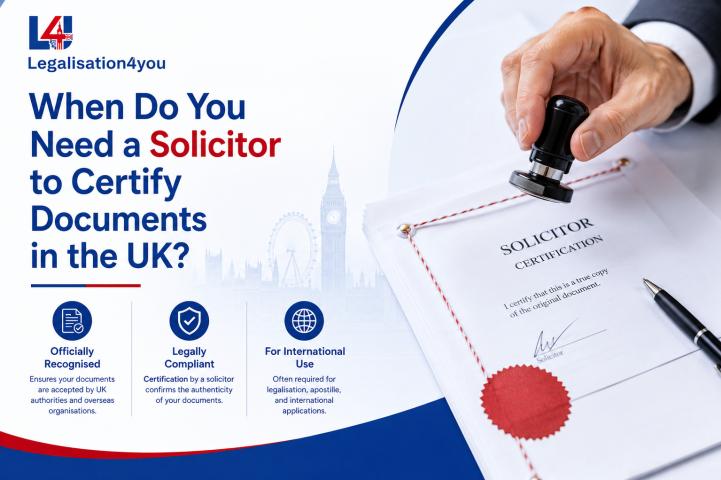
Solicitor certification involves a qualified solicitor checking an original document and certifying a copy according to the requirements of the organisation or authority requesting it.
The solicitor may verify that the copy corresponds with the original and provide appropriate wording, a signature, date and professional details on the certified copy.
A solicitor certificate should not be confused with an apostille. Certification and legalisation are separate stages. An apostille may be required when a document is going to be used in another country, depending on the destination country's requirements.
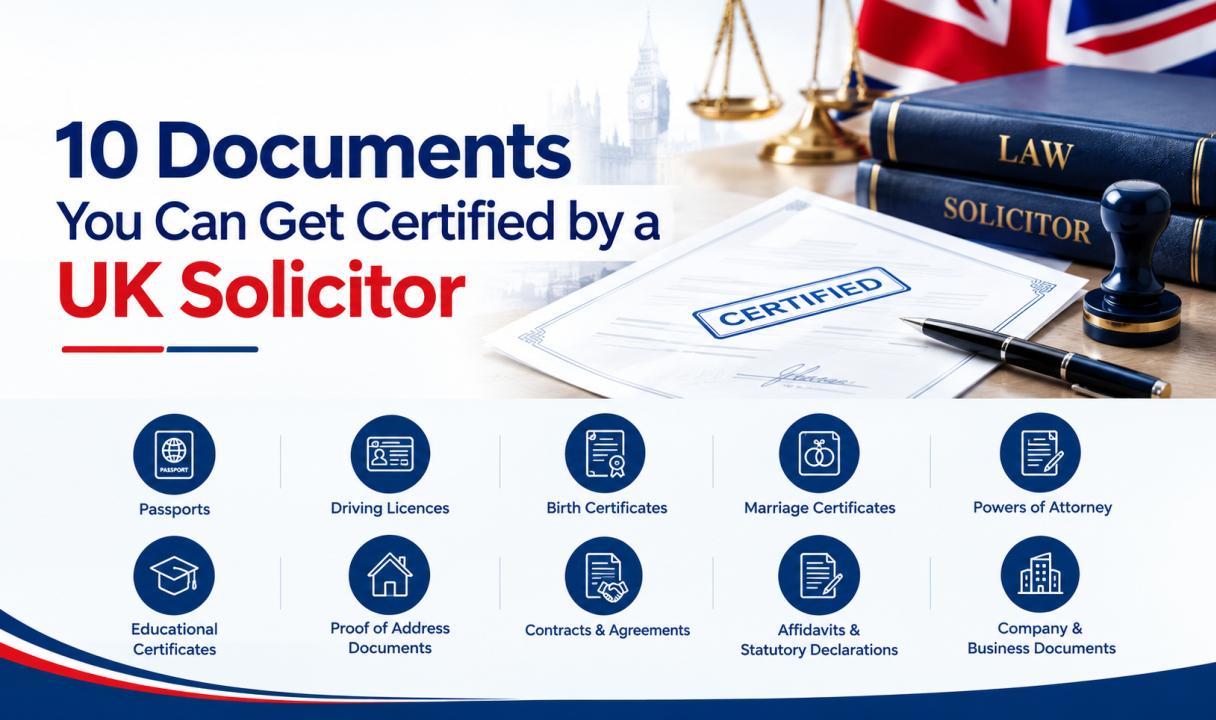
Here are 10 common types of documents that may require certification by a UK solicitor.
1. Passport Copies
Passport copies are among the documents that are frequently requested for identification and verification purposes.
A bank, overseas authority, immigration organisation, employer or legal professional may ask for a certified copy of a passport rather than accepting an ordinary photocopy.
The solicitor can compare the copy with the original passport and certify it according to the requirements of the organisation requesting the document.
Before having your passport copied and certified, check whether the receiving organisation has specified particular wording or requirements. Some organisations may require certification by a solicitor, while others may accept certification from another authorised professional.
2. Driving Licence Copies
A UK driving licence can also be used as an identity or address-related document in certain situations.
For example, a certified copy may be requested when opening an account, completing a legal transaction, applying for services overseas or verifying someone's identity.
The solicitor will generally need to see the original document before certifying a copy. You should therefore bring the original driving licence rather than relying on a photocopy.
If the document is intended for international use, check whether certification alone is sufficient or whether additional legalisation is required.
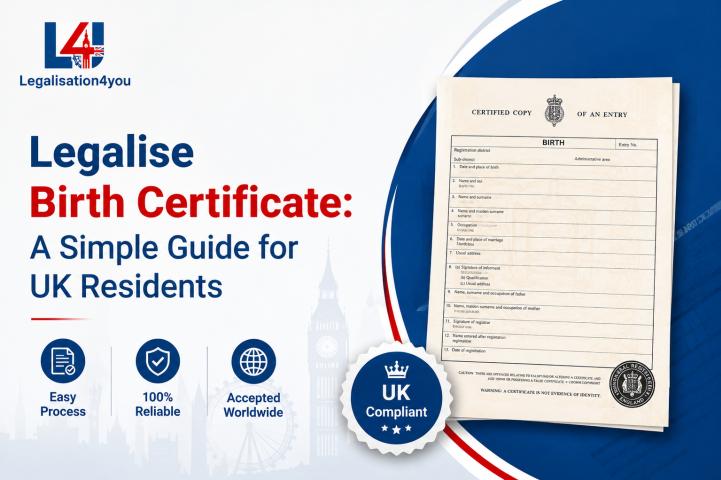
3. Birth Certificates
Birth certificates are important civil-status documents that can be requested for a wide range of purposes.
They may be needed for:
- Immigration applications
- Citizenship applications
- Marriage overseas
- Family-related applications
- Inheritance matters
- Registration with overseas authorities
- Visa applications
However, it is important to understand that not every birth certificate requirement involves solicitor certification. In some cases, the receiving authority may require an original certificate or an appropriately issued copy instead.
If certification is specifically requested, you should establish exactly what form is acceptable before arranging the service. For international use, you may also need an apostille or further legalisation depending on the destination country.
4. Marriage Certificates
Marriage certificates can be required when individuals need to prove their marital status.
For example, a marriage certificate may be requested when applying for a spouse visa, registering a marriage overseas, dealing with inheritance matters or completing an administrative process in another country.
If an organisation asks for a certified copy, a UK solicitor may be able to certify the document or an appropriate copy, subject to the requirements involved.
It is particularly important to check the destination authority's instructions when a marriage certificate is being prepared for overseas use. Some countries may require an apostille, translation or embassy legalisation in addition to certification.
5. Powers of Attorney
A power of attorney gives another person authority to act on someone's behalf in specific circumstances.
These documents can be used for property transactions, financial matters, business arrangements and other legal purposes. International powers of attorney can have additional requirements depending on the country where the document will be used.
A solicitor may be involved in preparing, witnessing, checking or certifying documents connected with a power of attorney.
If the document is intended for use abroad, it is important to establish the complete document route before signing or submitting it. Some jurisdictions may require notarisation rather than ordinary solicitor certification.
6. Educational Certificates and Qualifications
Educational documents can be requested when someone is applying for employment, education or professional recognition.
Examples include:
- University degree certificates
- Diplomas
- Academic certificates
- Professional qualifications
- Training certificates
- Examination certificates
An overseas employer, university or professional organisation may request a certified copy to confirm that the document presented is a genuine copy of the original.
Requirements vary considerably between institutions. Some may accept a solicitor-certified copy, while others may specify a notary public, issuing institution or another approved professional.
If the qualification will be used internationally, find out whether the document also needs an apostille, certified translation or additional authentication.
7. Proof of Address Documents
Certain organisations may request certified proof of address as part of identity or compliance checks.
Documents that may be used as proof of address include:
- Utility bills
- Bank statements
- Council tax documents
- Official government correspondence
- Certain financial documents
Not every organisation will accept every type of proof of address. Some may also require the document to have been issued within a specific period.
Before arranging certification, check the organisation's instructions carefully. If certification is required, the solicitor can review the original document and certify an appropriate copy where suitable.
8. Contracts and Agreements
Business and legal agreements can sometimes require certification, particularly when copies need to be presented to another organisation or authority.
Examples may include:
- Commercial contracts
- Property agreements
- Partnership agreements
- Business agreements
- Declarations
- Legal undertakings
Whether a solicitor should certify a contract depends on what the receiving organisation requires. Certification does not automatically confirm that every term in a contract is legally valid. It generally relates to the document or copy being certified.
For international transactions, additional authentication may be necessary. The receiving country's requirements should therefore be checked before documents are submitted.
9. Affidavits and Statutory Declarations
Affidavits and statutory declarations are formal documents that contain statements made for legal or official purposes.
These documents may need to be signed or witnessed in a particular way. A solicitor may be able to assist with the relevant procedure depending on the nature of the document and the legal requirements involved.
Because these documents can have legal consequences, it is important to use the correct procedure rather than simply signing a document and asking for a copy to be certified afterwards.
If the declaration is intended for an overseas authority, establish whether the receiving jurisdiction requires notarisation or another form of authentication.
10. Company and Business Documents
Businesses may need certified copies of documents for banking, corporate transactions, international trade or overseas registration.
Potential documents include:
- Certificate of incorporation
- Company documents
- Articles of association
- Board resolutions
- Share-related documents
- Business agreements
- Company identification documents
An overseas bank, business partner, government department or professional organisation may request certified corporate documents before proceeding with a transaction.
The exact requirements depend on the purpose and destination. In some circumstances, company documents may also need an apostille or additional legalisation after certification.
What Should You Check Before Getting a Document Certified?
Before arranging certification, do not simply assume that any certified copy will be accepted. Ask the organisation requesting the document what it requires.
Consider checking:
1. Who can certify the document?
Some organisations specifically request a solicitor, while others may accept a notary public or another authorised professional.
2. Does the original document need to be provided?
In most certification situations, the professional will need to compare the copy with the original.
3. Is specific wording required?
Some organisations provide specific wording that must appear on the certified copy.
4. Does the document need an apostille?
Certification and apostille are different processes. If the document is going overseas, an apostille may be required depending on the destination and purpose.
5. Is a translation required?
If the receiving authority does not accept documents in English, you may need a certified or otherwise approved translation.
6. Does the destination country require embassy legalisation?
Some countries have additional legalisation requirements after the UK authentication stage.
Solicitor Certification vs Apostille
It is easy to confuse these two processes, but they serve different purposes.
Solicitor certification generally confirms that a copy has been checked against an original document or that a solicitor has carried out a particular certification procedure.
An apostille, on the other hand, is issued through the appropriate government authority to authenticate a signature, seal or stamp on a public document for international use.
Whether you need one or both depends on the requirements of the organisation or country receiving your document.
For some documents, certification may be an important preliminary step before apostille processing. For others, the appropriate route may involve a notary public instead.
How Legalisation4you Can Help
Preparing documents for official or overseas use can sometimes involve several stages, especially when certification, apostille, translation and embassy legalisation may all be relevant.
Legalisation4you can help individuals and businesses understand the document preparation and legalisation process. Depending on your requirements, support may include document certification, apostille services, certified translations and further legalisation for international use.
The correct process depends on the document and the destination authority, so it is always advisable to confirm the requirements before submitting your documents.
Need Help Certifying Your Documents?
If you need documents prepared for official or international use, Legalisation4you can help you understand the appropriate certification and legalisation route.
Whether you need assistance with personal documents, business paperwork, certificates or documents intended for overseas authorities, getting the process right from the start can help reduce unnecessary delays.
Visit to learn more about document certification, apostille and legalisation services, or contact the team to discuss your requirements.
Frequently Asked Questions
1. What is a solicitor certificate used for?
A solicitor certificate can refer to certification provided by a solicitor confirming a particular fact about a document or copy, depending on the service and requirements. The exact wording and purpose should be confirmed with the organisation requesting the document.
2. Can a UK solicitor certify a copy of my passport?
Yes, a solicitor may be able to certify a copy of a passport after checking it against the original. However, you should confirm that the organisation requesting the copy accepts solicitor certification.
3. Can a solicitor certify a birth certificate?
A solicitor may be able to certify an appropriate copy where certification is required, but the receiving authority may instead require an original certificate, apostille or another form of authentication. Always check the specific requirements.
4. Is solicitor certification the same as notarisation?
No. Solicitor certification and notarisation are different professional services. A receiving authority may specifically request a notary rather than a solicitor, so it is important to follow its instructions.
5. Does solicitor certification automatically make a document valid abroad?
No. Certification does not automatically mean that a document will be accepted in another country. An apostille, translation or embassy legalisation may also be required.
6. Do I need the original document?
Usually, the professional carrying out the certification will need to see the original so that it can be compared with the copy. Specific requirements can vary depending on the document and service.
7. Can educational certificates be certified?
Educational certificates may be certified where the receiving organisation accepts this form of verification. Some universities, employers or overseas authorities may have their own requirements.
8. Can business documents be certified?
Yes, certain company and business documents may require certification for banking, commercial transactions, overseas registration or other official purposes. The required certification method depends on the organisation requesting them.
9. Do certified documents need an apostille?
Not always. An apostille is generally relevant when a document needs authentication for use abroad. Whether it is required depends on the destination country and the specific purpose.
10. How can I find out which certification I need?
The best approach is to ask the organisation or authority receiving your document which type of certification it accepts. Confirm whether it requires a solicitor, notary public, apostille, translation or additional embassy legalisation before starting the process.