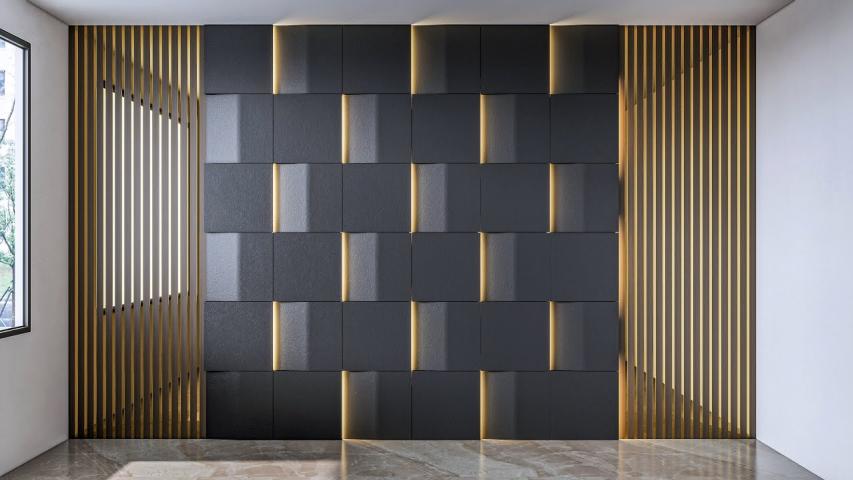

Two acoustic PET panels look identical on a sample board. Same colour. Same texture. Same thickness printed on the spec sheet. The price difference between them might be 20 percent.
What explains the gap? Material composition. The recycled content. The fibre structure. The density. The fire treatment. The things you can't see by looking, but you hear in the room and read in the test report.
PET polyester acoustic panels are not a single product. They're a category. And within that category, the composition varies widely. Specifiers who ignore this end up with panels that look right but perform wrong. Or panels that pass inspection but fail the acoustic brief. Understanding what's inside the panel is the difference between a specification that works and one that just looks good on paper.
The Recycled Content Question
Most PET felt panels are marketed on their recycled content. The numbers sound impressive. 60 percent post-consumer. 65 percent. Some claim higher.
But recycled content isn't just a sustainability metric. It affects the material's behaviour.
Post-consumer PET comes from plastic bottles. The fibres are reprocessed, which can change their length and strength compared to virgin PET. A panel made with high recycled content may have a slightly different fibre matrix from one with lower recycled content. That difference can affect airflow resistance, which in turn affects absorption.
This isn't a reason to avoid recycled content. It's a reason to ask for test data on the specific product, not a generic "PET panel" datasheet. A panel with 60 percent recycled content from one manufacturer may perform differently from another with the same headline number. The composition matters. The testing matters more.
Density and Thickness
Density determines how much material sits in a given volume. Thickness determines how far sound travels through that material. Both affect performance. Neither tells the whole story alone.
PET felt panels typically sit around 190 kg/m³ for standard products, though some range lower. A denser panel resists airflow more. That can improve absorption at certain frequencies, but it can also reflect sound if the density gets too high.
Thickness is the more visible variable. Common PET polyester acoustic panels range from 9mm to 24mm, with some products going thicker. A 9mm panel might hit NRC 0.45 mounted directly. A 12mm panel climbs to 0.60. A 24mm panel reaches 0.75.
But here's the part that surprises people. A 12mm panel with a 400mm air gap behind it can outperform a 24mm panel mounted flush. The cavity matters more than the thickness in many installations. So the composition (density, fibre structure) sets the potential. The mounting decides whether that potential gets realised.
Fire Treatment
PET is a plastic. It burns. The fire rating of a PET acoustic panel depends entirely on the additives and treatment used during manufacturing.
Quality products achieve Class A or Euroclass B-s1,d0 ratings. They're treated with fire retardants that slow combustion and limit smoke. The treatment is part of the material composition. It's not a coating applied later.
Cheaper panels may carry lower ratings or no formal certification. They might pass a basic test but fail under stricter conditions. For commercial projects, this is non-negotiable. The specification should name the required rating and require the test report for the specific product. The composition tells you whether the manufacturer invested in fire safety or skipped it.
Read to learn more about PET acoustic panels here: What Designers don’t Tell You about PET Acoustic Solutions?
What Composition Predicts and what it doesn't
Material composition can tell you a lot. The recycled content signals the sustainability profile. The density and fibre structure suggest the absorption range. The fire treatment indicates whether the panel meets code.
What composition cannot tell you is the exact NRC for your installation. That depends on thickness, mounting method, air gap, and the room's geometry. Two panels with identical composition can perform differently if one is glued to a wall and the other is suspended with a cavity.
The practical approach is to ask for both. The composition data (recycled content, density, fire rating) and the acoustic test data for the specific mounting condition. A manufacturer who provides both is a manufacturer who understands their product. One who only provides one is guessing.
Choose PET Acoustic Panels with Real Data
A sample board doesn't tell you everything. At Tranquil Global, we supply acoustic PET panels and PET polyester acoustic panels with the composition details and test data that matter. Recycled content. Density. Fire ratings. Absorption coefficients for real mounting conditions.
Whether you're specifying for an office, a school, or a hospitality space, our team helps you understand what's inside the panel before you commit. No guesswork from a swatch. No generic datasheets. Reach out to Tranquil Global today and specify with the full picture. Your acoustic design deserves more than a pretty sample.
FAQs
Does recycled content affect acoustic performance?
It can. Post-consumer PET fibres may have different properties from virgin fibres. The airflow resistance and absorption curve can shift. Always ask for test data on the specific product, not just the recycled percentage.
What density are PET acoustic panels?
Typically around 190 kg/m³ for standard products, though ranges vary. Density affects airflow resistance and absorption. It should be specified alongside thickness.
Does thicker always mean better absorption?
Not always. A thinner panel with a deep air cavity can outperform a thicker panel mounted flush. The mounting method matters as much as the thickness.