This story covers why and how I created a hiring Chrome extension for myself, finally.
My Pain Points (Driving Me Nuts!)
As someone connected to hiring, I’ve dealt with so many frustrations over the years that I had to do something about it. Here’s what got under my skin:
- Posting a job ad takes time.
Just putting up a job listing, including registering, can take at least half an hour—sometimes a lot longer. Then there’s the rules, requirements, and waiting for verification of the ad text, plus user verification, payments… It drives me up the wall. It’s a nightmare. - The costs of posting are a nasty surprise.
Free listings usually get buried at the bottom of the pile, while employers with budgets jack up prices to fight for visibility. On Upwork or similar sites, you’re paying for credits, plus a fee for each project—out of my experience, it can easily cost $100–200 just to get a handful of semi-decent candidates, and that’s not even guaranteed. - AI-tweaked resumes are killing me.
When I finally get responses, I’m just exhausted by resumes that look perfect for my job descriptions but were clearly pumped out by AI tools like GeekRadar. I end up chatting with agencies or AI assistants for the first few messages—it’s so frustrating. Meanwhile, solid, real developers don’t stand a chance getting noticed. And what’s worse, these AI tools keep getting sneakier, making it harder to spot the fakes. - Poorly automated matching process / metrics (incl. skill relevancy and gaps).
Recruiter tools and functions (Job sites, platforms, ATSs) simply fail. At the end of the day, I have to analyse profiles/resumes and map to job description under the microscope.
Finding Trustworthy Dev Profiles
- The toughest part for me was finding a source of developer profiles I could actually trust—ones with real feedback from past employers, up-to-date info, and solid proof of skills. There are millions of developers on Upwork and Fiverr, but the feedback is often half-hidden, unclear, or unreliable. I’d spend hours sifting through profiles just to pick a couple of “Definitely Yes” candidates. Working with those massive marketplaces feels premature right now—too much noise and uncertainty.
- I took Upstaff.com ( Hire Developers App DB API) as a first source of data, and plan to extend more. A dataset of about 3K developer profiles with project histories, work records, and reviews was OK to start with. It’s not that large from bigdata perspective, but covers most of typical job request on the other hand. That became the backbone for talently. I’m thinking about integrating other sources to expand it, too. At the moment, If I can’t find a relevant candidate, I can always reach out to upstaff.com for help—they’ll step in and find more options.
Tech Stack and why a Chrome Extension
The idea of building a helper that proactively searches for developers—without registration, waiting, fees, or those AI-tweaked resumes—really got me. So where do we spend most of our time these days if not in a web browser? I think Chrome Extensions have huge potential, especially now that Chrome’s rolling out stuff like Gemini Nano in dev versions.
I honestly think most SaaS tools should have browser extensions as a natural extension of their products—being closer and more convenient for users makes a huge difference. Making it a Chrome Extension felt like a no-brainer with the following stack:
- Front-End: Manifest V3, JavaScript, Vue.js (Vue 3), Google API, SCSS, Vuetify, Vite
- Back-End: Python/Django, ElasticSearch.
Besides, my team’s been involved in creating all sorts of Chrome Extensions — from analytical tools for research fund employees, CRM (Salesforce and HubSpot), to traffic analyzers similar to Ahrefs and SimilarWeb (though I think there was something there too).
So, I have a team of App developers, but it’s funny—here I was, like a cobbler without shoes, finally getting around to solving my own problem, not clients.
A few must-haves for talently:
- Super lightweight and efficient—I’ve seen too many plugins that slow everything down to a crawl.
- Side Panel (not pop-ups over images—pop-ups feel outdated and have too many limits).
- Bring Extra value and ease of use, so I and my colleagues would actually use it every day.
- One week turnaround time (from start to finish)
The idea was to get job snapshot, depending on the site you’re on, right in your browser. We pulled together the first version in 2–3 days, and then my scope and appetite started growing… I was on a second week at the time of writing, and decided to roll-out 1st version, and collect feedback.
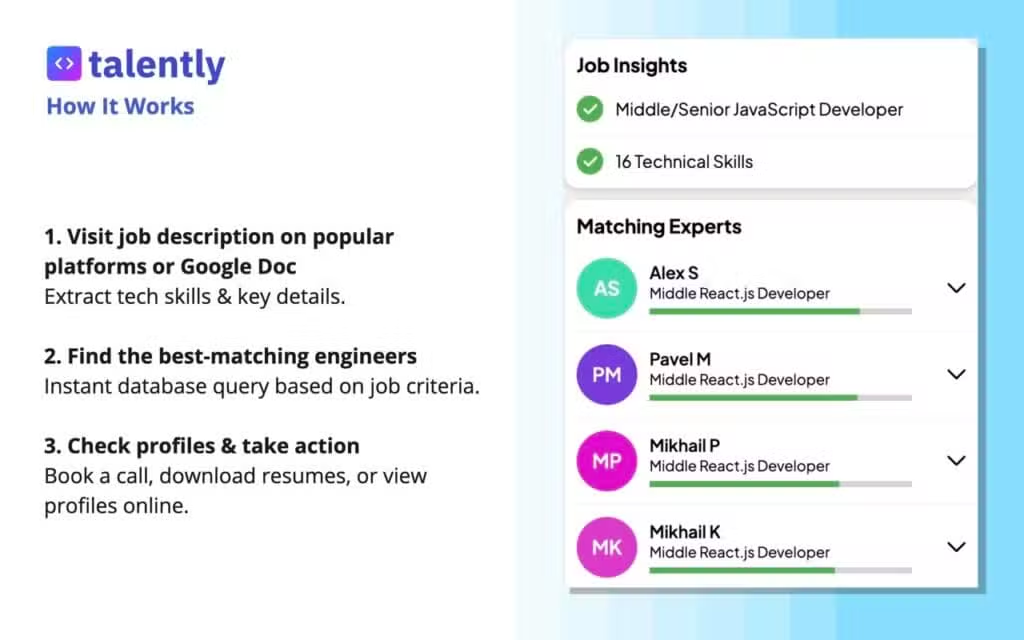
Early Versions & What I’ve Got So Far
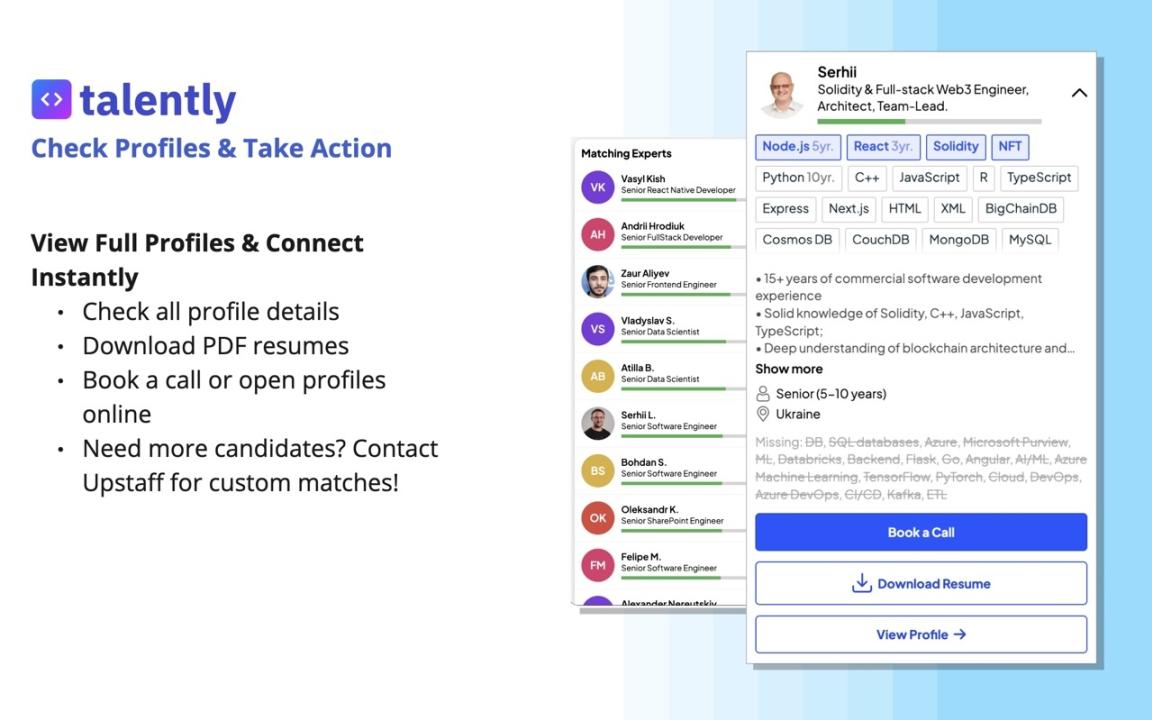
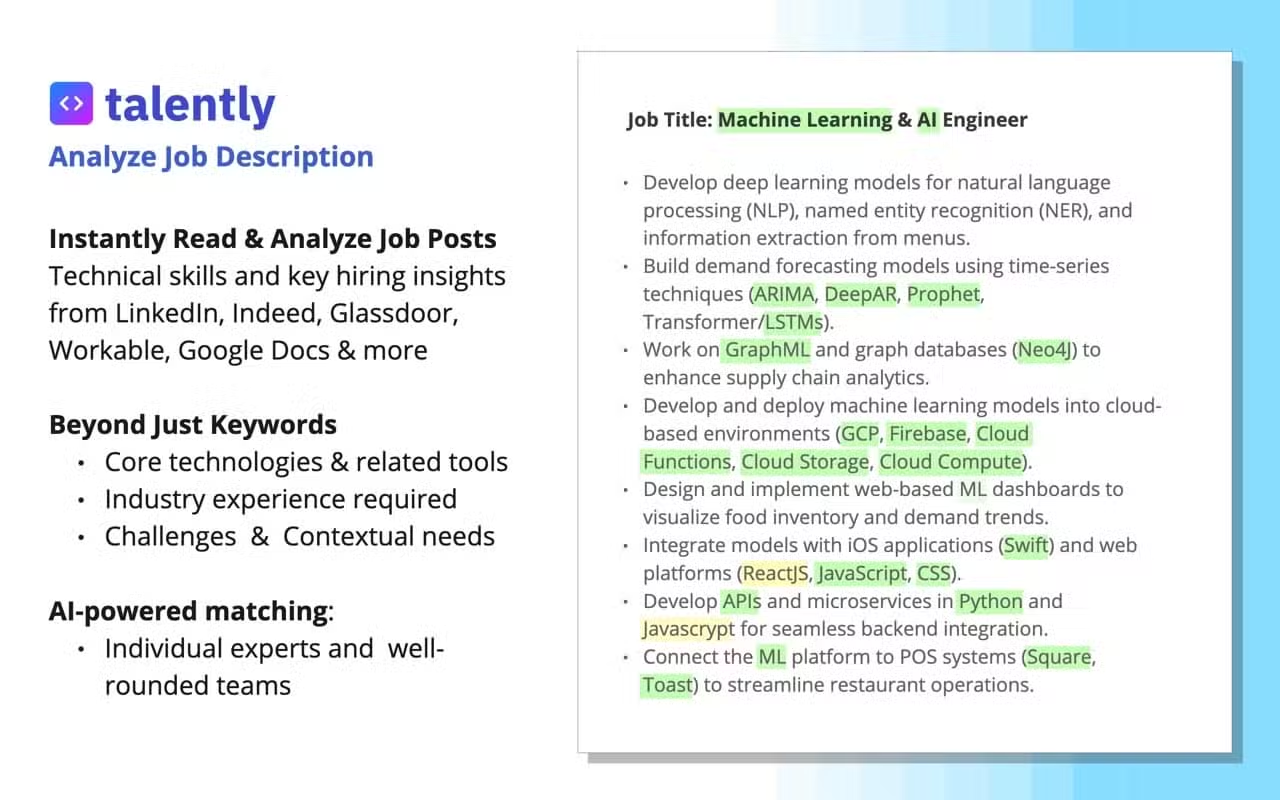
talently now covers the basics I needed, supporting major job platforms—Upwork, Fiverr, job sites like Indeed, Glassdoor, LinkedIn—and social networks like X.Jobs and Reddit. They’re all different, and I hope supporting them doesn’t turn into a nightmare down the line. We also added support fot Google Docs and PDFs from Google Drive. So any job or project description can be now scanned and turned into a list of relevant candidates right in a browser, on the same page.
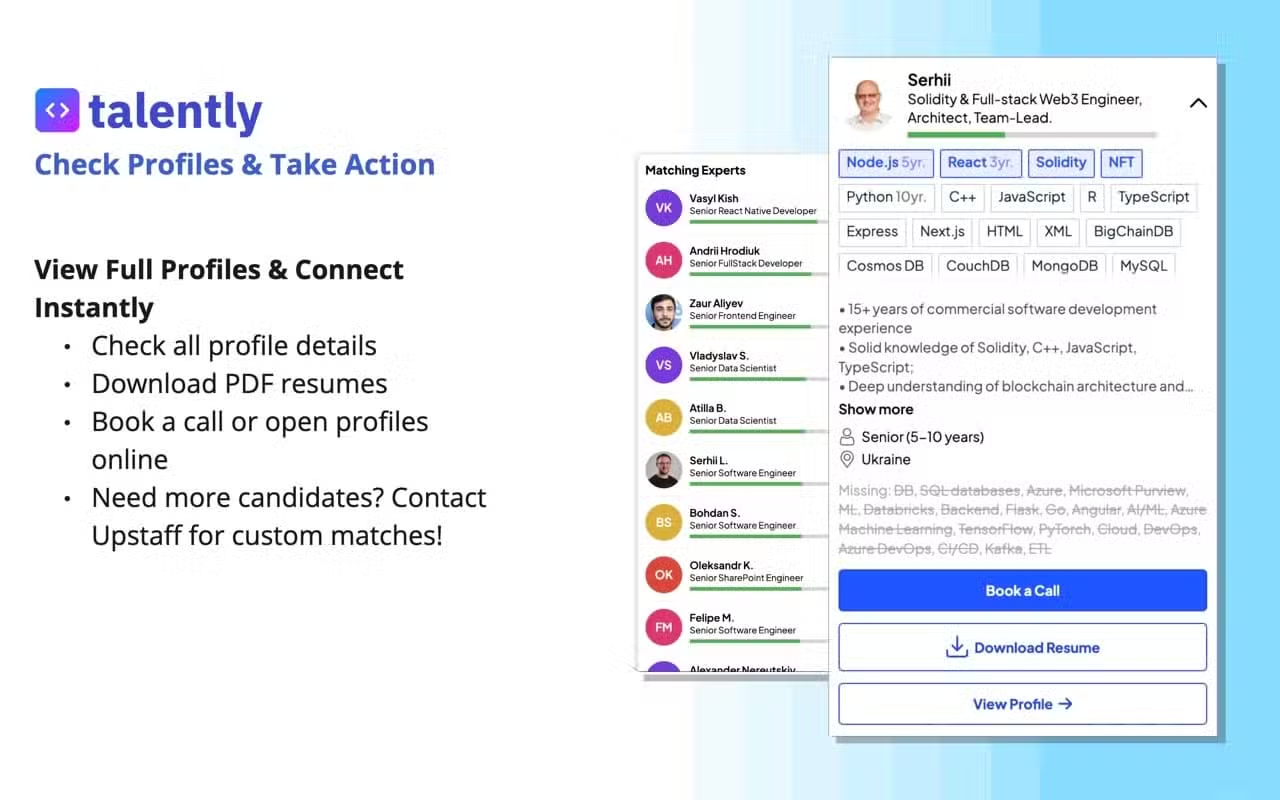
One thing I still need to fix is availability of developer. Not everyone is available for interviews right away (actual metric is 20-30% so far). So far it can be fixed by asking upstaff.com support to reach for availability or alternative manually. I’m working on making that smoother and automated, like Uber-like App.
Why talently could be an alternative for every hiring channel?
Look at talently as a little algorythmic and AI helper for finding developers—and maybe a pretty strong alternative overall. What if it becomes a potential replacement for Upwork, Fiverr, Indeed, Monster, Toptal, or even recruiting agencies—everything you’ve ever used for this.
The Cool Part: Zero Efforts
Of course it’s not ideal and roadmap will include we weeks at least. But wha I already like it it’s dead simple. You don’t even need your own job description to try.
- Any project description or page, and you’ll get recommendations for candidates right away in your browser.
- It’s a real chance to skip the long registrations, fees, verifications, and AI noise I’ve been dealing with every day.
I hope you can give feedback on whether you dint it useful for you or what could be better. It’s available in GoogleWebStore and I also published on Upstaff under Talently – App Developer in one click!
A Few Thoughts from Me
Finding developers isn’t just hard—it’s a slog. I read somewhere that, according to a 2023 U.S. Bureau of Labor Statistics report, tech job openings hit over 700,000 in the U.S. alone, but filling them takes an average of 41 days—sometimes longer if you’re stuck with bad matches or flaky candidates. I’ve seen it myself: people ghost, change their minds, or just don’t deliver, and that’s before you even get to the AI mess. A LinkedIn survey from last year also showed that 60% of recruiters say finding the right developer feels like finding a needle in a haystack, especially with so many AI-tweaked resumes flooding in. talently’s my way of cutting through that—focusing on real, vetted people, not fakes, and skipping the platform headaches.
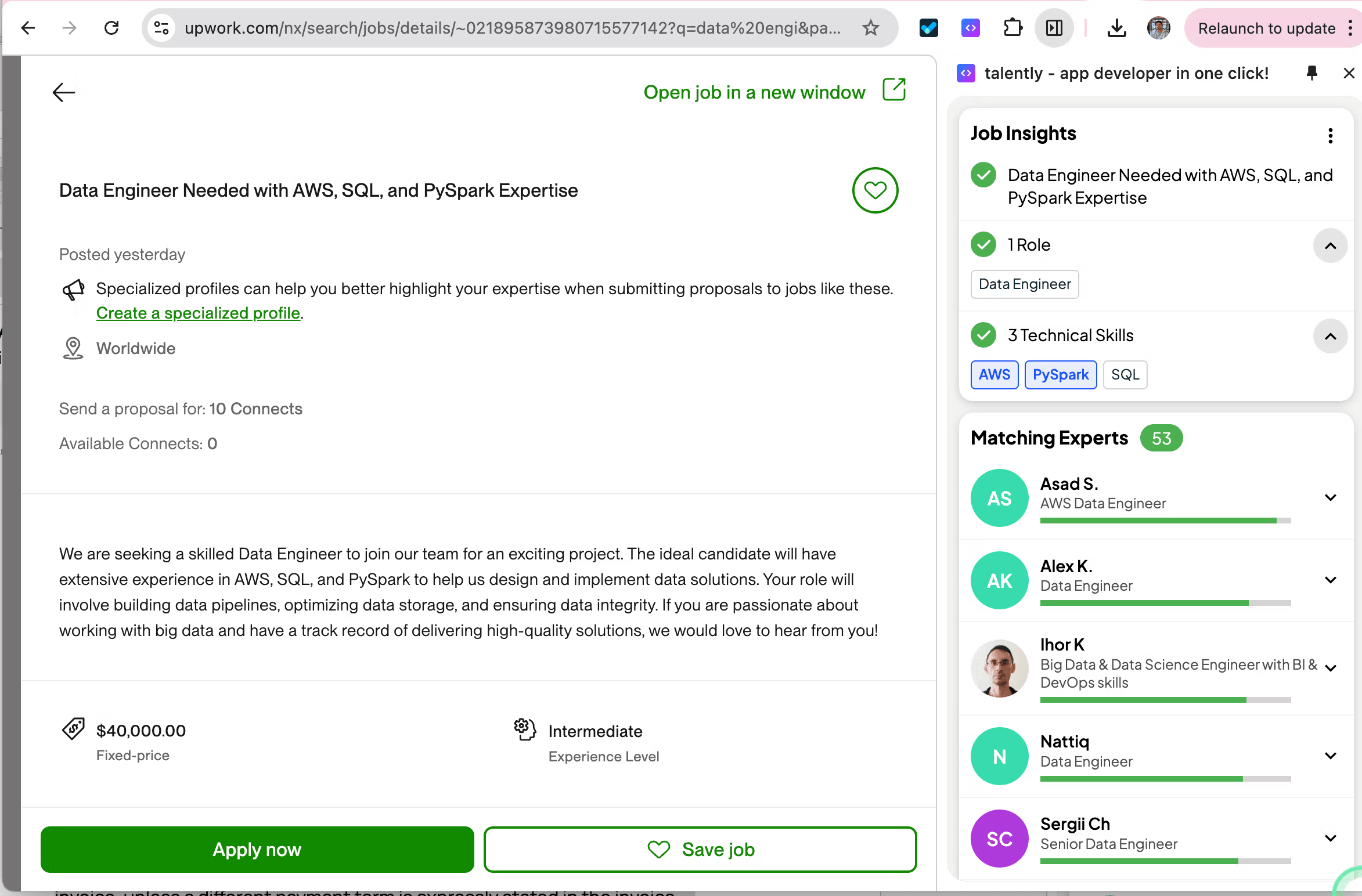
As someone who’s been in this grind, I can’t help but wonder: why do we keep putting up with these clunky systems? talently’s not perfect yet, but it’s my attempt to make it easier for all of us—whether you’re hiring for a startup, a big company, or just a side project. Train on a dataset of successful matches and projects in a distant future would probably become ultimate goal (Be your own recruiter).
What do you think, or if you’ve got your own horror stories with job boards or AI resumes? Maybe we can figure out better ways together. I’m open to collaborating, hearing new ideas, or working on projects. If you’ve got thoughts on talently—or just want to vent about finding developers—drop me a line. I’m here for it. Good luck to everyone out there!