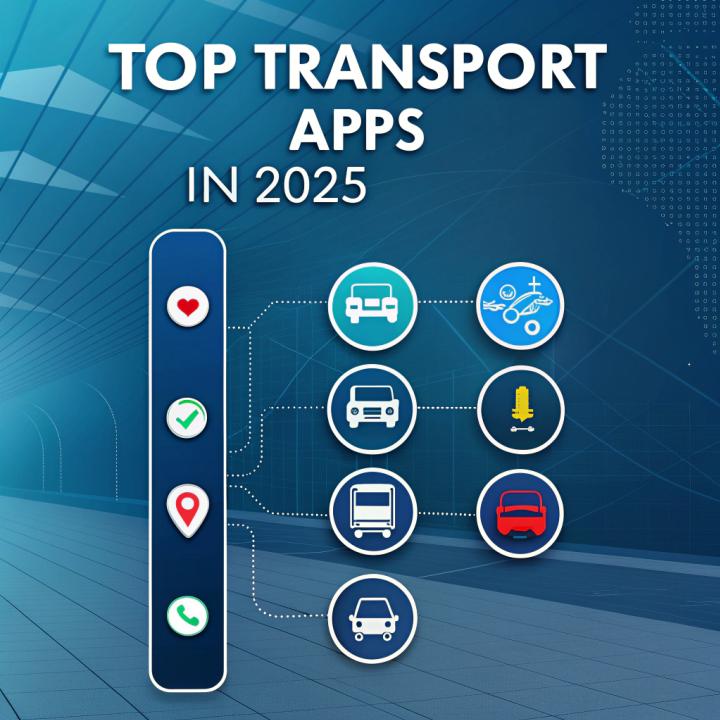

The year is 2025 and the world is a very different place. Public transportation has changed dramatically and there are now a variety of transport apps to choose from. So, what are the top transport apps in 2025?
In this article, we will take a look at the top transport apps in 2025 and what they have to offer. We will also highlight the problems that these apps aim to solve and how they can benefit you. So, without further ado, let's get started.
What are the top transport apps in the world?
There are many different transport mobile apps available on the market, but which ones are the best? This is a question that can be difficult to answer, as there are many different factors to consider. However, we have compiled a list of the top transport apps in the world, based on a number of different factors.
The first factor we considered is the number of downloads each app has. This is a good indicator of how popular the app is, and how many people are using it.
The second factor we considered is the number of positive reviews each app has. This is a good indicator of how well the app works, and how satisfied users are with it.
The third factor we considered is the number of negative reviews each app has. This is a good indicator of how buggy or poorly designed the app is.
The fourth factor we considered is the overall rating each app has. This is a good indicator of the quality of the app.
The final factor we considered is the price of each app. This is a good indicator of how much value the app offers.
After considering all of these factors, we have compiled a list of what we believe to be the top transport apps in the world.
1. Uber
Uber is a ridesharing app that allows users to request and pay for rides from drivers. It is available in over 600 cities worldwide. Uber has a 4.5 star rating on the App Store, and a 4 star rating on the Google Play Store. It is free to download and use. Assuming you would like a blog about the best transport app, Uber: When it comes to getting around town, there’s no question that Uber is the best transport app out there. With its quick and easy interface, you can be sure to get where you’re going in a jiffy – without having to worry about parking or hailing a cab. Plus, with Uber’s fare estimator, you can always know how much your ride will cost ahead of time, so there’s no need to worry about being surprised by a high bill at the end of your trip. Whether you’re going across town or across the country, Uber is the best way to get there. So why not download the app and give it a try today? You’ll be glad you did.
2. Lyft
Lyft: There are a lot of different ways to get around these days. You’ve got your traditional options like buses and taxis, and then you’ve got newer options like ride-sharing services. Lyft is one of the most popular ride-sharing services available, and it’s easy to see why. Lyft is convenient, affordable, and reliable. You can use the app to hail a ride from wherever you are, and you’ll never have to worry about getting stuck in traffic or paying an arm and a leg for your ride. Lyft is also a great option if you’re looking for a more social ride-sharing experience. With Lyft, you can choose to sit in the front seat and chat with your driver, or you can sit in the back and relax. If you’re looking for the best transport app, Lyft is definitely the way to go. With its convenient, affordable, and reliable rides, it’s easy to see why Lyft is one of the most popular ride-sharing services available.
3. Grab
When it comes to finding the best transport app, there is no doubt that Grab is the way to go. With Grab, you can get where you need to be without any hassle. The app is easy to use and you can find the nearest Grab driver with just a few clicks. Plus, you can pay for your ride with GrabPay, which is a safe and convenient way to pay. If you're looking for a Grab driver, all you need to do is open the app and click on the "Find a Driver" button. Once you've found a driver, you can pay for your ride with GrabPay. To do this, simply enter your credit or debit card information into the app. Once you've done this, you're all set!
4. Gett
If you're looking for the best transport app out there, you need to download Gett. Gett is an app that connects you with a driver in just a few minutes, so you can get where you need to go without any hassle. Plus, with Gett you can be sure you're getting the best possible price for your ride. Gett is available in major cities all over the world, so whether you're in New York, London, or Paris, you can use Gett to get around. And with Gett's new corporate car service, you can even book rides for your employees, so you can be sure they're getting to meetings on time. So what are you waiting for? Download Gett and start saving time and money on your transportation today.
5. Didi Chuxing
Didi Chuxing Looking for the best transport app? Look no further than Didi Chuxing. Didi Chuxing is a Chinese transportation company headquartered in Beijing. The company offers app-based booking and scheduling services for private and commercial vehicles. Didi Chuxing was founded in 2012 by two individuals, Cheng Wei and Liu Qing. The company has since grown to become one of the largest transportation companies in the world. In 2016, the company completed over 11 million trips per day. What makes Didi Chuxing stand out from its competitors is its focus on user experience. The app is very user-friendly and provides a hassle-free experience. Additionally, the company offers a wide range of services, making it a one-stop shop for all your transportation needs. Whether you're looking for a taxi, private car, or even a ride-sharing service, Didi Chuxing has you covered. So why not give them a try next time you need a ride?
What are the top transport apps in the United States?
There are many different transport apps available in the United States, but some of the most popular ones include Waze, Google Maps, and Uber. Each of these apps offers different features and benefits, so it is important to choose the one that best suits your needs.
1. Google Maps: Google Maps is a widely used app for getting directions and finding locations. It offers features such as turn-by-turn navigation, traffic data, and transit information.
2. Waze: Waze is a community-based traffic and navigation app. It offers real-time traffic information and alerts about accidents, road closures, and other traffic disruptions.
3. iExit: iExit is an app that helps you find the best exit strategy when you're driving on the highway. It provides exit-by-exit information on gas prices, restaurants, hotels, and more.
4. INRIX: INRIX is a traffic and navigation app that provides real-time traffic information, traffic predictions, and traffic incident alerts.
5. Traffic Map: Traffic Map is a traffic app that provides live traffic data, traffic predictions, and real-time traffic alerts.
6. Roadtrippers: Roadtrippers is a trip planning app that helps you find the best things to see and do along your route. It offers features such as trip planning, gas prices, and weather information.
What are the top transport apps in Europe?
If you're planning a trip to Europe, you'll want to download a few apps to help you get around. Here are the top transport apps in Europe:
1. Google Maps Google Maps is a must-have for any traveler, and it's especially useful in Europe. With real-time traffic and transit updates, you can always find the best route to your destination.
2. Citymapper Citymapper is a public transit app that covers over 100 cities in Europe. It can help you plan your trip, find the best routes, and even purchase tickets.
3. Uber Uber is a ridesharing app that is available in many European cities. With Uber, you can request a ride with just a few taps on your smartphone.
4. Flixbus Flixbus is a long-distance bus service that operates in many European countries. With Flixbus, you can book your tickets in advance and track your bus in real-time.
5. Trainline Trainline is a train ticket app that covers Europe's major train operators. With Trainline, you can easily search for and book train tickets.
6. Rome2rio Rome2rio is a trip planner app that can help you plan your journey by public transport, car, or even walking. With Rome2rio, you can easily compare the options and find the best route for your trip.
Assuming you are asking for the top 5 transport apps in Europe:
1. Google Maps - With over 1 billion downloads, Google Maps is the most popular app in the world. It offers comprehensive, accurate maps and powerful navigation features.
2. Waze - Waze is a community-based traffic and navigation app. It offers real-time traffic information and route planning.
3. HERE WeGo - HERE WeGo is a maps and navigation app. It offers detailed maps of over 150 countries and turn-by-turn navigation.
4. Citymapper - Citymapper is an urban transit app. It offers real-time information on public transport options and journey planning.
5. Moovit - Moovit is a public transit app. It offers real-time information on bus, train, and metro schedules and routes.
What are the top transport apps in Asia?
Assuming you would like a list of the top 5 transport apps in Asia:
1. Grab
2. Gojek
3. ComfortDelGro
4. SMRT
5. MyTeksi
What are the top transport apps in Asia?
1. Didi Chuxing -Didi Chuxing is a ride-sharing app that is popular in China. The app allows users to book a car or taxi and pay for their ride through the app. Didi Chuxing is available in many cities in China and is expanding to other countries in Asia.
2. Grab - Grab is a ride-sharing app that is popular in Southeast Asia. The app allows users to book a car or taxi and pay for their ride through the app. Grab is available in many cities in Southeast Asia and is expanding to other countries in Asia.
3. Ola - Ola is a ride-sharing app that is popular in India. The app allows users to book a car or taxi and pay for their ride through the app. Ola is available in many cities in India and is expanding to other countries in Asia.
4. Uber- Uber is a ride-sharing app that is popular in many countries. The app allows users to book a car or taxi and pay for their ride through the app. Uber is available in many cities in many countries and is expanding to other countries in Asia.
What goes into Developing a Transportation App?
When you’re planning to develop a transportation app, there are many things you need to take into account – from the functionality of the app to the design. In this article, we’ll take a look at what goes into developing a transportation app, so that you can make sure your app is the best it can be.
Functionality is key for any app, and a transportation app is no different. You’ll need to make sure that your app can do what it’s supposed to do, and that it does it well. That means ensuring that it can track routes, provide estimated times of arrival, and give users the ability to book and pay for transportation.
Design is also important for a transportation app. The app needs to be easy to use, so that users can quickly and easily find the information they need. It should also be visually appealing, so that users will want to use it again and again. Developing a transportation app is a big undertaking, but if you take the time to plan and design it carefully, you can create an app that’s both functional and beautiful.
The Features of Transportation Apps
Transportation apps can offer a variety of features to users, from GPS tracking to real-time updates. When developing a transportation app, it is important to determine which features will be most useful to your users.
GPS Tracking: GPS tracking is a must-have for any transportation app. It allows users to see their current location, as well as the location of their destination. Real-Time Updates: Real-time updates are also essential for transportation apps. They allow users to see how long it will take to reach their destination, as well as any delays or changes in the route.
Push Notifications: Push notifications are a great way to keep users updated on the latest information about their transportation. They can be used to notify users of changes in the route, delays, or even to remind them to catch their transportation.
In-app Messaging: In-app messaging is another great way to keep users updated on the latest information about their transportation. It can be used to notify users of changes in the route, delays, or even to remind them to catch their transportation.
Geo-fencing: Geo-fencing is a must-have for any transportation app. It allows users to see their current location, as well as the location of their destination. This is especially useful for users who may be unfamiliar with the area.
Routing: Routing is another essential feature for transportation apps. It allows users to see the best route to their destination, as well as any changes or delays that may occur.
These are just a few of the essential features that your transportation app should have. By including these features, you can be sure that your app will be most useful to your users.
The Benefits of Transportation Apps
Transportation apps can offer a number of benefits to users, from convenience to cost savings. When developing a transportation app, it is important to keep these benefits in mind in order to best serve your users.
Convenience: Transportation apps can make it easier and more convenient for users to get around, whether they are looking for public transit options or private ride-sharing services.
Cost savings: Transportation apps can help users save money by providing information on the cheapest and most efficient routes.
Time savings: Transportation apps can help users save time by providing information on the fastest routes and avoiding traffic congestion.
Improved safety: Transportation apps can help improve safety by providing information on safe routes and providing alerts for dangerous areas.
The Different Types of Transportation Apps
There are many different types of transportation apps, from ride-sharing apps to public transit apps. When deciding to develop a transportation app, it is important to first determine which type of app would best fit the needs of your users. There are many different types of transportation apps, each with their own unique set of features and benefits. When deciding to develop a transportation app, it is important to first determine which type of app would best fit the needs of your users.
Ride-sharing apps, such as Uber and Lyft, allow users to request and pay for rides from private drivers. These apps are typically used for short distance travel, such as getting to and from a nearby restaurant or bar.
Public transportation apps, such as Citymapper and Google Maps, provide users with information on nearby public transportation options, such as bus and train schedules. These apps can be used for both short and long distance travel.
Biking apps, such as Strava and MapMyRide, are designed for users who prefer to bike instead of drive or take public transportation. These apps can be used to plan routes, track progress, and find nearby bike racks.
Car-sharing apps, such as Zipcar and Car2go, allow users to rent cars by the hour or day. These apps are typically used for short distance travel, such as running errands or going on a day trip.
Travel apps, such as TripAdvisor and Foursquare, provide users with information on nearby attractions, hotels, restaurants, and more. These apps can be used for both short and long distance travel.
Developing the Transport App
Developing a transportation app is a big undertaking, but if you take the time to plan and design it carefully, you can create an app that’s both functional and beautiful.
Defining the problem that your app will solve
When it comes to developing a transportation app, the first step is to define the problem that your app will solve. This will help you determine the app's purpose and how it will benefit users. For example, if your mobile app designed to help users find a ride to their destination, you'll need to consider how it will find the best route, what type of transportation options it will offer, and how it will payment. Once you've defined the problem, you can start brainstorming app
Planning and designing your app
The first step in developing a transportation app is to determine the purpose of the app. What does the app need to do? What features does it need to have? Once the purpose and features of the app are determined, the next step is to design the app. This includes planning the layout of the app, choosing the colors and fonts, and creating the icons and graphics. After the app is designed, the next step is to develop the code. This includes writing the code that will make
Developing the app
There are a few things that go transportation mobile app development. The first is to come up with a good idea. The second is to find a developer who can turn that idea into a reality. The third is to make sure that the app meets all the necessary requirements. The fourth is to test the app and make sure it is user-friendly. The fifth is to launch the app and make it available to the public.
Testing the app
When developing a transportation app, it is important to test the app to ensure that it is functioning properly. This can be done by testing the app on different devices and in different environments. Additionally, it is important to test the app with different users to ensure that it is user-friendly and meets the needs of its users.
Promoting and marketing your app
There are a number of ways to promote and market your transportation app. Here are a few key ways to get started:
1. Use social media platforms to get the word out there. Platforms like Twitter and Facebook are great for promoting and marketing your app.
2. Use paid advertising platforms like Google AdWords to reach a wider audience.
3. Use app store optimization techniques to make sure your app is visible and easily searchable on app stores like iTunes and Google Play.
4. Make use of email marketing to reach potential users who may not be aware of your app.
5. Use influencer marketing to get people who are respected in your industry to promote your app.
Maintaining and updating your app
Maintaining and updating your app is important to ensure that it continues to function properly and meets the needs of your users. There are a number of factors to consider when doing this, including:
Ensuring that your app is compatible with the latest version of the operating system it is designed for
Testing your app regularly to ensure that it is functioning correctly and responding to user input as expected
Monitoring user feedback and ratings to identify any areas where improvements could be made
Keeping your app up to date with the latest features and functionality
It is also important to consider how often you need to update your app. In general, it is best to release updates on a regular basis to keep users engaged and to address any bugs or issues that may have arisen. However, releasing too many updates can be overwhelming for users, so it is important to strike a balance.